Why did nobody come back for more than 5,000 silver coins buried in this field?
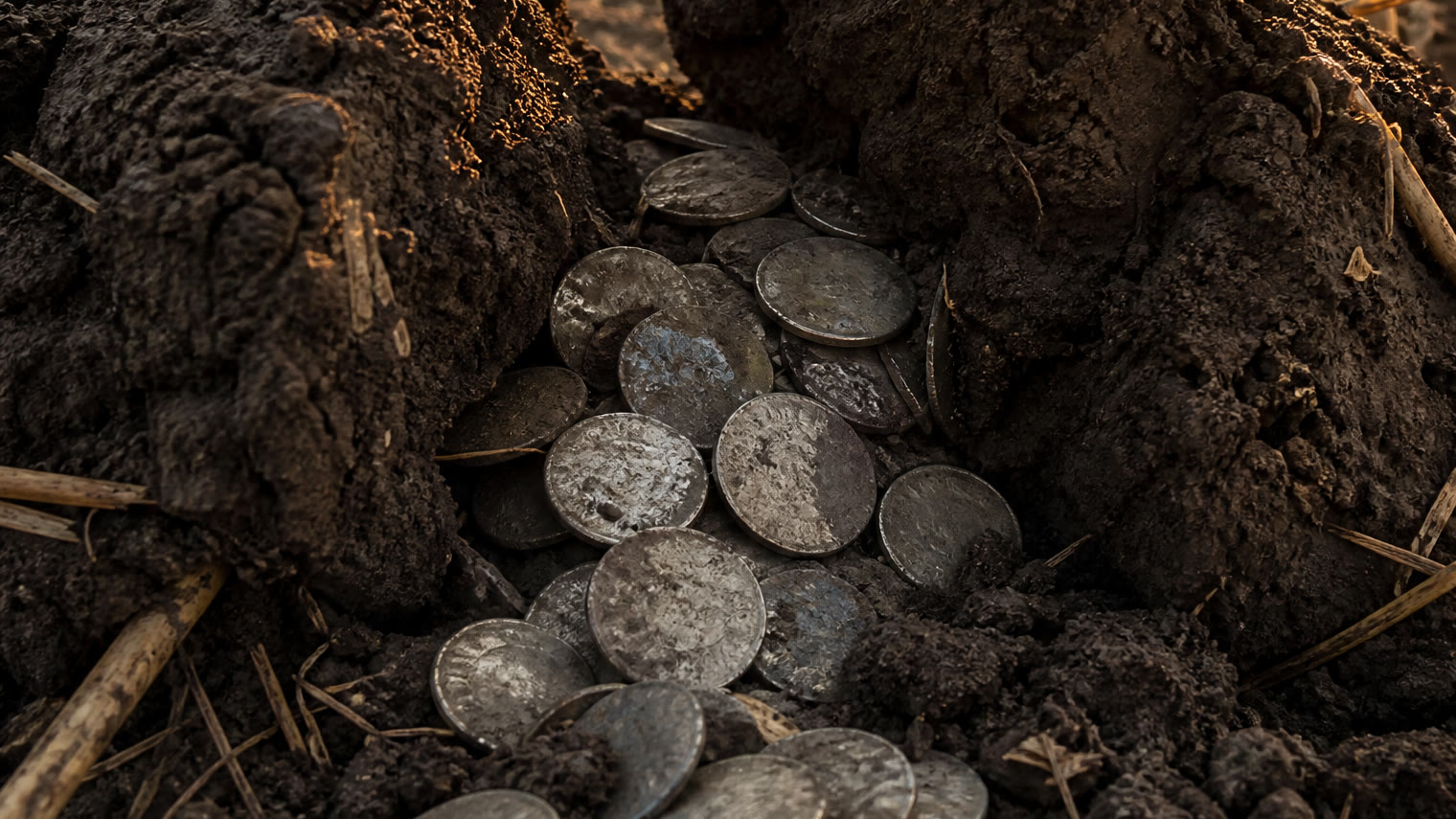
Illustration generated with AI for DomiVerseX
In April 2026 two men stopped digging after 19 coins and made a phone call. What came out of that Norwegian field afterwards was still being counted six months later.
This article contains affiliate links. If you buy through them, we may earn a small commission at no extra cost to you.
On 10 April 2026 two men, Rune Sætre and Vegard Sørlie, walked across a farm field with their metal detectors. The field belongs to Mørstad farm, near Rena in Norway. Grain grows there. Then the detectors started to beep.
Out of the soil came silver coins. The two men found 19 of them. You could count that many on your fingers and toes and still have one toe left over. Then they did something that took real self-control. They stopped digging and called the archaeologists.
The county archaeologist, May-Tove Smiseth, later called it an exemplary case, according to Innlandet county council. It matters to you for a simple reason. If you ever find something old in the ground, the best thing you can do is what they did: leave it where it is and tell someone who knows.
The count that would not stop
Smiseth expected a few hundred coins at first. The field had other plans.
By 30 April 2026, just 20 days after the first beep, the count was over 3,150. By 9 May it was over 4,000. Before the summer it stood at 4,886.
Then it looked finished. A search with ground radar found nothing more, so the farmer, Ole Erik Hørstad, sowed his grain as usual. After the harvest the team came back with an excavator to reach deeper soil. On the last weekend of September, Hørstad himself picked up coin number 5,000. It was a German type called an Otto-Adelheid penny, Science Norway reported.
How many is 5,000 coins? If you counted one every second without a break, you would be counting for almost an hour and a half.
And it kept growing. On 1 October 2026 the count was about 5,200. If the archaeology news site archaeologymag.com has it right, the number was about 5,500 by 10 October, and Florent Audy of the Museum of Cultural History in Oslo expected it to pass 6,000. Those figures will be out of date by the time you read this. "More than 5,000" will not be.
This is the largest Viking Age coin hoard ever found in Norway. Each of those words counts: coins, Viking Age, Norway. If the county council's figures are right, the old record was a hoard of about 1,849 coins found at Årstad in Egersund between 1836 and 1843. Mørstad is well over twice that size, and close to three times if the October count holds. If Innlandet county council is right, the last big find of this kind in Norway was about 964 coins in Trondheim in 1950. That was 76 years earlier, a wait as long as a whole human life.
Whose money was this?
Most of the coins are not Norwegian at all. They are mostly English and German, with some Danish and Norwegian ones. They carry the names of rulers such as Cnut the Great, Æthelred II and Otto III. Some of the English coins also name the men who made them, and a few of those names are Norse: Beorn, Aslac and Cetil.
The oldest coins were made in the 980s and the youngest in the 1040s. That is a spread of about 60 years. Imagine a jar of coins in 2026 with dates running all the way back to the 1960s.
Why so much foreign money? Because before King Harald Hardrada, every coin used in Norway came from somewhere else. A coin was worth what its silver weighed. Hardrada came home after years in Byzantium and started Norway's own coinage after 1046. By the time he died in 1066, about two out of every three coins in Norway were Norwegian, Science Norway explains.
Four of Hardrada's very first pennies are in this hoard, and they are its youngest coins. Only about 15 to 20 of those earliest coins were known anywhere before this find, according to Svein Gullbekk of the Museum of Cultural History. Because nothing newer is in the pile, the silver was probably buried about 1047.
From 1047 to 2026 is 979 years, so the coins lay in that field for almost 1,000 years. If a new generation is born about every 25 years, about 39 generations lived and died while the silver waited.
It did not wait quietly. The coins lay in the top layer of soil, the part a plough turns over, and many years of farming had scattered them. The bag or box that once held them had rotted away. Pieces of silver cut from jewelry were found there too.
Enjoying this story?
Get a short teaser by email whenever we publish something new. No spam.
Why does this matter to you? Money looks solid, but the idea of "our own money" had to be invented. This field caught the moment when Norway's own money was only just beginning.
The twist: one coin that looked like all the others
The biggest surprise did not come out of the ground. It came out of a tray.
While the coins were being catalogued, archaeologist Anne Skogsfjord picked up what looked like one more English penny of Æthelred II. It was not. The letters on it read ONLAF R+ NORMANORV. It was a penny of Olaf Haraldsson, a king of Norway who later became the country's patron saint.
Fewer than 20 coins of Olaf Haraldsson survive in the whole world. That is fewer than the players on a soccer field at kickoff. Of this exact type, only four were known before, so this is the fifth. If The History Blog is right, three of those four are in Sweden. The only other one ever found in Norway turned up in 1924, in a hoard at Stein church. That was 102 years before this one.
The coin was struck between about 1024 and 1028. So it had been passed from hand to hand for about 20 years before it went into the ground. It shows it, too. There are knife cuts on both sides, where people long ago tested the silver.
The museum set 20 November 2026 as the day the Olaf coin goes on show at the Historical Museum in Oslo, archaeologymag.com reported. Cataloguing the rest was expected to take at least a year.
Why does this matter to you? The rarest thing in a pile can look just like everything around it. It took one careful person looking twice at coin after coin.
So why would anyone leave it?
Here is the question in the headline. Archaeologist Kjetil Loftsgarden put it plainly: "You don't forget where you buried almost 5,000 silver coins."
So the owner probably did not forget. Something stopped that person from coming back. Researchers have offered four ideas about why the silver was buried in the first place. It could have been hidden from enemies. It could have been savings, in a time without banks. It could have been a religious offering. Or it could be linked to the iron industry of the region. None of these is proven.
Think about what burying your money meant. There was no bank. The ground was the safe, and the only key was the memory of where to dig. If the one person who knew could not return, the treasure was lost to everyone.
Why does this matter to you? Your savings can be found again with a name and a number. This fortune depended on one person's memory, and something happened to that person.
The question still in the ground
When this article was written, on 12 October 2026, the digging and counting were not over. None of the reports gave the total weight of the silver, or a name for its owner.
What is known is small and sharp. About 1047, someone put a fortune into the earth in Østerdalen in Norway. Then that person walked away and never came back for it.
What happened to them?
Sources
- Enormt skattefunn fra vikingtiden, Innlandet fylkeskommune
- Record hoard from the Viking Age: Coin number 5,000 has now been dug up, Science Norway
- Four coins make the Viking hoard in Norway truly unique, Science Norway
- Rare coin of Norway's King Olaf Haraldsson in Viking hoard, archaeologymag.com
- Norway's record Viking hoard has passed 5,000 coins and more are still emerging, Arkeonews
- Buried Viking fortune unearthed in Norway, Life in Norway
- Report on Norway's largest Viking Age coin hoard, Greek Reporter
- Post on the Olaf Haraldsson coin from the Mørstad hoard, The History Blog