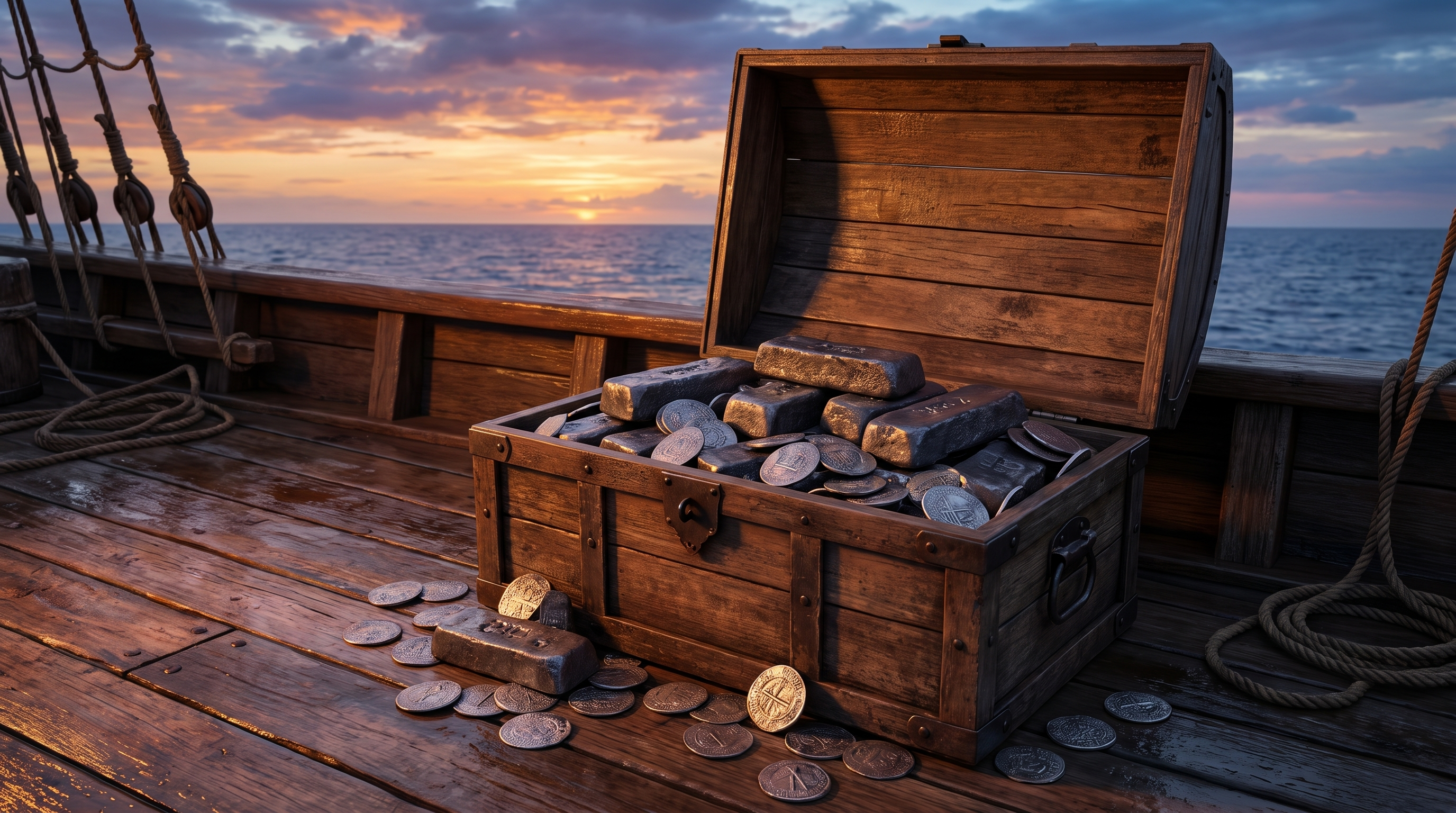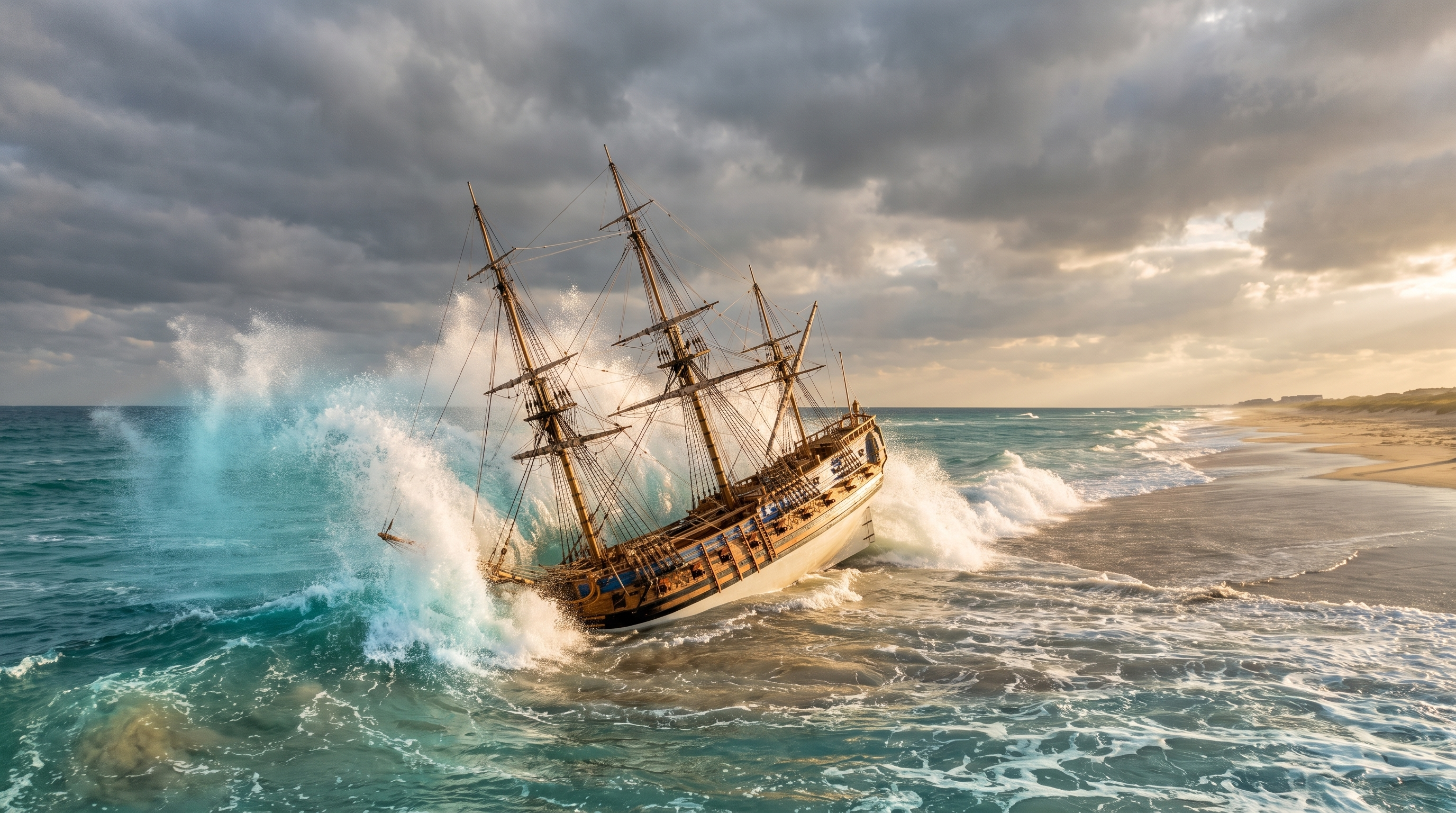
In twenty eleven, a search team found a ship that sank in nineteen forty one, torpedoed by a German submarine and resting almost three miles down.
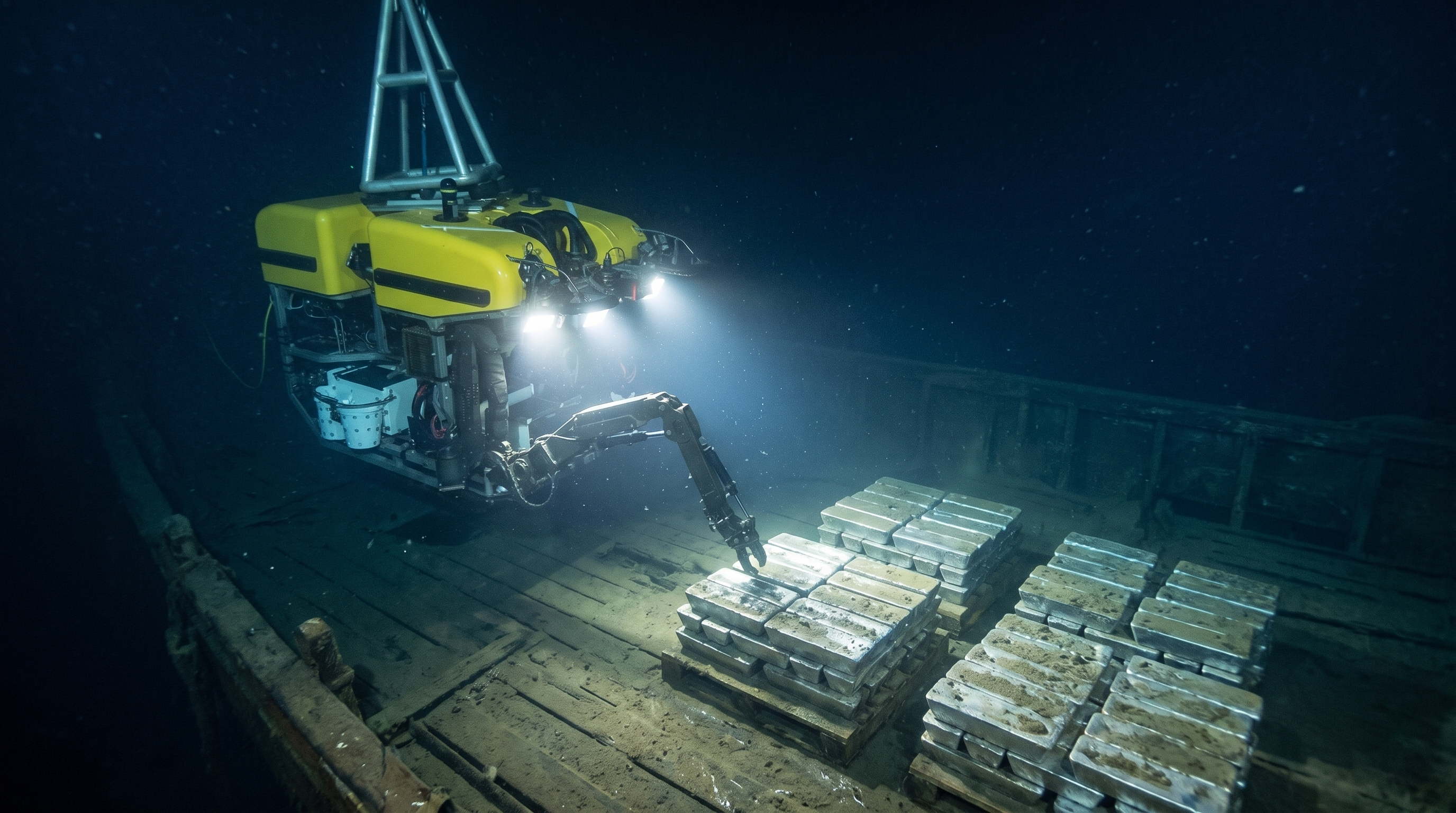
AI-generated illustration
A ship had been sitting in freezing black water for seventy years. Then a team of robots dove deeper than anyone had ever pulled treasure from a shipwreck before.
This article contains affiliate links. If you buy through them, we may earn a small commission at no extra cost to you.
In February 1941, a British steamship called the SS Gairsoppa was sailing home to Britain from India. It was carrying tea, pig iron, and something far more valuable: silver bars meant for the Royal Mint in London. According to Wikipedia and a phys.org report, the ship ran low on coal in a storm and fell behind its convoy. That made it an easy target.
A German submarine called U-101 found the Gairsoppa alone in the North Atlantic. On February 17, 1941, it fired a torpedo that struck the ship's side. The Gairsoppa sank in about twenty minutes. Only one of the eighty-five crew members survived, according to Wikipedia. If you want to picture what these wartime hunts and rescues were really like, a book like Deep Blue: Stories of Shipwreck, Sunken Treasure, and Survival walks through many similar true stories.
The ship went down about 300 nautical miles southwest of Galway, Ireland. It landed on the seafloor at a depth of nearly 4,700 metres, or about 15,400 feet, according to both shipwreck.net and gcaptain. That is close to three miles down. For comparison, the famous Titanic wreck sits at about 3,800 metres, so the Gairsoppa actually rests even deeper, as National Geographic points out. At that depth, the water pressure is crushing and no diver can go there in a normal suit. For seventy years, nobody touched it.
Finding the Wreck After Seventy Years
In 2010, a company called Odyssey Marine Exploration won a contract with the British government to search for the Gairsoppa. They were allowed to keep a large share of any silver they recovered, since the cargo had been insured and the insurance had already been paid out decades earlier. Fans of deep-sea history often collect books on searches like this one; The Search for Sunken Treasure: Exploring the World's Great Shipwrecks covers several famous cases in detail.
Odyssey found the wreck in September 2011 using sonar, according to Wikipedia. The Gairsoppa was sitting upright on the seabed, remarkably well preserved by the cold, dark water. To actually reach the silver, Odyssey could not send down human divers. Instead, they used a remotely operated vehicle, or ROV, which is basically an underwater robot controlled from a ship far above. The ROV had cameras, lights, and a robotic arm strong enough to lift heavy metal bars one at a time.
The recovery ship, called the Seabed Worker, ran its robot around the clock, according to gcaptain's photo caption. In 2012, the team pulled up about 48 tons of silver, worth roughly 38 million dollars at the time, based on figures from phys.org and the History Blog. That first haul only made up about 20 percent of the silver believed to still be inside the wreck. Odyssey went back the following year for more. If you like the idea of holding a piece of real bullion history yourself, collectors sometimes display coins in a protective silver bar storage case to keep them from tarnishing.
Enjoying this story?
Get a short teaser by email whenever we publish something new. No spam.
In July 2013, Odyssey announced a second, even bigger recovery. They brought up more than 61 tons of silver that time, according to gcaptain. Added together across both years, the company recovered around 110 tons of silver, or about 2,792 individual bars. That represented more than 99 percent of the insured silver that had been on the ship, based on figures reported by both gcaptain and shipwreck.net.
Sources do not fully agree on the exact numbers. Wikipedia describes the original cargo as an estimated 7 million troy ounces, or about 220 tonnes, of silver bullion. National Geographic instead gives a total cargo figure closer to 240 tons. The value of the recovered silver is also reported differently depending on the article and the year it was written, ranging from about 35 million to 38 million dollars. These differences likely come from currency changes, silver price changes between 2012 and 2013, and rounding between tons and troy ounces. Every source agrees, though, that this was an enormous amount of silver pulled from an extreme depth.
Odyssey Marine Exploration has described the Gairsoppa project as the heaviest and deepest precious-metal recovery ever completed from a shipwreck, a claim repeated by both gcaptain and National Geographic. It is worth noting that this is Odyssey's own description of its record, though independent outlets have reported it without disputing it.
Many of the recovered ingots still carried their original stamps, reading "HM Mint Bombay," and some were produced decades before the ship even sank, according to Blanchard Gold's market report. A small number of original bars were later sold to collectors, while thousands more were melted down into new coins and smaller bars for the public. Some treasure hunters who get inspired by stories like this even try their own searches along local beaches and shallow water with a handheld underwater metal detector, even though nothing found that way compares to a deep ocean shipwreck.
There is still more to the Gairsoppa story. Odyssey's contract allowed further searches for any remaining bullion, and the wreck itself, sitting quietly on the seafloor, still holds pieces of history beyond the silver, including a preserved compass and other fittings mentioned in National Geographic's photo report. For anyone who wants to see how these deep ocean recoveries actually look on camera, a documentary collection like the National Geographic Mysteries of the Deep: Lost Ships of World War II set covers several similar wartime wrecks.
Nobody has said whether every ounce of silver from the Gairsoppa has now been recovered, or whether more still sits in the wreck almost three miles under the Atlantic.
Sources
- SS Gairsoppa — Wikipedia
- SS Gairsoppa — Shipwreck.net
- WWII Shipwreck Gives Up 61 Tons of Silver 3 Miles Under Atlantic — gCaptain
- WWII Shipwreck Photos: 48 Tons of Silver Recovered 3 Miles Down — National Geographic
- British ship sunk by U-boat yields haul of silver — phys.org
- 48 tons of silver recovered from WWII shipwreck — The History Blog
- Top-5 Discoveries from the SS Gairsoppa — Blanchard Gold
- How Deep Is the Titanic Wreck? — Britannica