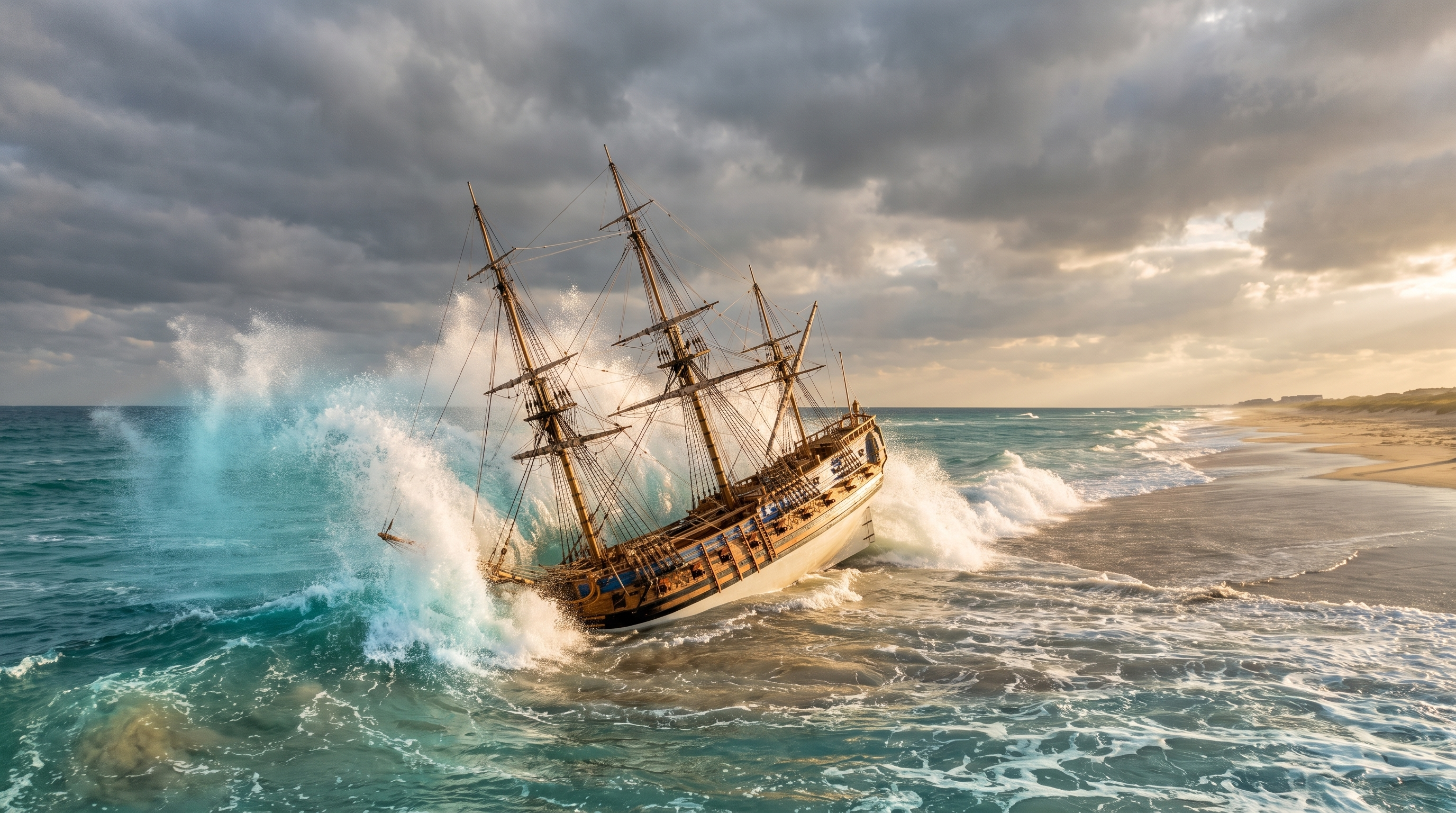
Divers pulled forty tons of silver and gold from one shipwreck, found in nineteen eighty five after a sixteen year search off the Florida Keys.
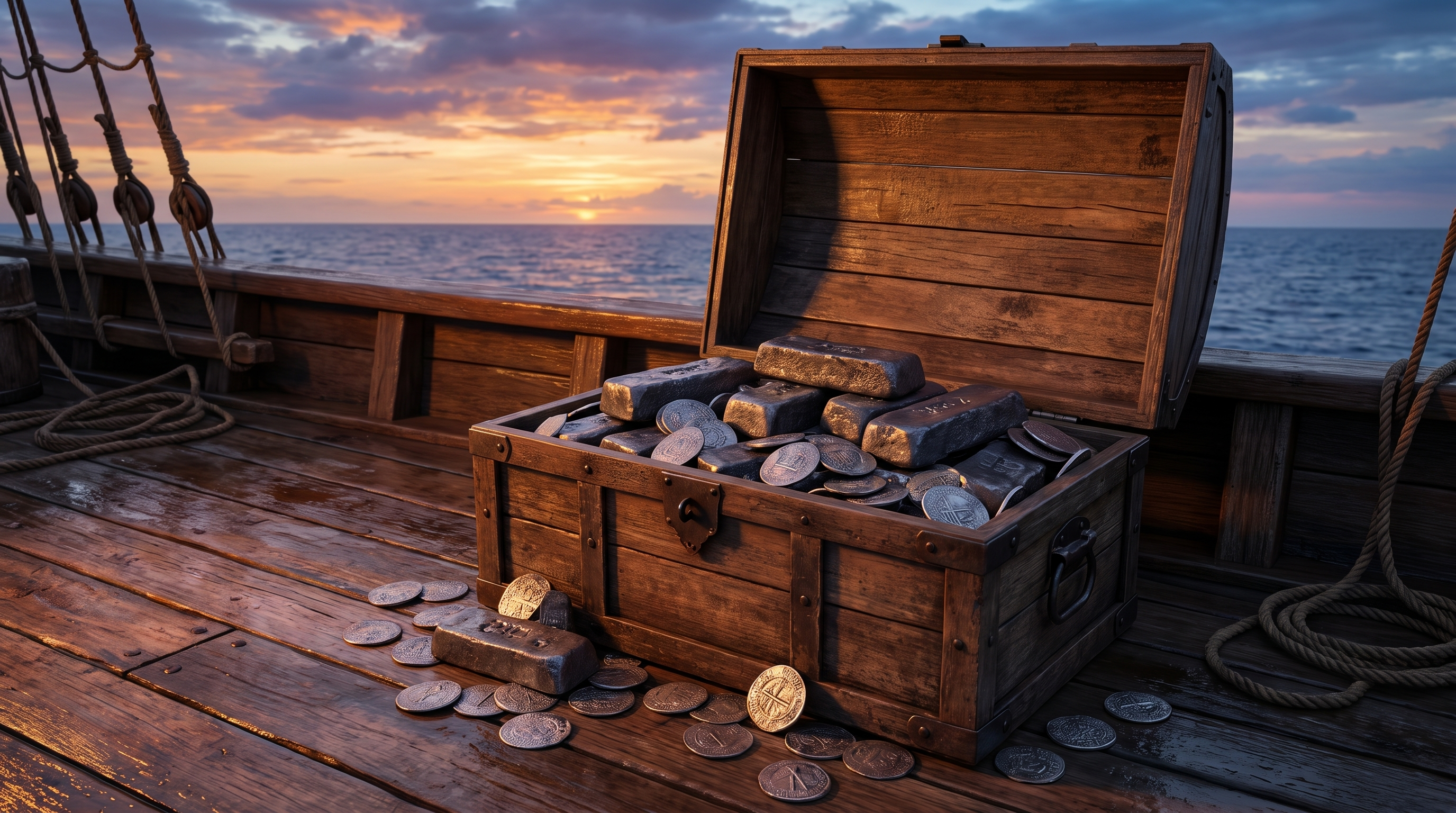
AI-generated illustration
A father spent sixteen years chasing a sunken galleon full of silver. Along the way, he lost the son who was searching right beside him.
This article contains affiliate links. If you buy through them, we may earn a small commission at no extra cost to you.
In 1969, a treasure hunter named Mel Fisher set out to find a Spanish ship that had been missing for more than three hundred years. He believed he knew roughly where it went down. What he did not know was how long the search would take, or what it would cost his family before it was over.
The ship was called the Nuestra Señora de Atocha. It was a Spanish galleon, a large armed sailing ship built to carry cargo across the ocean. In September 1622, the Atocha was part of a fleet leaving Havana, Cuba, loaded with silver, gold, and emeralds mined in South America and bound for Spain. Just one day out, a massive hurricane tore through the fleet. The Atocha sank near the Florida Keys, taking almost everyone aboard down with it, along with a fortune that would stay hidden for centuries (watch the original documentary about the wreck and its discovery).
Mel Fisher was not a professional historian or archaeologist. He was a former chicken farmer from California who had fallen in love with scuba diving and treasure hunting. He moved his family to Key West, Florida, and started a company to search for shipwrecks, using old Spanish shipping records to narrow down where the Atocha might be resting on the ocean floor. If the hunt sounds appealing, you can start your own treasure hunt with a beginner-friendly metal detector kit.
The search was slow and expensive from the start. Fisher and his crew, which included his wife Dolores and their children, spent years dragging search equipment across the seabed, finding scattered clues but not the main wreck. In 1971, they found an anchor. In 1973, divers pulled up silver bars stamped with numbers that matched the Atocha's official cargo records, proving they were on the right trail. Still, the main treasure, the bulk of the ship itself, stayed missing.
A Terrible Loss at Sea
Mel Fisher's family worked alongside him on the hunt, and that closeness made the risks of the job personal in a way few treasure stories are. On July 20, 1975, tragedy struck. A salvage boat called the Northwind, a 60-foot vessel Fisher's crew used in the search, capsized before dawn while anchored at the search site. According to multiple historical accounts, a bilge pump, the piece of equipment that pumps water out of a boat's hull, failed during the night, allowing water to fill one side of the boat while the crew slept below deck. The boat rolled over in the dark. Three people drowned: Fisher's oldest son, Dirk, who was twenty one years old and helped lead the search; Dirk's wife, Angel; and a diver named Rick Gage. The family's own account of these years puts a human face on what the search really cost.
It was a devastating blow to the Fisher family. Dirk had been one of the most dedicated members of the search team, and losing him, along with his wife and a crewmate, in a single accident might have ended the whole effort. Instead, by most accounts, the family chose to keep searching, in part because stopping would have meant Dirk's years of work, and his life, counted for nothing. Mel Fisher reportedly kept a phrase going through the years of the hunt: "Today's the day," a way of staying hopeful even after setback after setback. Different sources describe his mindset slightly differently, but they agree the search continued for another decade after the accident. The definitive Fisher biography covers this whole stretch in detail.
The years that followed brought more legal and financial struggles than treasure. Fisher's company found other wrecks and smaller amounts of cargo, enough to keep the operation funded, but not the Atocha's main hold, the ship's cargo hold where the bulk of the silver and gold would have been stored when it sank. The state of Florida and the U.S. government also argued that they, not Fisher, had the right to whatever treasure was found, which led to a long court battle. In July 1982, the U.S. Supreme Court ruled in Fisher's favor, confirming that his company could keep what it found.
Enjoying this story?
Get a short teaser by email whenever we publish something new. No spam.
Finding the Mother Lode
On July 20, 1985, exactly ten years after the accident that killed Dirk, Fisher's crew finally found what they had been searching for. His son Kane Fisher, who was captaining a search boat that day, spotted a large pile of silver bars and cannons on the ocean floor. He radioed the news back with a phrase that became famous in treasure hunting circles: "Put away the charts, we've found the main pile." Some retellings of the story note the exact date differently, with a few sources citing July 18, but the great majority of historical accounts, including Fisher's own museum, mark the discovery as July 20, 1985. Read the full story of the hunt in the definitive account of the sixteen-year search.
What they found was staggering. Accounts of exactly how much treasure was recovered vary somewhat depending on the source and the year the estimate was made, but most agree the haul included roughly 40 tons of silver and gold combined, though some sources break this down differently, describing about 24 tons of silver bullion, ingots, and coins along with more than 100 separate gold bars. Multiple accounts describe more than 100,000 silver coins recovered, with some putting the number closer to 114,000 and others closer to 255,000 depending on what was counted and when. Divers also recovered more than 70 pounds of uncut Colombian emeralds, gold chains, and religious artifacts. If you want to own a piece of the legend, replica coin jewelry inspired by the wreck is easy to find, or you can simply hold a replica coin modeled on the very pieces of eight divers pulled from the Atocha.
The total value of everything recovered has been estimated at anywhere from 400 million to 450 million dollars, and some experts who have studied the collection believe even that figure is conservative, since the Atocha's stern section, where additional cargo was likely stored, has never been fully located or recovered. That means, remarkably, that part of the ship's fortune may still be sitting on the ocean floor today.
What the Discovery Meant
For Mel Fisher, finding the Atocha was the end of a sixteen year search that had cost him money, his health, and members of his own family. He became one of the most famous treasure hunters in American history, and the objects his team recovered, silver bars, gold coins, and jewelry, are now displayed in museums, including one bearing his name in Key West, Florida. For a hands-on way to picture the ship itself, you can build your own galleon with a classic model kit. Some pieces of the treasure were also sold to collectors and museums around the world, which is part of why estimates of the total haul's value differ from source to source.
Dirk Fisher never got to see the moment his family had worked toward for so long. He died a decade before the main treasure was found, during the same kind of ordinary, dangerous work, sleeping on a boat anchored over open water, that eventually led to the discovery. His name is remembered alongside his father's whenever the story of the Atocha is told, not just as a footnote, but as a reminder of what the search actually cost.
Mel Fisher continued working in shipwreck salvage until his death in 1998. To this day, researchers and treasure hunters occasionally recover additional pieces of the Atocha's cargo, silver bars, coins, individual artifacts, from the waters off the Florida Keys. Whether the full treasure of the Nuestra Señora de Atocha has ever truly been found, or whether more of it is still down there, is a question nobody has been able to answer for certain.
Sources
- Mel Fisher — Wikipedia
- Mel Fisher — Grokipedia
- The World's Most Valuable Shipwreck: The Nuestra Senora de Atocha — Maritime Executive
- "Today's the Day": The Life and Legacy of Mel Fisher — Treasure Hunters Journal
- For 17 Years, Divers Scoured the Waters Off Key West — Yahoo Style Canada
- Who's Mel Fisher? Why is Key West celebrating? — AOL/News
- Atocha: The Most Valuable Shipwreck Find in History — CoinWeek
- Gold & Silver Bars of the Atocha — FindBullionPrices.com
- MelFisher.org — 1622 Galleons
- Commemorating the Atocha Shipwreck — FAU Research Daily