Hundreds of millions of Pablo Escobar's dollars may still be buried in Colombia. So why can't anyone find them?
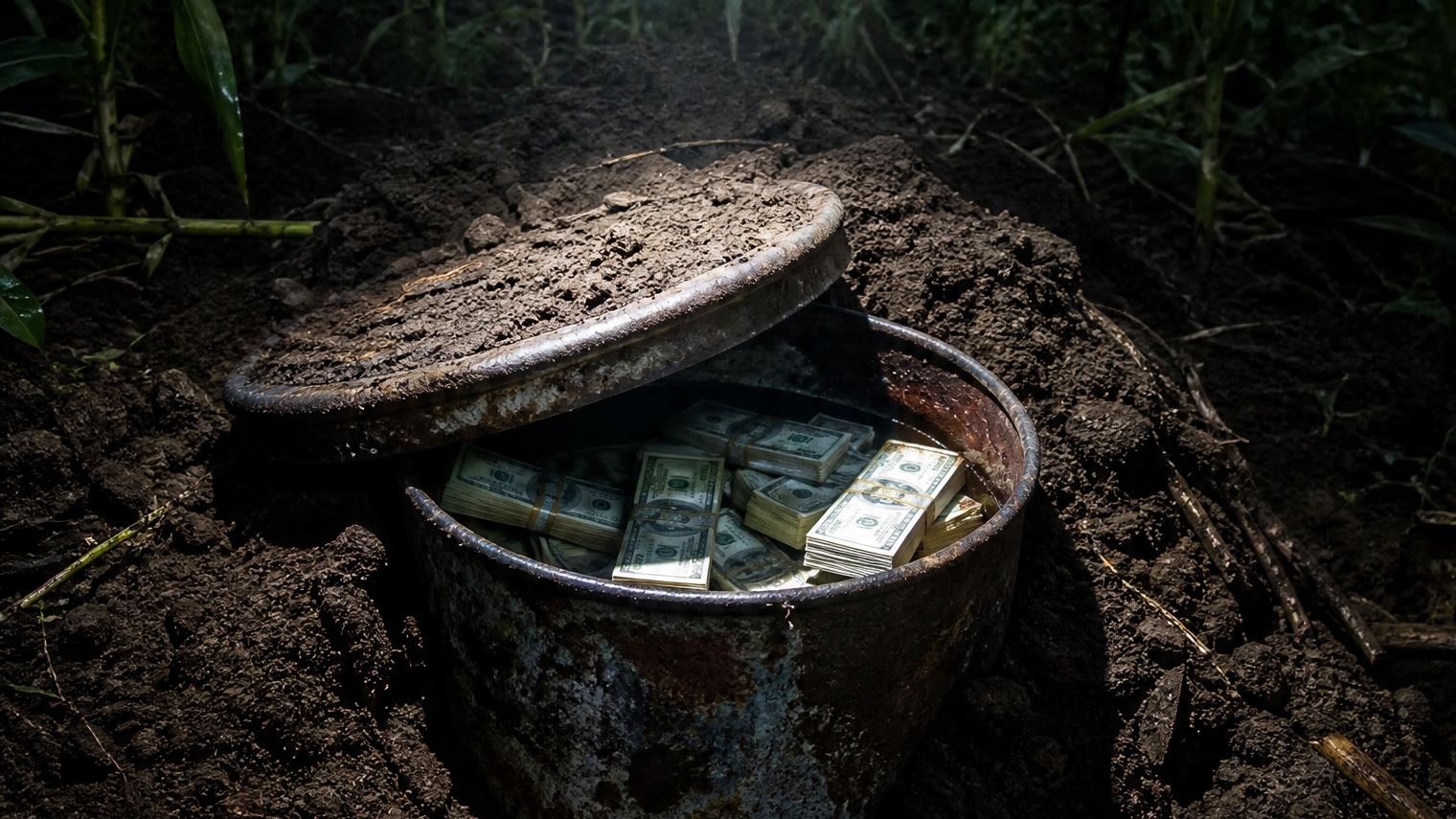
AI-generated illustration
A fortune measured in billions, hiding places that died with one man, and more than 30 years of sledgehammers, shovels and rumors. Here is what treasure hunters have actually found.
This article contains affiliate links. If you buy through them, we may earn a small commission at no extra cost to you.
Picture a hillside farm near Medellín, the green city in the mountains of Colombia. A man with a shovel is not planting anything. He is looking for money that a dead drug lord may have buried there decades ago. Scenes like this have played out again and again since the early 1990s, and the man they are chasing is Pablo Escobar.
Let's be clear about where the money came from. Escobar led the Medellín cartel, which smuggled huge amounts of cocaine into the United States. His business was built on violence, and it cost many lives: police officers, judges, journalists, politicians and ordinary people caught in bombings. This story is not about admiring him. It is about a strange puzzle he left behind: a mountain of cash that nobody has ever fully accounted for.
How rich was he, really?
Nobody has a bank statement for Escobar, so every number here is an estimate. Britannica puts his net worth at about $25 billion, and some outlets, such as Colombia One, go as high as $30 billion. To feel that size: if you counted one dollar every second, day and night, $25 billion would take you roughly 790 years.
Britannica also says the cartel was earning roughly $420 million a week at its peak. That is about $700 every single second, faster than you could read this sentence. Money arrived so fast that it could not all go into banks. Much of it was stacked in houses, warehouses and fields, a bit like an old world map covered in secret X marks that only a few people could read.
Why does this matter to you? Because it explains the whole treasure hunt. Cash hidden in walls, holes and home safes does not show up in any record. When the people who hid it disappear, the map disappears too.
The rats, the water and the rubber bands
The strangest clues come from Escobar's own brother, Roberto Escobar, who handled the cartel's books. In his 2009 memoir, The Accountant's Story, he wrote that "each year we would write off 10% of the money because the rats would eat it in storage or it would be damaged by water or lost," as quoted by TheJournal.ie. That is one dollar out of every ten, simply gone, like leaving a tenth of your groceries to rot every week.
You will often see the headline that Escobar lost "$2.1 billion a year" this way. Be careful: that figure is a media calculation built on the $420 million weekly estimate, not a number Roberto counted himself. Treat it as a rough guess.
Roberto also claimed the cartel spent about $2,500 a month just on rubber bands to hold stacks of bills together. That is about what a family might pay in monthly rent in many cities, spent only on rubber bands. It sounds like a joke, but it shows how much paper money was piled up in places no bank ever saw, inside something closer to a treasure chest than a vault.
Where people have searched
When Escobar was shot dead by Colombian police on a Medellín rooftop on 2 December 1993, the exact locations of many stashes were probably lost with him and the men around him. Since then, the search has turned his old properties into Swiss cheese.
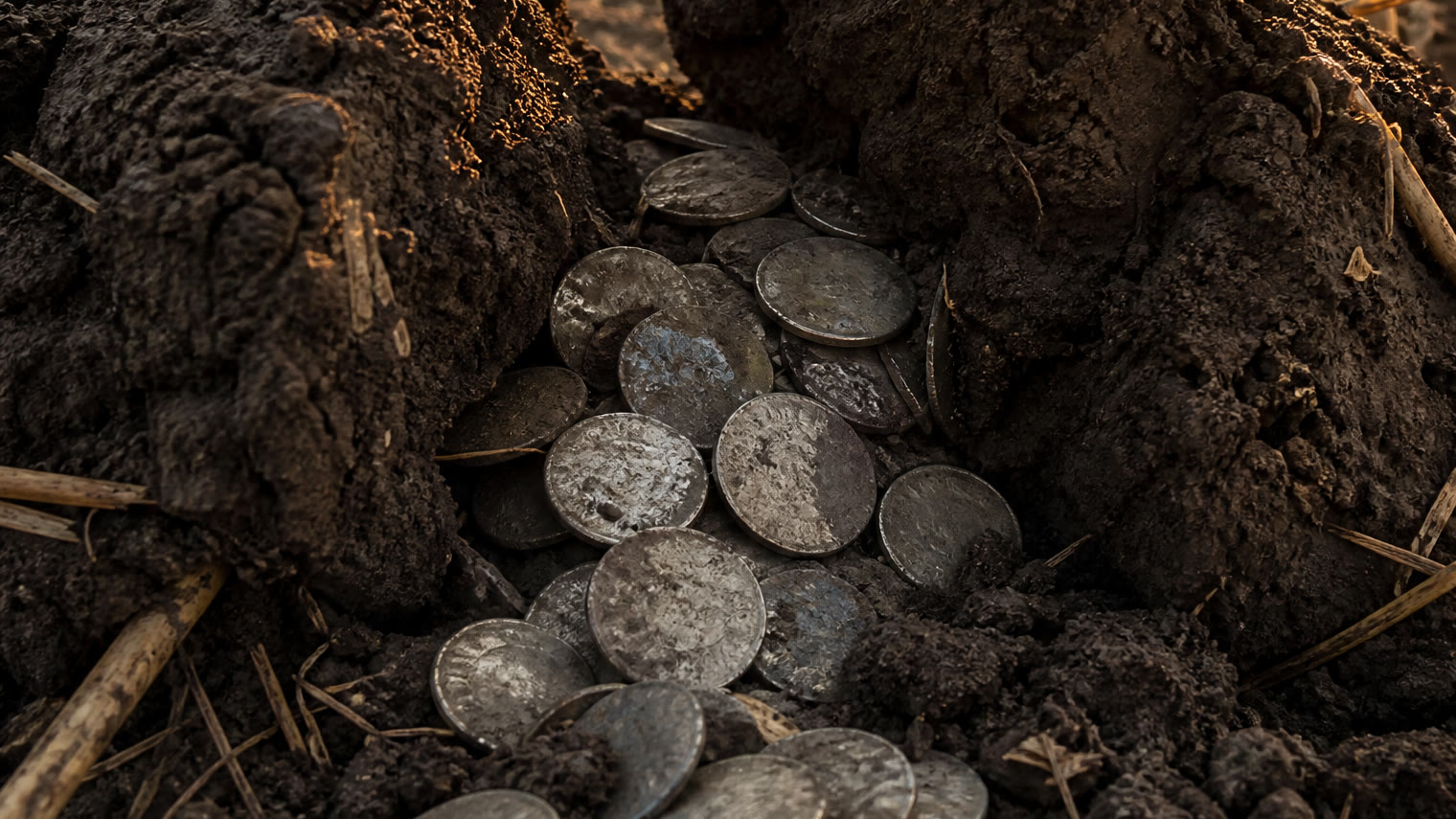
La Catedral. This was the private prison Escobar built for himself in the hills above Medellín. After he escaped in 1992, locals came with sledgehammers and shovels. The Daily Beast reports the rumor that cash had been buried there in milk cans, each reportedly holding a million dollars. One local told the site: "We never found anything. Escobar's men, who knew where everything was, managed to get there first." Today monks run the place.
La Manuela. His lakeside mansion near the town of Guatapé was bombed in 1993. Atlas Obscura notes that "the walls are filled with holes where people have searched for stashed money," and that locals say nobody has ever found any.
Hacienda Nápoles. His giant ranch, with its private zoo, was also raided. According to Atlas Obscura, people have sneaked in, once even with a backhoe, to dig up lawns and floors. The estate is now a theme park, and the descendants of Escobar's imported hippos still roam the region.
The house next door. In August 2014, according to InSight Crime, two armed men posing as utility workers entered a home beside Escobar's last residence, told the owner they had come for something "El Patrón" left there, and dug up the floor. After about half an hour they left with nothing.
Miami Beach. In January 2016, workers demolishing Escobar's former waterfront mansion found a small safe under a marble tile. UPI reported the owner believed it had been emptied within the previous 30 days. A second, much larger safe turned up in the foundation. CBS News reported the owners planned to crack it open, but its contents were never made public in those reports.
Enjoying this story?
Get a short teaser by email whenever we publish something new. No spam.
The Mónaco building. His fortified apartment block in Medellín was blown up in February 2019 and replaced with a memorial to the victims of drug violence, as Euronews reported. Many locals welcomed the change.
On television. Discovery Channel's series Finding Escobar's Millions has sent treasure hunters back to Colombia for more than one season. Its starting point is that Escobar buried stashes of cash across the country and that much of it has never been found. If even a small share of a fortune estimated in the billions is still underground, that could mean hundreds of millions of dollars.
The big twist: the one "find" the family itself denied
Here is where the story gets messy. In September 2020, Escobar's nephew, Nicolás Escobar, told the Colombian channel Red+ Noticias that he had found about $18 million in a plastic bag hidden inside a wall of one of his uncle's old houses in Medellín, according to The National. He said many of the bills had rotted and become useless. For scale, $18 million in $100 bills would weigh roughly 180 kilograms, heavier than two grown men.
It sounded like the jackpot every treasure hunter dreams of. Then Nicolás's own father, Roberto Escobar, called it a lie. "Nicolás is fooling the world," Roberto said in an audio message, adding that what his son was saying was "totally false," as reported by El Tiempo. Roberto said the property in question was his own home, where he had lived for years.
So the most famous "discovery" of Escobar's money rests on one man's word, and the family's own accountant says it did not happen. That is the pattern with this treasure: loud claims, very little proof.
A viral story you should not believe
You may have seen a clip claiming a Colombian farmer dug up $600 million of Escobar's cash and handed it to police. It spread widely on social media, but there is no official confirmation of it, and Colombia One reports the story was debunked by police. Treat it as internet folklore, not news.
Why nobody knows how much is left
There are three big reasons the total is a mystery.
First, a lot of the money probably never stayed hidden. Escobar's son, Juan Pablo, now known as Sebastián Marroquín, told Infobae that "when we left the country after his death, the Government took everything." He also said his father "didn't know how many millions he had."
Second, money was likely moved through front men and partners, and some of them may have quietly kept it. Marroquín has said he knows where part of the fortune went but will not say, citing threats to his family.
Third, cash rots. If Roberto is right that a tenth of it was lost every year to rats and water, then any bag still buried in a damp wall today may be worth little more than compost. Even a real find could be like opening a lunchbox full of mush.
What this means today
Medellín itself has changed enormously since the 1990s. It is now known for cable cars, murals and tourism, and many locals are tired of their city being famous for one criminal. If you visit, a good Colombia travel guide will point you to the city's museums, parks and food rather than a dead man's hiding spots. That shift matters, because every viral treasure clip keeps the old image alive. The Medellín skyline today looks nothing like the fortress city of the 1980s.
My honest take: most of Escobar's money is probably gone, seized, spent, eaten or quietly absorbed by the people who knew where it was. But "probably" is doing a lot of work in that sentence. Nobody has ever produced a full list of his stashes, and the holes in the walls of La Manuela show that plenty of people still believe something is out there.
So is there still a bag of cash sealed inside some Colombian wall, slowly turning to dust? Or did the last real secret die on that rooftop in 1993?
Sources
- Britannica: How Rich Was Pablo Escobar?
- TheJournal.ie: Pablo Escobar lost $2.1 billion in cash each year
- The National: Pablo Escobar's nephew finds $18m bag of cash
- El Tiempo: Roberto Escobar desmiente historia de caleta hallada
- InSight Crime: Is Pablo Escobar Treasure Hunt Linked to Hitman's Early Release?
- UPI: Empty safe, 'suspicious' cylinder found in Pablo Escobar's Miami home
- Atlas Obscura: La Manuela Hacienda Ruins
- Infobae: Sebastián Marroquín habla sobre la misteriosa fortuna del capo
- Discovery Press: Finding Escobar's Millions