In nineteen ninety six, divers found cannons buried in the sand off North Carolina.
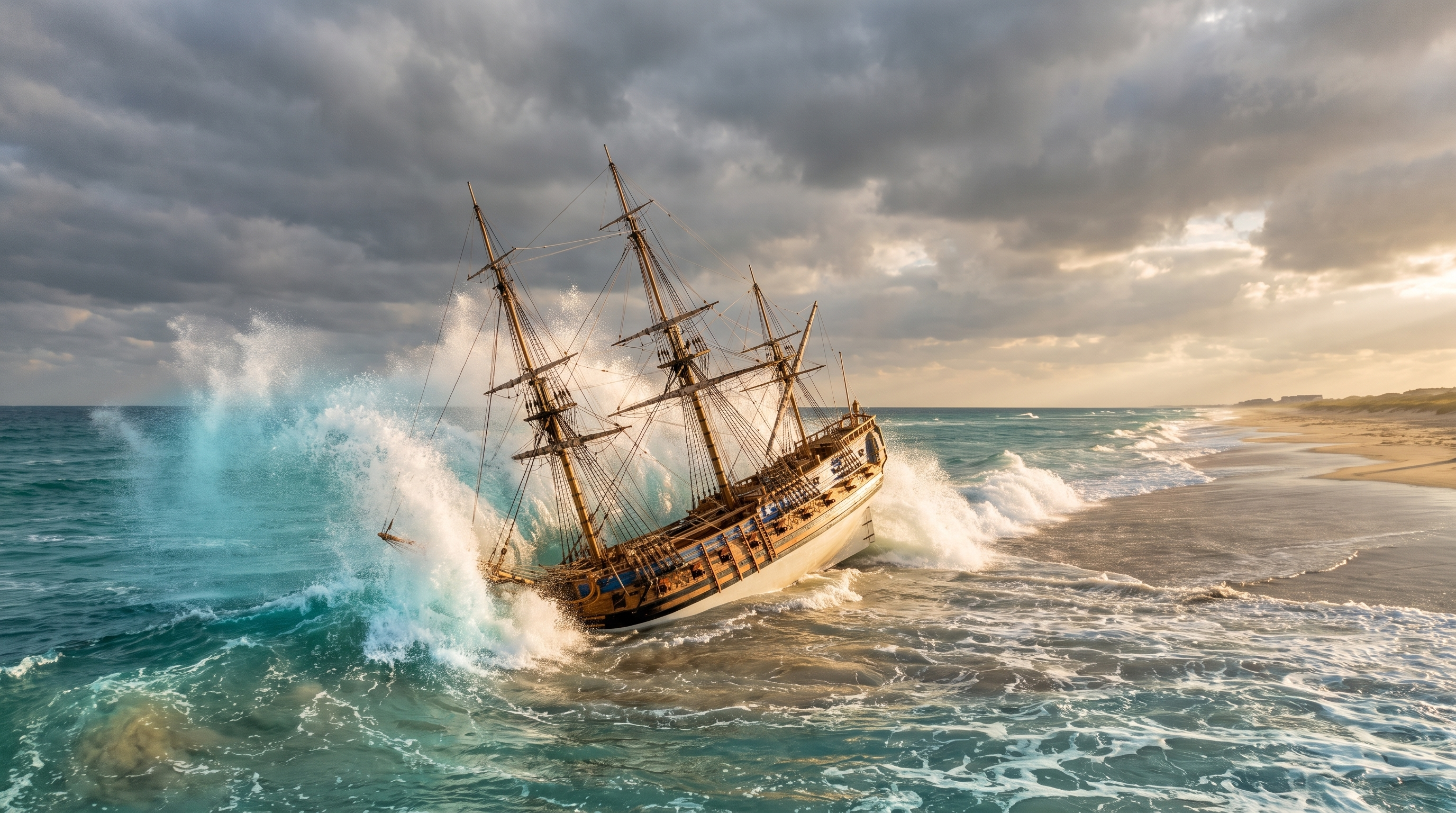
AI-generated illustration
A pirate ship crashed onto a sandbar off the coast of North Carolina in 1718. It took almost three hundred years for anyone to find it again.
This article contains affiliate links. If you buy through them, we may earn a small commission at no extra cost to you.
Edward Teach was the most feared pirate in the world. Most people knew him by a scarier name: Blackbeard. He tied burning fuses into his beard before battles so that smoke curled around his face like a demon's crown. His warship was called Queen Anne's Revenge, and it carried dozens of cannons and hundreds of terrified sailors' nightmares up and down the Atlantic coast. But this mighty ship did not sink in a great battle. It ended its life stuck on a sandbar, and its wreck stayed hidden for centuries.
How Blackbeard Got His Ship
Blackbeard did not build Queen Anne's Revenge. He stole it. In November 1717, he captured a French ship called La Concorde and turned it into his personal flagship, adding extra cannons until it carried around forty guns (Wikipedia; North Carolina History). The ship stretched about 103 feet long, roughly the length of two school buses parked end to end, and could carry up to 300 crew members when Blackbeard used it to command his pirate fleet (get the full story of the ship in this book).
In the spring of 1718, Blackbeard used the ship to blockade the harbor of Charleston, South Carolina, stopping ships from coming in or out until the town gave him medicine and supplies (North Carolina History; National Geographic). Soon after that daring move, his famous flagship met its end (this kids' pirate adventure book covers the whole tale).
The Wreck at Beaufort Inlet
Most historians agree that Queen Anne's Revenge ran aground on or around June 10, 1718, near Beaufort Inlet in North Carolina, an area then called Topsail Inlet (Wikipedia; Queen Anne's Revenge Project). The ship struck a sandbar while the rest of Blackbeard's small fleet made it through the narrow channel safely.
Here is where the story gets mysterious. Not everyone agrees on how it happened. Some old letters from the summer of 1718 suggest it was simply an accident, that the pirates were trying to steer into the harbor and misjudged the shallow water (Queen Anne's Revenge Project). But another account, a sworn statement from a crew member named David Herriot, claims Blackbeard grounded the ship on purpose. The theory says he wanted to shrink his crew down to a smaller, more loyal group and keep more of the stolen treasure for himself (Queen Anne's Revenge Project; Wikipedia). Nobody alive today can ask Blackbeard which version is true, so historians still argue about it (you can fly your own pirate flag while you decide which side you believe).
Whatever the reason, the ship was abandoned in the shallow water and Blackbeard escaped with a smaller ship and a smaller crew. He would be killed in battle just a few months later, but that is a different story for another day (read the deep dive here).
Three Hundred Years Underwater
After the wreck, Queen Anne's Revenge disappeared from history. Sand and silt slowly buried it. Generations of North Carolina fishing boats sailed right over the spot without anyone knowing a legendary pirate ship rested below.
Enjoying this story?
Get a short teaser by email whenever we publish something new. No spam.
That changed on November 21, 1996, when a private research company called Intersal Inc. found a cluster of cannons and anchors on the seafloor near Beaufort Inlet, roughly a mile off the coast of Atlantic Beach, in only about 28 feet of water (Queen Anne's Revenge Project; Wikipedia). It was shallow enough that a tall adult could almost stand and keep their head above the surface (imagine finding that with your own metal detector kit).
Even after the discovery, nobody could say for certain it was Blackbeard's ship right away. Researchers spent years studying the site before North Carolina officials felt confident enough to officially confirm in 2011 that this really was Queen Anne's Revenge, based on the size of the wreck, the number of weapons, and other clues rather than one single "aha" moment (National Geographic) (watch the real search unfold).
What Divers Found
Divers and archaeologists have been carefully excavating the site since 1997, and what they pulled from the sand tells a story of danger, wealth, and daily pirate life. One of the most important clues was a bronze ship's bell stamped with the date 1705 (Queen Anne's Revenge Project; National Geographic), which helped experts match the wreck to the right time period (see a replica pirate treasure chest like the kind Blackbeard might have used).
The site holds an estimated 20 to 30 cannons ranging from small half pound guns to massive six pounders, and by the early 2010s at least two dozen had been raised from the seabed (Queen Anne's Revenge Project; Archaeological Institute of America) (this pirate history book explains how divers do it). Teams also recovered a massive anchor weighing close to a ton, cannonballs, a sword guard, apothecary weights stamped with French symbols left over from the ship's earlier life, wine glasses, and even tiny flecks of gold hidden inside shot (National Geographic; Archaeological Institute of America) (grab your own beginner metal detector and start hunting in your backyard). By the time major recovery work slowed down, researchers estimated they had pulled up somewhere between 280,000 and more than 300,000 individual objects and fragments from the site, though most of them are tiny pieces of lead shot and broken material rather than glittering treasure (Archaeological Institute of America; Wikipedia).
The United States government even lent a hand. NOAA's Office of National Marine Sanctuaries helped fund and support expeditions to the wreck starting in 2009, including a 2011 mission that used a NOAA research vessel to help raise a large cannon from the seafloor (NOAA Office of National Marine Sanctuaries).
Where the Treasure Lives Now
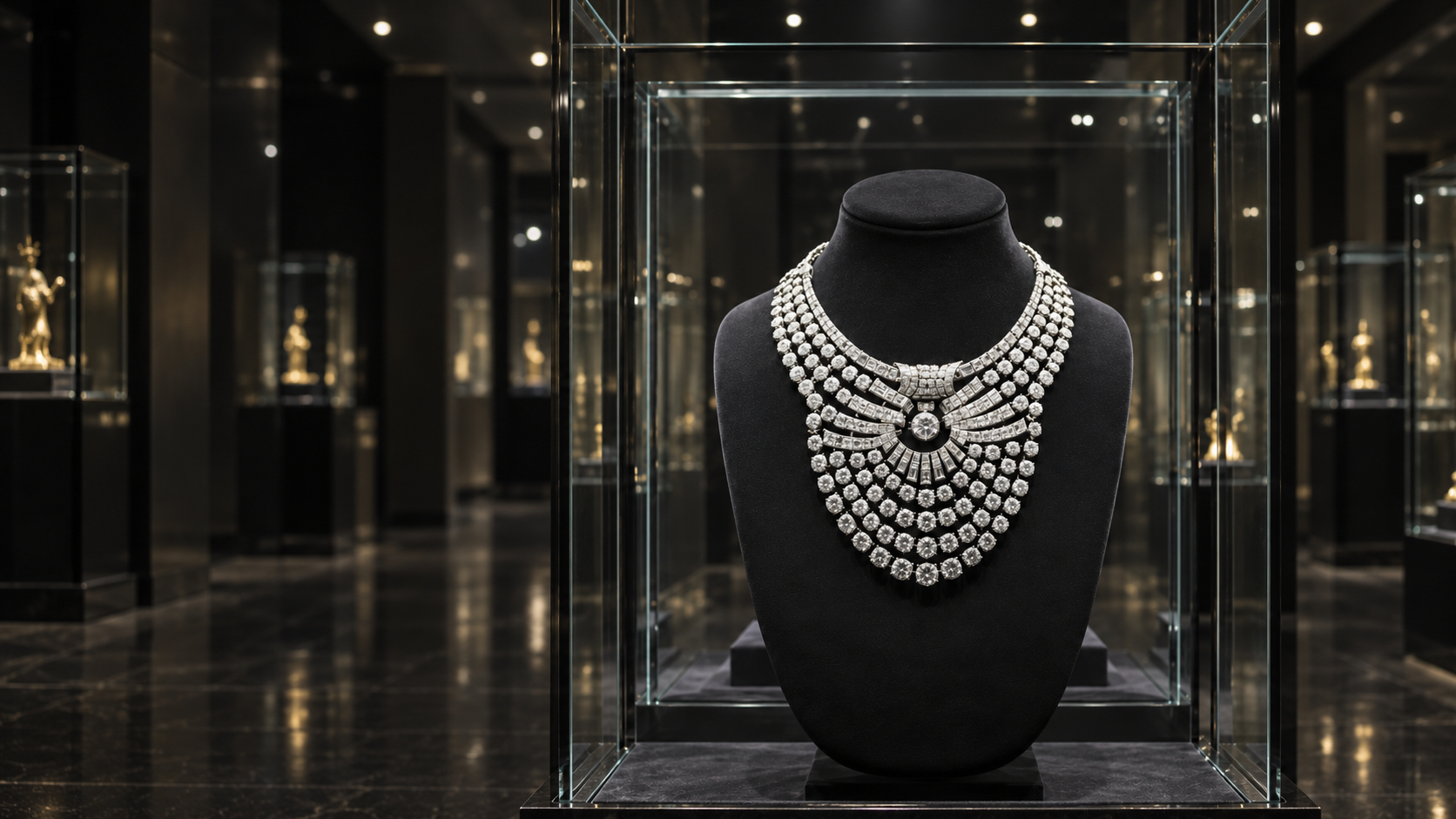
North Carolina officially owns the wreck, and the state protects the site and everything within 300 yards of it by law (North Carolina Department of Natural and Cultural Resources). Many of the recovered objects are cleaned and studied at a conservation lab before going on display, and according to some reports a few artifacts have even traveled to major museums, including the Smithsonian's National Museum of American History (Wikipedia) (this kids' book makes a great gift for young pirate fans).
Not everything has been dug up yet. Large-scale digging slowed down after 2015 amid disagreements over the project, according to Wikipedia, which means parts of the wreck may still be sitting quietly under the sand, waiting.
So what else is still down there? Nobody knows for sure. Maybe it is just more broken pottery and rusted iron. Or maybe, somewhere under three hundred years of sand off the coast of North Carolina, a piece of Blackbeard's story is still waiting for someone to find it.
Sources
- On This Day, the Fate of a Ship was Sealed — Queen Anne's Revenge Project — https://www.qaronline.org/blog/2018-06-07/day-fate-ship-was-sealed
- Blackbeard's Shipwreck Discovered — Queen Anne's Revenge Project
- Cannon — Queen Anne's Revenge Project
- Queen Anne's Revenge (C-86) — NC Department of Natural and Cultural Resources
- Queen Anne's Revenge — Wikipedia
- Blackbeard's Ship Confirmed off North Carolina — National Geographic
- Conservation of the Queen Anne's Revenge Shipwreck — Archaeological Institute of America
- NOAA's Sanctuary Research Vessel to Assist in Recovery of Cannon — NOAA
- Queen Anne's Revenge — North Carolina History Encyclopedia