Loggers once burned this tree as trash
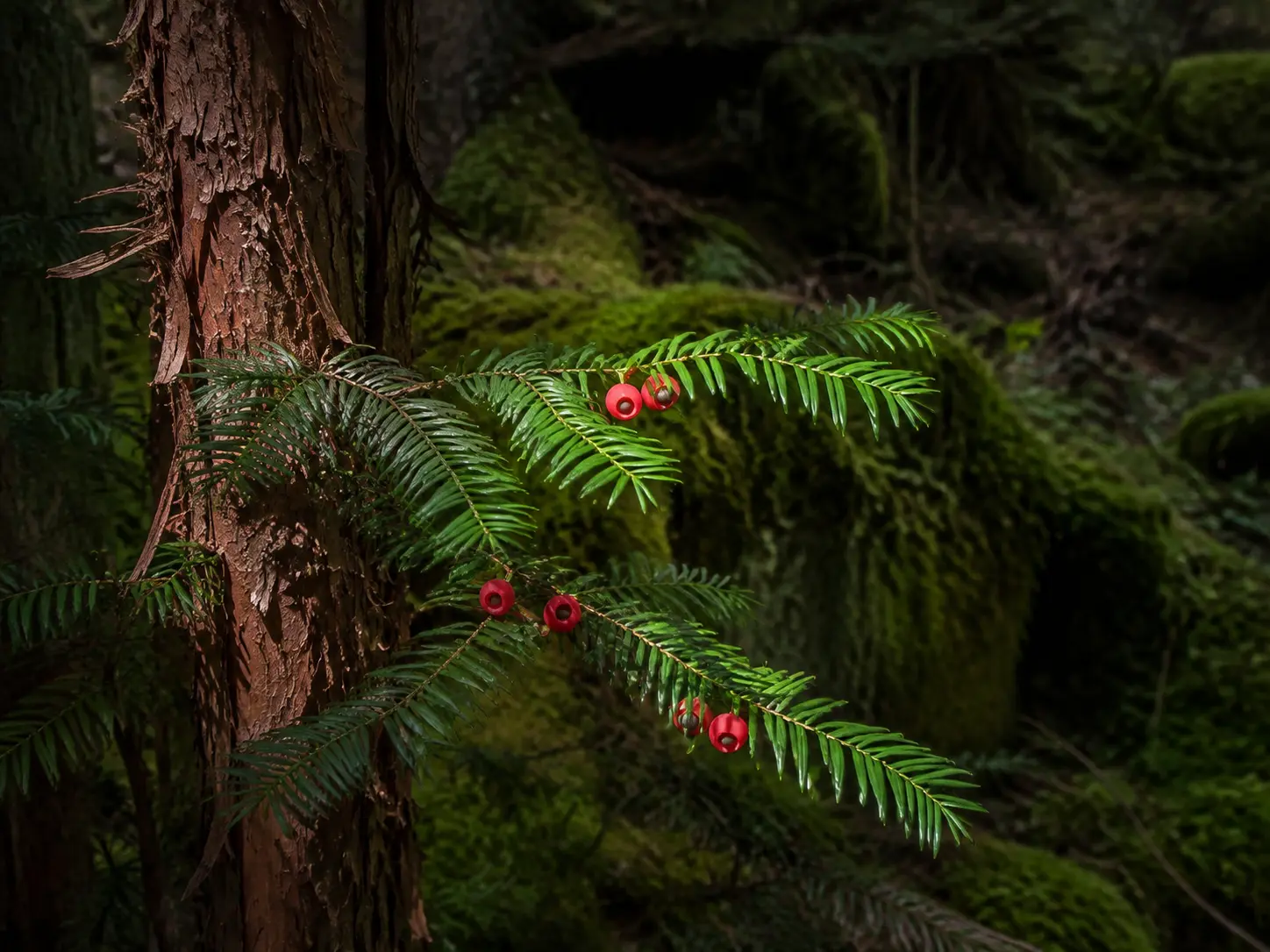
Illustration by Domi Verse X
A slow, shady forest tree that nobody wanted turned out to be hiding one of the most valuable molecules in chemistry.
This article contains affiliate links. If you buy through them, we may earn a small commission at no extra cost to you.
Under the giant Douglas firs of the Pacific Northwest grows a small, dark, crooked tree with papery purple bark. For most of the twentieth century, timber crews treated it as something to get rid of.
The tree nobody valued
The Pacific yew, *Taxus brevifolia*, grows painfully slowly. The US Forest Service says it reaches maturity at 250 to 350 years old, so a yew cut down in 1990 may have sprouted before the American Revolution. Its twisted trunks made poor lumber, and after clearcutting, burning the leftover branches has virtually eliminated yew in some areas. The American Chemical Society says it was long considered a trash tree. Telling a yew from the conifers around it comes down to the needle arrangement, and a 10x stand magnifier settles it in a second.
Then, in 1962, a botanist collecting samples for the National Cancer Institute peeled some bark and mailed it in.
One molecule, not one tree
Chemists found a compound in that bark and named it paclitaxel. To be very clear about what happened next: scientists pulled a single pure chemical out of the bark and developed it into a medicine that doctors give in hospitals. The tree itself is not a medicine. Yew is genuinely poisonous, listed by University of Utah Poison Control, and a 2023 case report describes a death after someone ate Pacific yew. Nobody should touch any part of it.
Enjoying this story?
Get a short teaser by email whenever we publish something new. No spam.
The bigger problem was arithmetic. Early extraction needed roughly 12 kilograms of dried bark, about the weight of a two-year-old child, to get half a gram of the compound. Chemical & Engineering News reports that one 40-foot yew yielded barely half a gram, while ACS figures suggest around six smaller trees for the same amount. You will often see "six 100-year-old trees per patient" quoted flatly. It depends entirely on tree size, and sources disagree.
Peeling the bark is fatal. Bark carries the tree's food supply, so a stripped yew dies. The National Cancer Institute puts it plainly: harvesting kills the tree. Fieldwork like that runs on notes taken in the rain, which is what a weatherproof notebook is for.
Needles saved the forest
The escape came from chemistry. In France, Pierre Potier pulled a near-identical building block out of the needles of the common European yew. Needles grow back. Robert Holton then worked out a practical way to finish the molecule in a lab. Supply stopped depending on dead wild trees.
Chemists are still combing yew needles for relatives of that molecule. Peter Wohlleben's The Hidden Life of Trees is a good companion for anyone who has started noticing the understory.