This orchid spends its whole life underground
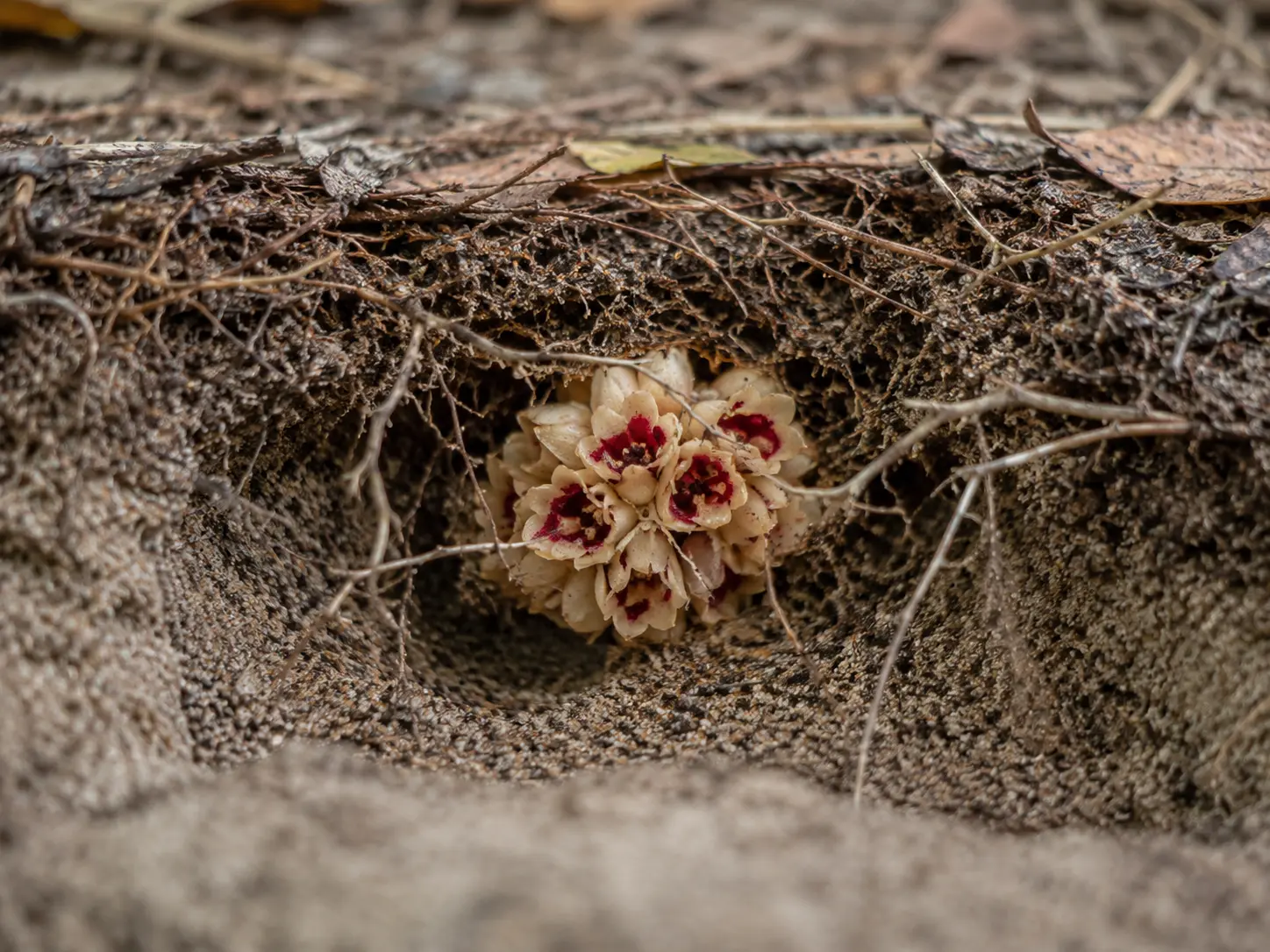
Illustration by Domi Verse X
Almost a hundred years ago, a farmer in Western Australia ploughed up a flower that had never seen daylight.
This article contains affiliate links. If you buy through them, we may earn a small commission at no extra cost to you.
Most plants push a stem into the sunshine. The western underground orchid, *Rhizanthella gardneri*, does the opposite. It stays buried, it has no green leaves, and even its flowers open down in the soil rather than in the open air.
Found by accident, in a field
In 1928 a farmer near Corrigin, in Western Australia, was ploughing his paddock when the blade turned up a strange fleshy flower head from under the dirt. Botanist Richard Rogers described it as a brand new kind of orchid that same year, and the find caused what one review in *Plants, People, Planet* calls an international sensation.
Does it really flower underground? Almost. The Australian records note that as the flower head ripens it can crack the soil above it, and the tips of its bracts sometimes poke up through the leaf litter. But it never lifts a bloom into the air the way a daisy does. Photographing something that small at ground level is exactly what a clip-on macro lens is built for.
It steals lunch from a bush
Enjoying this story?
Get a short teaser by email whenever we publish something new. No spam.
A green plant makes its own sugar from sunlight. This orchid cannot, so it takes sugar from somebody else. It taps into a fungus growing on its roots, and that same fungus is plugged into the roots of a shrub called broom bush, *Melaleuca uncinata*. Sunlight hits the shrub's leaves, the shrub makes sugar, the fungus carries it along, and the orchid eats it. Three living things, one straw. If you want to watch fungal threads do their work at home, an oyster mushroom grow kit fruits on a kitchen counter in a couple of weeks.
Nobody is sure who pollinates it
This is the honest gap. Termites, fungus gnats, flies, wasps and ants have all been suggested, and termites and ants have been seen crawling into the flower heads. Writing in The Conversation, orchid researchers say the pollinator is probably a tiny fly that burrows down thinking the flower is a mushroom. Nobody has watched the job actually get done.
Counts are small and shrinking. Australia's 2016 conservation advice listed six populations and fewer than 250 mature plants, roughly a small primary school. Since then the eastern plants were split off as a separate species, and a 2019 review counted fewer than 20 individuals left, fewer than one classroom of children. Merlin Sheldrake's Entangled Life is the book that explains why a fungus can hold a whole story like this together. Whether more are hiding under the litter, unseen, is exactly the problem with a plant nobody can see.