A mayapple patch can be one single plant
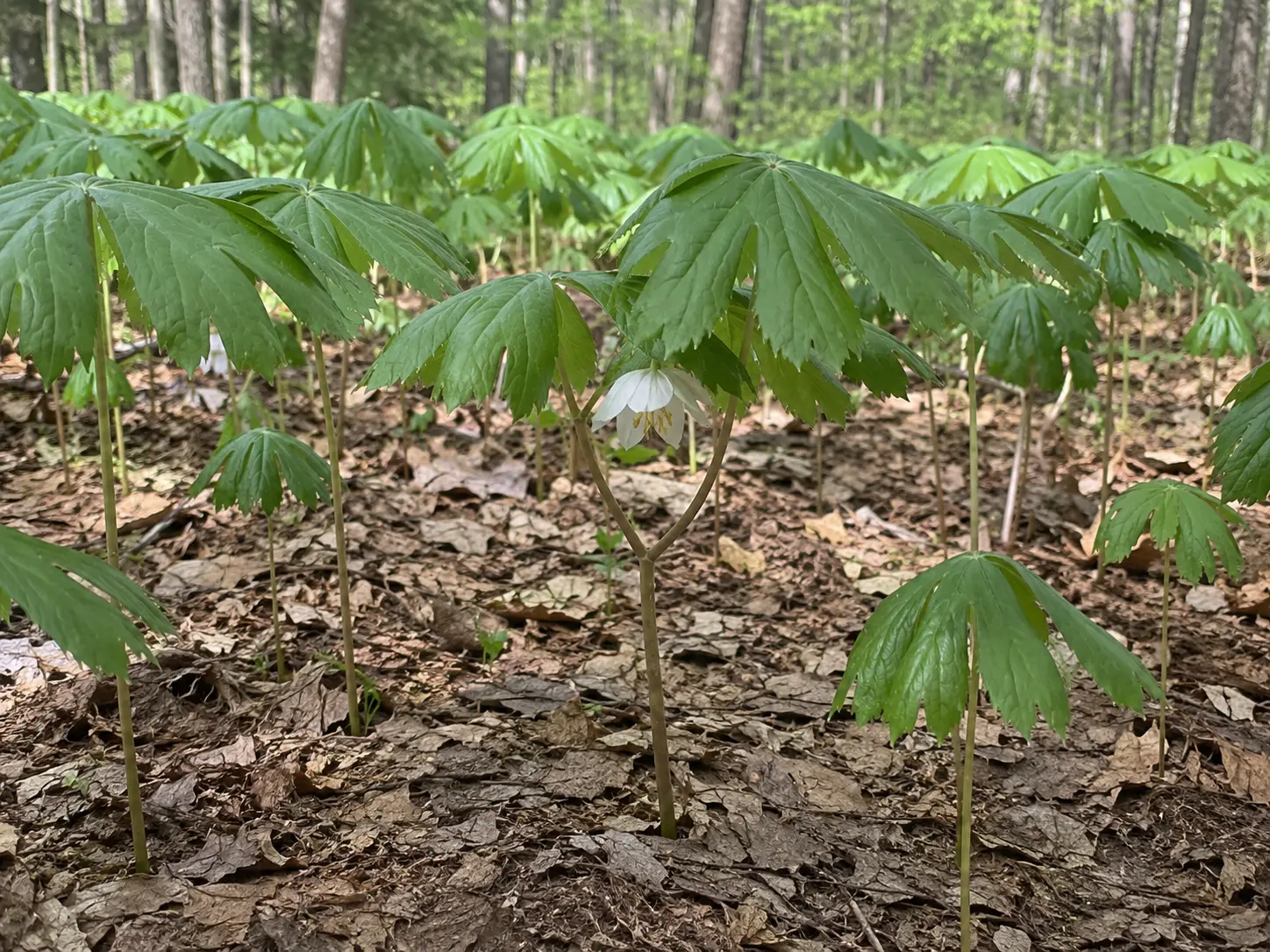
Illustration by Domi Verse X
A forest floor full of little green umbrellas, each one hiding a flower it does not want you to see.
This article contains affiliate links. If you buy through them, we may earn a small commission at no extra cost to you.
Walk into an eastern North American woodland in spring and you may find hundreds of small green umbrellas pushing up through the leaf litter. They belong to the mayapple, *Podophyllum peltatum*, and almost everything interesting about it is happening where you cannot see it.
Umbrellas with a secret underneath
Each stalk carries one or two leaves that can reach about 30 centimetres across, roughly the width of a dinner plate. The stalk joins the middle of the leaf blade instead of the edge, which is why it opens like an umbrella, as the Arkansas Native Plant Society describes.
A stem with only one leaf never flowers. Only a forked, two-leaved stem makes a bloom, and it makes exactly one: a single nodding white flower tucked into the fork between the leaves, usually hidden below them. To find it, you have to crouch down and look up, and so does a bee. Shooting upward into that gap is awkward with a bare phone, which is what a clip-on macro lens solves.
Hundreds of leaves, very few plants
Enjoying this story?
Get a short teaser by email whenever we publish something new. No spam.
Underground, a branching stem called a rhizome creeps sideways. A 2024 review in *Frontiers in Plant Science* reports that most rhizome systems add only one new shoot a year, rarely two or three, and stay connected for about six or seven years. University of Wisconsin horticulture says colonies typically grow from a single root, while the *Frontiers* authors say a patch may belong to one clone or several. Either way, a huge sheet of umbrellas is often just a handful of individuals, copied again and again.
Later the fruits drop to the ground, where eastern box turtles and small mammals eat them and move the seeds. The *Frontiers* review notes turtles are unlikely to carry seeds very far, so mayapple spreads mostly by growing, not by travelling. If you want to keep a record of what is coming up each spring, a flower press beats a phone album.
Poisonous, and interesting to chemists
This is not a plant to sample. NC State Extension rates its poison severity as high and says all parts are highly poisonous except the ripened fruit. The toxin, podophyllotoxin, is the same reason chemists paid attention. They isolated it and rebuilt it in the laboratory into etoposide, a drug approved by the FDA in 1983 and used against small cell lung and testicular cancer. The plant is not the medicine. It was only the starting material, which leaves an odd question about what else is standing quietly in the woods. Newcomb's Wildflower Guide is the classic way to learn to name what you walk past.
Sources
- Know Your Natives, Mayapple | Arkansas Native Plant Society
- Podophyllum peltatum | NC State Extension Plant Toolbox
- Demography in the understory clonal herb Podophyllum peltatum | Frontiers in Plant Science, 2024
- Mayapple, Podophyllum peltatum | University of Wisconsin-Madison Extension Horticulture
- Etoposide, StatPearls | NCBI Bookshelf