The world's most dangerous tree is protected
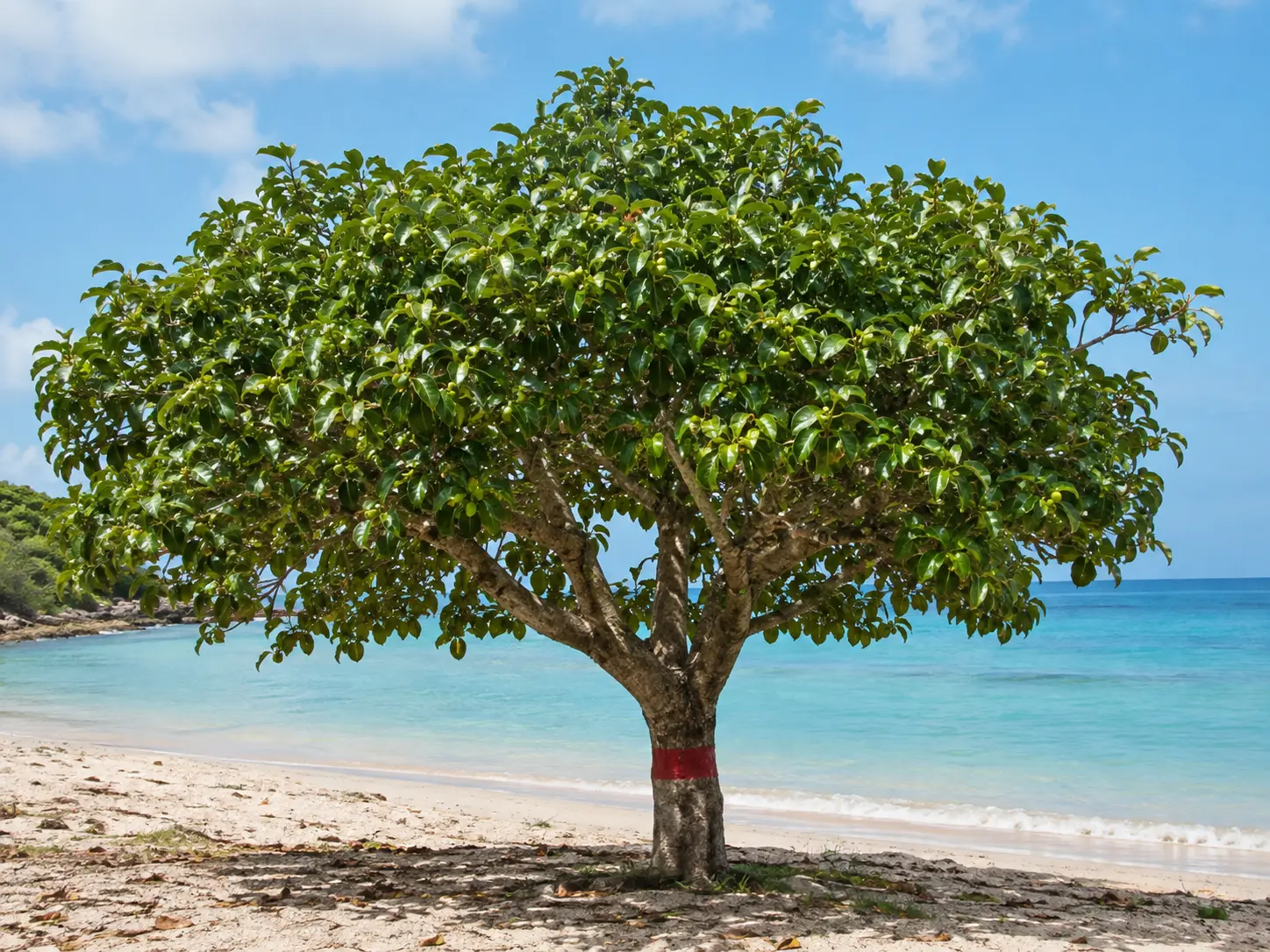
Illustration by Domi Verse X
Guinness lists it as the deadliest tree on Earth. Florida lists it as endangered and guards the few that are left.
This article contains affiliate links. If you buy through them, we may earn a small commission at no extra cost to you.
Walk a beach in the Florida Keys or the Caribbean and you might pass a neat green tree with shiny leaves and small round fruit that looks like a tiny apple. Almost every part of it is loaded with irritant chemicals.
A tree that fights back
*Hippomane mancinella*, the manchineel, holds the Guinness World Records title for most dangerous tree. It reaches about 15 metres, roughly a five storey building, and its fruit is no bigger than a golf ball. The University of Florida's extension service describes a thick, milky sap that oozes from leaves, twigs, bark and fruit and raises burn-like blisters on skin. Burning the wood is no escape. UF/IFAS reports that irritants in the smoke have caused heavy eye inflammation and even temporary blindness. This is a tree to identify from a long way off, which is what a pair of compact binoculars is for.
The rain story, and one famous bite
The most repeated claim is that rain dripping off the leaves blisters anyone sheltering underneath. It is better supported than most tree legends, but it rests on scattered patient reports rather than on controlled study. Emergency physician Jason B. Hack, writing in ACEP Now, describes people harmed by the tree's water-soluble irritants carried in leaf run-off and in puddles below. A 2024 case report in the dermatology journal *Cutis* says much the same. On a beach where the rain arrives without warning, a waterproof phone pouch is the cheapest insurance there is.
Enjoying this story?
Get a short teaser by email whenever we publish something new. No spam.
Doctors also still cite one short first-person account: British radiologist Nicola Strickland's 2000 note in the BMJ, Eating a manchineel beach apple, written after she tasted the fruit on a Caribbean beach.
A popular story claims Spanish explorer Juan Ponce de Leon died in 1521 from an arrow tipped with manchineel sap. That detail turns up far more often in modern retellings than in the historical record, so treat it as legend, not settled history.
Rare, and worth keeping
Here is the twist. In Florida the manchineel is a state listed endangered species. The Florida Natural Areas Inventory counts only about 20 surviving populations there, mostly inside parks and preserves, few enough to count on your fingers and toes. They cling to coastal berms and rock barrens near mangroves, and managers work to keep those thickets undisturbed. The tree is not useless either: UF/IFAS notes that iguanas eat its fruit and shelter in its branches.
Which raises a question chemists have not fully answered. What exactly is in that sap, and why does one shoreline tree need quite so much of it? Amy Stewart's Wicked Plants is a tour of the rest of the family.