A Cold War spy satellite broke apart in orbit, and nobody knows why
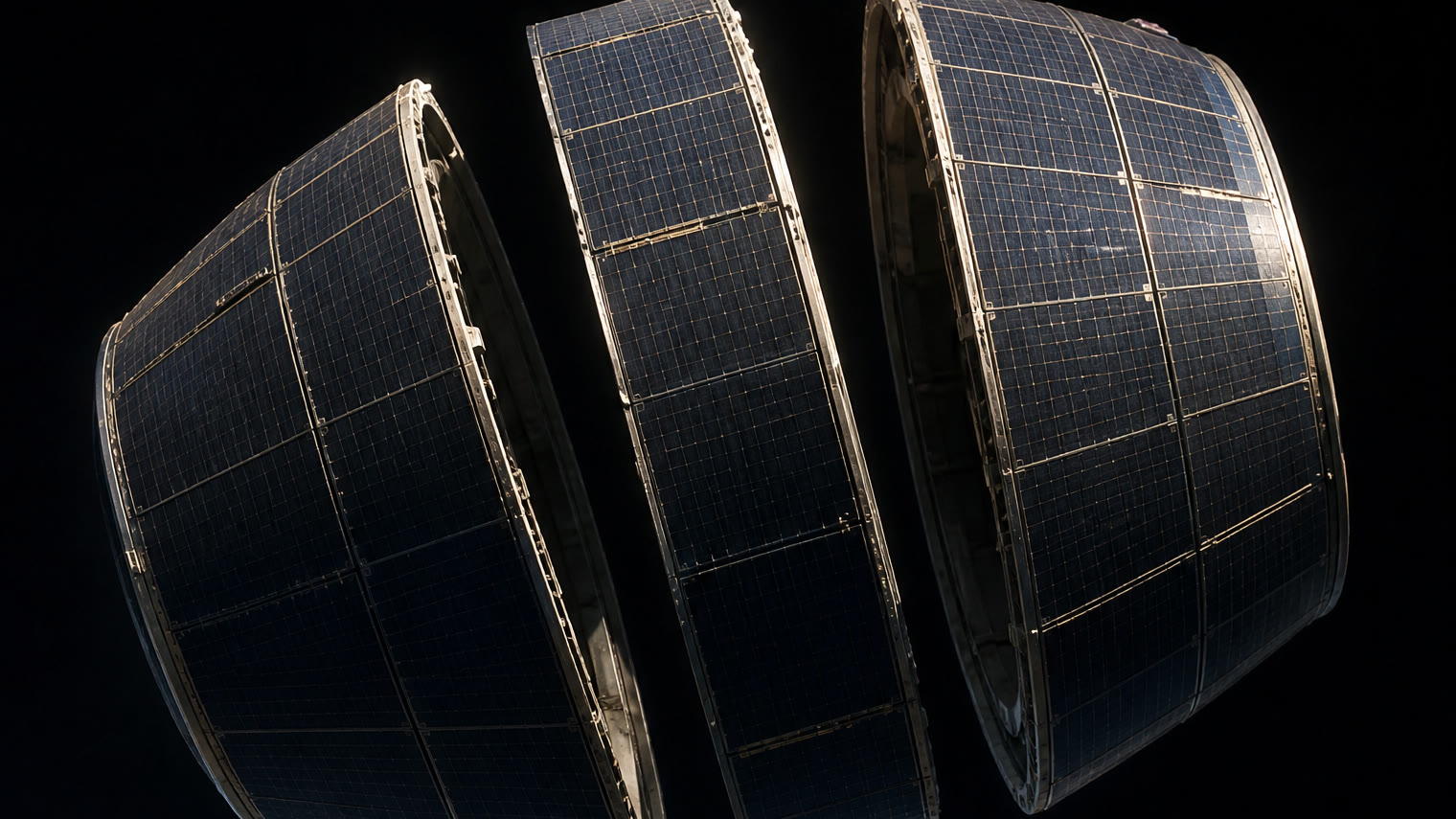
Illustration generated with AI for DomiVerseX
It was launched in secret in 1988 and kept circling long after anyone needed it. In September 2026 something happened to it that the people who track every object in orbit could not explain.
This article contains affiliate links. If you buy through them, we may earn a small commission at no extra cost to you.
On 5 September 1988 a rocket climbed away from Vandenberg, on the coast of California. It was a Titan II, and nobody in charge would describe what it carried. The official name of the thing on top was as dull as a name can be: USA 32.
This was the time of the Cold War, and USA 32 went up without an explanation. People who follow satellites as a hobby had their own idea of what it was: a spy in the sky.
It settled into a path about 775 kilometers above the ground. That is almost twice as high as the International Space Station. If you could drive a car straight up at highway speed, the trip would take almost eight hours.
Then it started doing laps. One trip around the Earth took about 100 minutes, which is about the length of a movie. That makes about 14 laps every day, at about 26,800 kilometers an hour. A passenger jet is about 30 times slower.
Why does this matter to you? Because the sky over your head is not empty. Machines that were sent up before many parents of school children were born are still there, still moving, and mostly forgotten.
38 years of going around
USA 32 kept circling for 38 years. A baby born on its launch day would have been a grown-up of 38 when the end came.
In that time it went around the planet about 200,000 times. Added together, that is about 9 billion kilometers. That is about as far as flying to the Sun and back 30 times.
Nobody planned for that. If The Space Review is right, as the space news site SpaceNexus quotes it, the satellite was designed to work for about three years. It stayed in orbit about 13 times longer than that. Reports say it was still working in 2004, which was 16 years after launch, and that it was seen spinning in 2021, when it was 33 years old.
What did it look like? No verified picture of USA 32 has been published. Reports describe satellites of its kind as a big, squat drum that people called a "tuna can". If The Space Review has it right, the later ones weighed more than 1,360 kilograms. That is about as heavy as a small family car, turning slowly in the dark.
Why does this matter to you? A machine does not vanish when people stop using it. In orbit there is no rubbish truck. What goes up at that height stays up for a very long time.
The day it came apart
On 13 September 2026, eight days after the 38th anniversary of its launch, USA 32 broke into pieces.
Four days later, on 17 September, a short notice appeared from U.S. Space Forces-Space, the military unit that tracks objects in orbit. It said the unit "confirms the fragmentation of USA 32" in low Earth orbit. It added: "No immediate threats have been identified; further analysis is ongoing." You can read the notice as the tracking site KeepTrack recorded it.
Look at the word they chose: fragmentation. Many headlines said the satellite exploded, but no official has said that. This article says "broke apart" for the same reason.
How many pieces are there? No number has been published. On 24 September, 11 days after the breakup, the public list of objects in orbit still showed no new pieces from this satellite, SpaceNexus reported. A Swiss tracking company, s2a systems, shared a video that it said showed a "large number of fragments". Newsweek wrote that it could not check that video for itself.
There is one more small clue. If the news site The Debrief has it right, the path of the satellite changed only a tiny bit at the moment of the breakup, by about 0.3 meters per second. That is the length of a school ruler every second.
And the reason? A spokesperson for the unit told Newsweek: "The cause of the fragmentation is currently unknown as analysis is still ongoing."
Why does this matter to you? The people whose job is to track objects in orbit looked at this and said, in plain words, that they do not know. That is rare, and it is honest.
Enjoying this story?
Get a short teaser by email whenever we publish something new. No spam.
The twist: the satellite had a secret name
USA 32 was not its only name. Independent satellite trackers identify it as FARRAH III, one of a family of satellites built by the National Reconnaissance Office to listen to Soviet radar signals. The family was code-named after the actress Farrah Fawcett. IFLScience wrote that it could find no clear link between her and the job the satellite did.
Here is the strange part. The public only learned what the FARRAH satellites were for in 2026, when the program was declassified, Live Science and others reported. That is the same year this one fell apart. The secret lasted about as long as the machine.
One caution belongs here. No official statement names USA 32 as FARRAH III, and the Space Force would not say what the satellite was for. So "spy satellite" is what trackers and analysts say. The government has not confirmed it for this object.
The second surprise is about old satellites in general. A dead satellite is not a quiet lump of metal. It still carries batteries and leftover fuel. About every 100 minutes, USA 32 went from baking sunlight into freezing shadow and back out again, and it did that about 200,000 times.
The leading suspicion comes from the site Spaceweather.com, as several outlets relay it. An old battery or a pressurized tank could have burst after 38 years of heating and cooling. There are other ideas. A piece of debris too small to track could have hit it, or a small space rock could have. The same reports say a weapon cannot be ruled out, and also that there is no evidence for one. None of these ideas is proven.
Why does this matter to you? Old things can fail with no warning, even when nobody touches them. That is true of a satellite, and it is true of the battery in a drawer at home.
A crowded neighborhood
USA 32 did not fly alone. More than 200 working satellites orbit within about 50 kilometers of its height. A car on a highway covers 50 kilometers in half an hour. If each of those satellites were a child, they would fill eight classrooms of 25. They include a whole fleet called Iridium NEXT.
That height has a history, too. In 2009 two satellites, Iridium 33 and Cosmos 2251, hit each other at about 790 kilometers. That is only about 15 kilometers higher than USA 32, and it happened 17 years before this breakup.
So is anyone in danger? The official answer in the September 2026 notice was calm: no immediate threats identified. The International Space Station flies at about 400 kilometers, and it and the Tiangong station are well below the height of the breakup.
Still, breakups are taken seriously. In June 2024 the astronauts on the International Space Station took shelter for about an hour, the length of a long school lesson, after a Russian satellite called Resurs-P1 broke up. By 2022 NASA counted more than 9,000 tonnes of debris in orbit. That is the weight of about 6,000 cars.
And USA 32 is not the only old satellite to come apart in autumn 2026. Do not mix the two up. On 5 October 2026 the tracking company LeoLabs detected that a different object, a Soviet weather satellite called Meteor 2-7, had fragmented. It was launched in 1981, and Starlust reported "tens of fragments". It was the second breakup of its life, after a first one in March 2004. It flies about 80 kilometers higher than USA 32 did. These are two satellites and two events, about three weeks apart.
Why does this matter to you? The weather forecast and the map on a phone depend on satellites. They all share the same sky with the old ones.
What the pieces could tell us
Finding the cause is slow work. Someone has to follow each piece and run its path backwards to the moment of the breakup. Live Science reported that this could take months or years.
There is also the question of who will do it. U.S. Space Forces-Space told Newsweek that it tracks debris to keep other spacecraft safe, and that it does not investigate why satellites break up.
When this article was written, in October 2026, no cause and no count of pieces had been published.
So the oldest question is still open. Did something hit USA 32, or did a battery that was 38 years old finally give out? And will the pieces ever tell us which?
Sources
- USA 32 Breakup Announced By Space-Track (KTOC Notice KT-20260913-19460-ANN), KeepTrack
- US Space Force Confirms Mystery Break Up of Cold War-Era 'Spy Satellite', Newsweek
- An American Cold War-era spy satellite just exploded above Earth, and nobody knows why, Live Science
- A Secret US Spy Satellite Launched In 1988 Has Unexpectedly Shattered Into Pieces, Posing Danger To Other Satellites In Low Earth Orbit, IFLScience
- A 1988 U.S. Military Satellite Broke Apart in One of Orbit's Busiest Bands. What Is Confirmed, and What Is Not, SpaceNexus
- Mystery Surrounds Destruction of U.S. Spy Satellite in Orbit as Officials Assess Possible Danger to Existing Spacecraft, The Debrief
- Cold War US spy satellite breaks apart in orbit, debris raises collision fears, Ynetnews
- Satellite launched in 1981 breaks up in low Earth orbit; debris may put other spacecraft at risk, Starlust