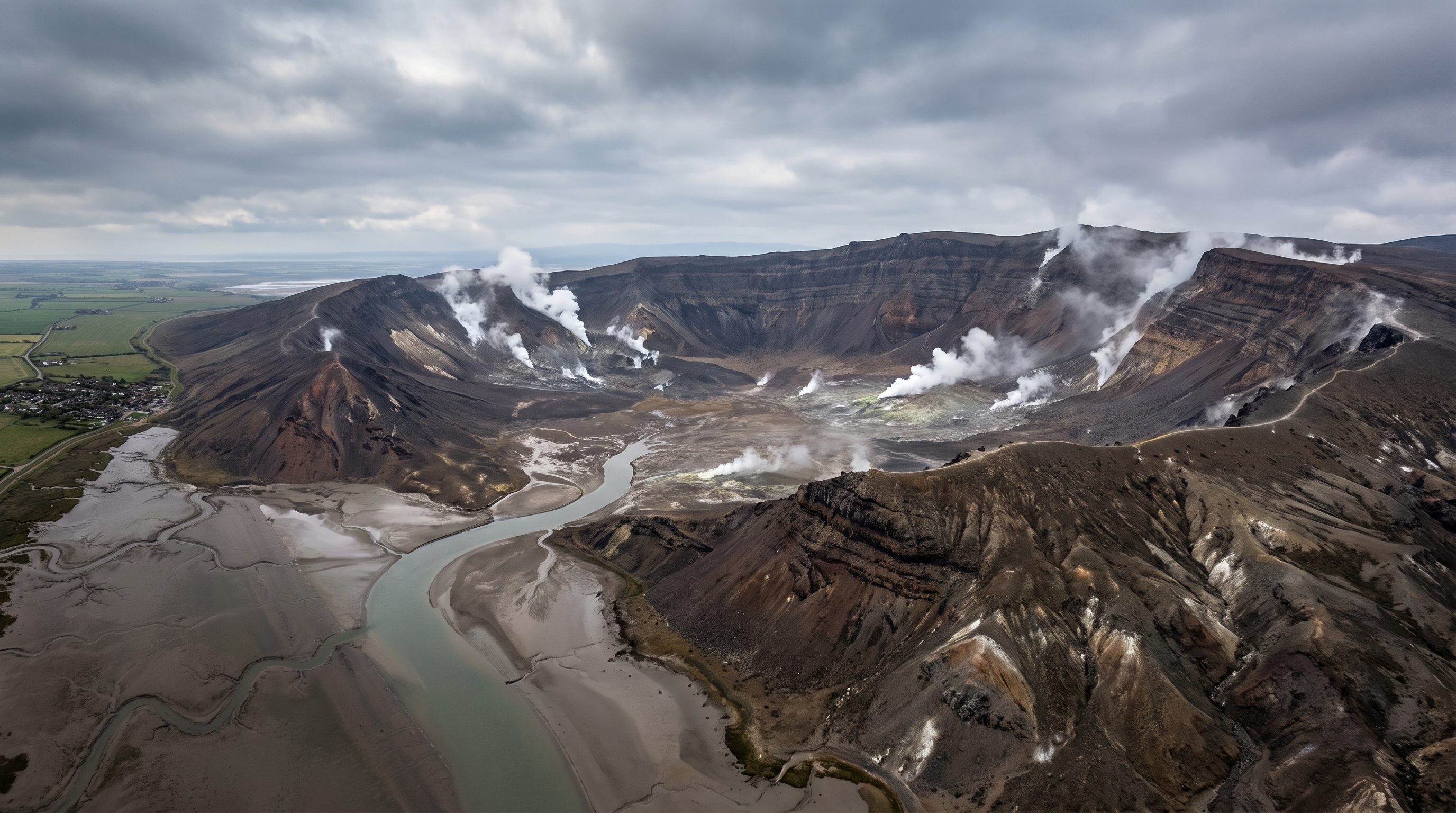
The Mysterious Disappearance of Amelia Earhart
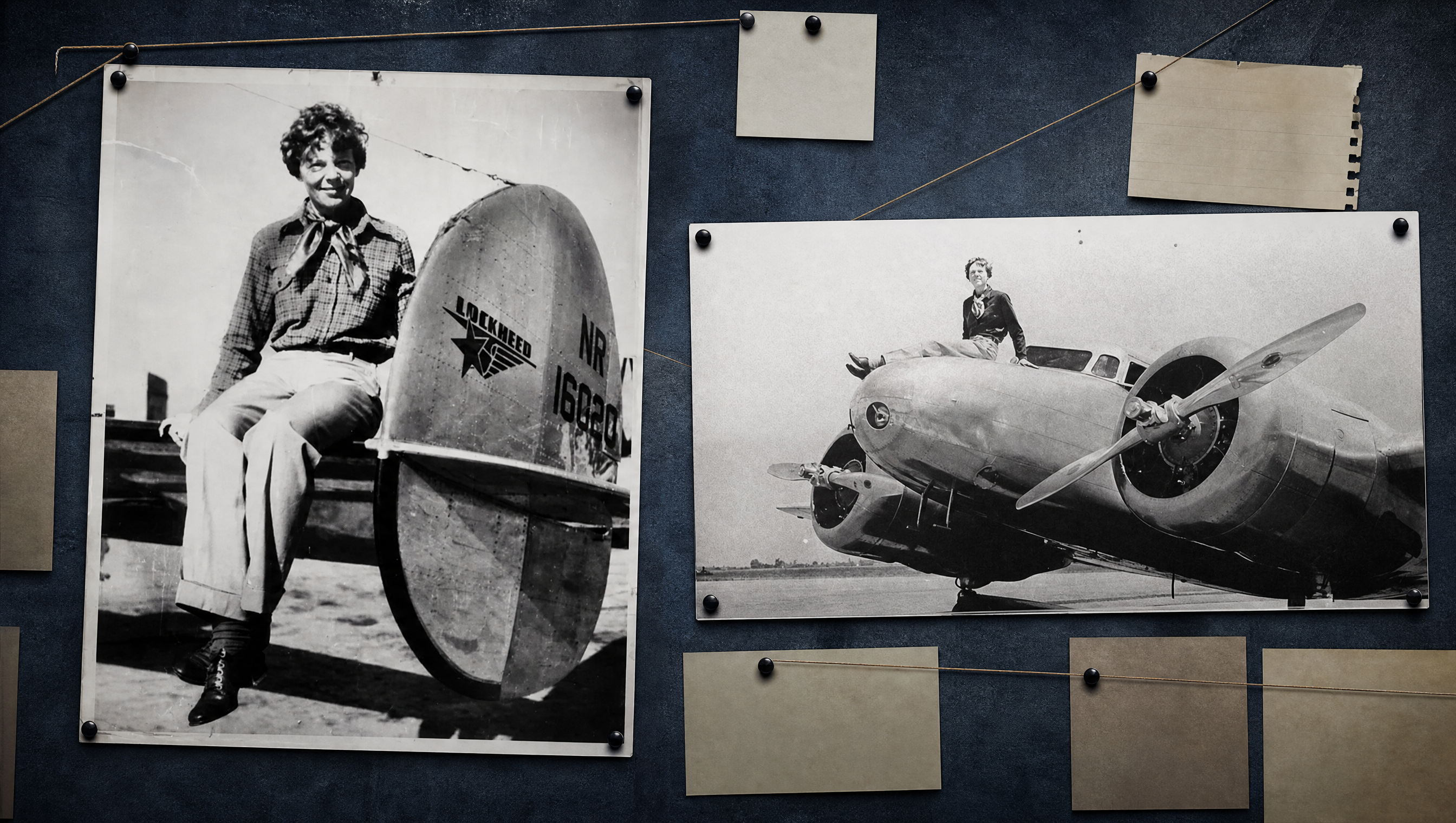
AI-generated composite based on archival photographs
A dark shape in a remote Pacific lagoon. A lost plane, or a fallen tree?
This article contains affiliate links. If you buy through them, we may earn a small commission at no extra cost to you.
On the morning of July 2, 1937, a silver twin-engine plane rolled down a runway in Lae, New Guinea. On board were Amelia Earhart, probably the most famous pilot in the world, and her navigator Fred Noonan. They were trying to fly around the planet, and only a few legs of the trip were left.
They never landed. Almost 90 years later, nobody can say for certain where they ended up. And this October, a team plans to sail to a remote Pacific island to test one of the theories up close.
The hardest leg of the trip
Their plane was a Lockheed Electra 10-E, a sleek metal airliner fitted with extra fuel tanks. The next stop was Howland Island, a tiny speck in the middle of the Pacific where a US Coast Guard ship was waiting with fuel.
According to the Smithsonian's National Air and Space Museum, the flight from Lae to Howland was 2,556 miles (4,113 km). That is a little longer than flying from New York to Los Angeles, except with almost no land below to help you check your position.
The target made it even harder. The museum describes Howland as about 2 miles long and 1 mile wide. Imagine flying for hours over open ocean, with no GPS, and trying to spot an island you could walk from end to end in well under an hour.
Why does this matter? Because it explains why the "simple" answer to this mystery is also a frightening one. A small navigation error over that much water could be enough to miss the island completely.
The voice on the radio
The Coast Guard cutter Itasca waited near Howland and listened. Earhart's voice reached the ship, at times loud and clear, but the plane and the ship never managed a reliable two-way conversation. She reported that they could not see the island.
A later message placed the plane on what navigators call a line of position, running north and south. Think of it like knowing which street you are on, but not which house. The US National Archives still holds the Itasca radio logs from those hours. After that, the confirmed trail goes cold.
The biggest search of its time
Ships and aircraft combed the ocean from July 2 to July 18, 1937. The Smithsonian calls it the US government's largest ever search for a lost aircraft. They found no confirmed wreckage and no confirmed remains.
So what happened? The museum's own collection notes put it plainly: "The most reasonable explanation, based on the known facts of her flight, is that they were unable to locate Howland Island, ran out of fuel, and ditched into the Pacific Ocean."
That explanation deserves real weight. But it is an explanation, not a located crash site. The Electra has never been found. That gap is exactly why other ideas are still being tested, and why Earhart's story keeps pulling people in. Hollywood retold it in the 2009 film Amelia, with Hilary Swank as the pilot, and years earlier in the 1994 TV film Amelia Earhart: The Final Flight, with Diane Keaton.
Another island, another theory
Hundreds of miles south of Howland lies Nikumaroro, a narrow ring of coral around a lagoon. In 1937 it was called Gardner Island.
For decades, a research group called TIGHAR has argued that Earhart and Noonan did not crash at sea. Instead, the group says, they may have landed on Nikumaroro's flat reef at low tide, survived for a while as castaways, and eventually died there.
Their case is built from several clues: radio signals reported after the disappearance, a small shape in an old photograph of the reef, objects from the 1930s dug up on the island, and records of human bones found there in 1940. Put together, it makes a story worth testing. The catch is that every single clue has a question mark attached. None of them is a confirmed piece of Earhart's plane, and none is a confirmed personal possession.
The bones that went missing
The bone story shows why this case refuses a clean answer. In 1940, a partial skeleton was found on the island. The next year, a doctor in Fiji named D. W. Hoodless examined 13 bones and concluded they belonged to a man, according to Live Science. Then the bones themselves were lost.
Only his notes and measurements survive. In 2015, researchers Pamela Cross and Richard Wright argued that the original verdict, a stocky European man, was still the better reading. In 2018, forensic anthropologist Richard Jantz compared the recorded measurements with estimates of Earhart's body size and argued they fit her unusually well.
Enjoying this story?
Get a short teaser by email whenever we publish something new. No spam.
Two sets of experts, the same handful of old numbers, two different answers. Without the actual bones, nobody can run a modern DNA test. Calling them Earhart's would go further than the evidence allows, and so would ruling her out.
A tiny shape in an old photo
Another clue is known as the Bevington Object. In October 1937, a British colonial officer named Eric Bevington photographed Gardner Island's shoreline. In the distance, near the water, there is a very small mark.
TIGHAR argues, after an engineering comparison, that it could be part of the Electra's landing gear sticking out of the reef. Maybe. But the shape is extremely small in the original picture, and nothing was ever recovered from that spot. A photo like this can tell you where to look. It cannot tell you what was actually there.
The twist: something in the lagoon
Here is where the story takes a new turn. In 2020, a Navy veteran named Michael Ashmore was scrolling through Apple Maps on his phone and noticed a dark shape in Nikumaroro's lagoon, near a spot called Taraia. It has since been nicknamed the Taraia Object.
The two groups most involved in the search read it in opposite ways.
TIGHAR looked at the images and, in a 2021 newsletter, concluded it was probably a palm tree knocked into the water by a storm in 2015. "We think the object is a log because, well, it looks like a log," the group wrote. Its founder, Ric Gillespie, told CNN in 2025 that it is "very clearly a tree."
The Archaeological Legacy Institute (ALI) sees something else. It says the shape appears in many images over many years: possibly in aerial photos from 1938, as a bright reflection in 2001 helicopter video, sharply in satellite images from 2015 and 2016, in drone footage from 2017, and still as a dark spot on the lagoon floor in 2026. ALI says the object is "exactly the right size to represent the fuselage and tail of the Electra." TIGHAR disputes key parts of that timeline, including how early the object really shows up.
Both groups have a stake in the answer, and neither has seen the object up close. Right now it is a visual mystery, not an identified airplane.
The test in October
That is about to change, if the plan holds. According to Purdue University, an expedition led by ALI is set to begin on October 3, when some members fly out of Purdue's airport. The full team, about 16 people, is due to meet in Tarawa, Kiribati, on October 6 and sail on October 7. The trip to Nikumaroro is roughly 830 nautical miles, a bit farther than the straight-line distance from London to Rome.
Purdue has a personal reason to go. Amelia Earhart joined the university in 1935 as a career counselor for women and an adviser in aeronautics, and Purdue helped finance the very plane she disappeared in.
This trip was supposed to happen sooner. It was first planned for November 2025, but Purdue postponed it while the team waited for permits from Kiribati's government and because cyclone season was approaching.
The plan is careful. ALI describes using magnetometers, which sense metal, side-scan sonar, which uses sound to draw a picture of the lagoon floor, and a probe pushed into the sediment. Only if it makes sense will the team remove enough sand to see what the object is made of. These are planned steps, not results.
What would count as an answer
Imagine the three possible outcomes.
The team could find recognizable aircraft parts. Even then, a piece of aluminum alone would not close the case. They would need features that match an Electra, careful documentation, and a solid link to Earhart's specific plane.
They could find a tree or another ordinary object. That would end this particular lead, but not the wider mystery. Earhart's fate would still be open.
Or the lagoon could simply refuse to give a clear answer. In shallow water with shifting sand, that is a real possibility.
This mystery has lasted so long because plausible details are easy to mistake for proof. What the record does tell us is that Earhart and Noonan never reached Howland. What it does not tell us is where they finally came down. The ocean explanation is still reasonable. The Nikumaroro theory is still a theory. And the shape in the lagoon is still unidentified, at least until someone stands next to it.
Sources
- Smithsonian National Air and Space Museum: Amelia Earhart: Missing for 80 Years But Not Forgotten
- Smithsonian National Air and Space Museum: Trophy, City of Medford, Amelia Earhart
- US National Archives: Records Relating to Amelia Earhart
- Purdue University: ALI, Purdue expedition to search for Amelia Earhart's plane will depart in October
- Purdue University: Expedition to search for Amelia Earhart's plane postponed to 2026
- General Aviation News: New Earhart expedition set for October
- Archaeological Legacy Institute: Taraia Object
- TIGHAR: TIGHAR Tracks, June 2021
- TIGHAR: Bevington Object: New Analysis
- Live Science: Did Amelia Earhart Perish on the Pacific Island of Nikumaroro?
- RNZ / CNN: An object in a satellite image defies explanation