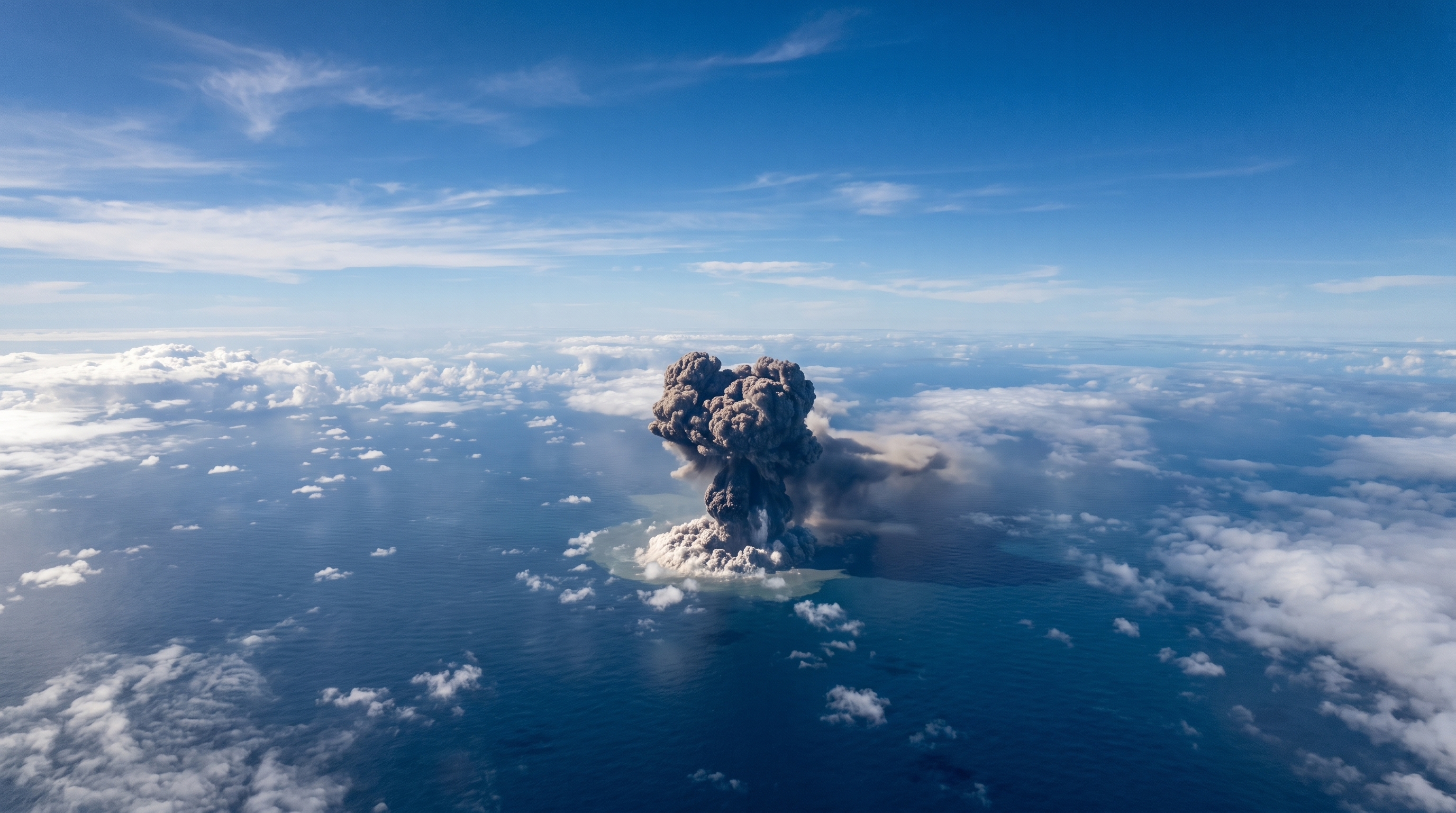
There is a supervolcano under England. It erupted four hundred fifty four million years ago.
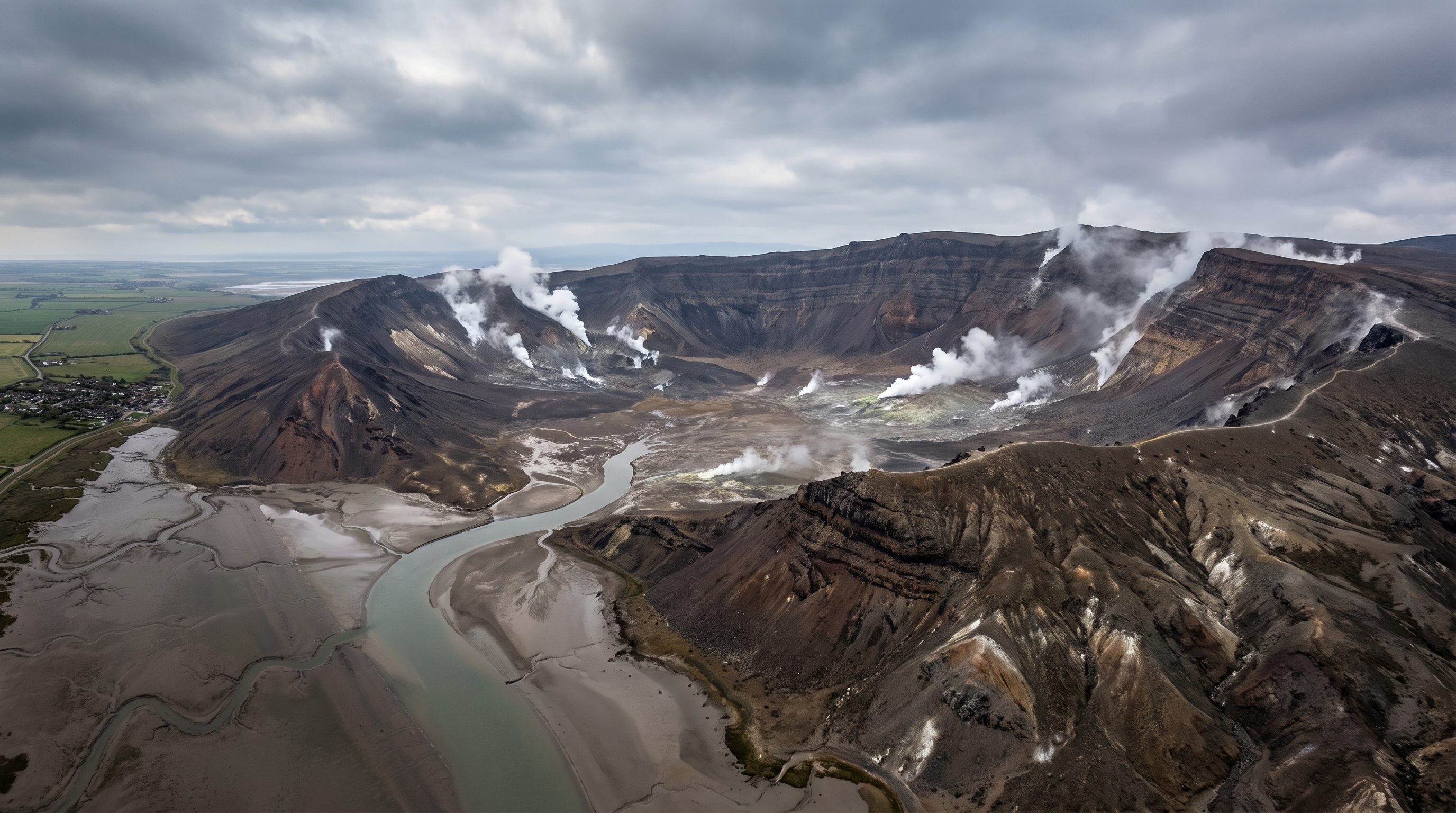
AI-generated illustration
Deep under a quiet, muddy bay on England's east coast, drill cores just revealed one of the biggest volcanic eruptions the region has ever hidden, dated to 454 million years ago, with ash that reached all the way to Scandinavia.
This article contains affiliate links. If you buy through them, we may earn a small commission at no extra cost to you.
The Wash looks like the last place on Earth to hide a violent secret. It is a shallow, muddy bay where the land goes flat in every direction, where wading birds pick through the tide line and sheep graze right up to the water. But when geologists drilled deep boreholes into farmland near North Creake in Norfolk and Claxby in Lincolnshire, about 40 miles apart, they pulled up rock cores that had waited underground for hundreds of millions of years. Inside were tiny crystals, smaller than a grain of sand, about to tell a much bigger story.
A Volcano With No Mountain
Here is the strange part: there is no crater, no cone, nothing that looks like a volcano on the surface today. That is because this eruption happened so long ago, according to the British Geological Survey (BGS), that everything above it has since worn away or been buried under newer rock. Imagine a mountain range that existed before there were trees on land, then picture it eroding down to flat fields over hundreds of millions of years. That is roughly what happened here, and the only proof left is buried deep underground. If hunting for clues like these sounds appealing, a starter rock and mineral collection kit like this one is a hands-on way to start recognizing the kind of specimens geologists use to trace eruptions this old.
What the Rocks Revealed
The tiny crystals BGS found are called zircons, and they act like tiny clocks because of how the elements inside them slowly change over time. Reading that clock, researchers dated the main eruption to about 454.45 million years ago, with a second, related blast around 453.7 million years ago. BGS calls it a "super-Plinian" style explosion, the most violent kind of volcanic blast, and says it threw hundreds of cubic kilometres of rock into the stratosphere, the layer of sky far above where planes fly. BGS lead scientist Tim Pharaoh called it one of the biggest eruptions in the region's recorded history, a project roughly 40 years in the making.
Is "Supervolcano" the Right Word?
Enjoying this story?
Get a short teaser by email whenever we publish something new. No spam.
Here is the twist most headlines skipped over. Not everyone agrees the word "supervolcano" fits. A true supervolcano eruption is usually defined as throwing out more than a thousand cubic kilometres of material, and BGS's own figure for the Wash eruption is "hundreds," below that line, not clearly over it. Live Science asked several volcanologists who were not involved in the study, and they pushed back. USGS scientist Michael Poland said he "really hates the term supervolcano." University of Bristol volcanologist Peter Rowley said volcanologists rarely use the word themselves and would call this an "ultraplinian eruption" instead. UC Berkeley's Stephen Self called supervolcano "a kind-of buzz-word." So the honest answer is that this eruption was genuinely huge, but whether it clears the technical bar for "super" is still argued by the people who study these blasts for a living.
Ash That Traveled Farther Than the Volcano
Even without a name everyone agrees on, the ash from this blast left a real trail. BGS says ash layers tied to this eruption, known in Sweden as the Kinnekulle bed, have been found spread across Norway, Sweden, the Baltic region, Belarus, and Poland, hundreds of miles from where the volcano once stood. Picture a dust cloud from one explosion settling as a thin gray layer across the floor of a sea that no longer exists in that shape. That layer is now solid rock, and it is one of the clues that let scientists connect it back to the Wash. This finding was first published by BGS in late August 2026 and covered more widely by outlets like Lynn News and Live Science the following week, so it is best understood as a recently confirmed discovery, not something dug up in the last few days.
Why This Matters to You
You do not need to live near an active volcano for this to matter. Finding a buried eruption this size, in a place with zero surface trace, tells scientists that other quiet, ordinary-looking landscapes could be hiding similar giants. It shows how much of Earth's dramatic history is invisible unless someone goes looking with a drill and a microscope.
So next time you stand on flat, unremarkable ground, ask yourself what really happened there 454 million years ago.
Sources
- Secrets of an ancient supervolcano uncovered | British Geological Survey, https://www.bgs.ac.uk/news/secrets-of-an-ancient-supervolcano-uncovered-that-change-our-understanding-of-englands-geological-past/
- An ancient 'supervolcano' has been found hiding beneath eastern England. But experts say there's not enough evidence to call it that. | Live Science, https://www.livescience.com/planet-earth/volcanoes/an-ancient-supervolcano-has-been-found-hiding-beneath-eastern-england-but-experts-say-theres-not-enough-evidence-to-call-it-that
- Scientists discover supervolcano under The Wash | Lynn News, https://www.lynnnews.co.uk/news/scientists-discover-supervolcano-under-the-wash-9480663/