The Whole Planet Rang for Nine Days and It Took a Year to Find Out Why
AI-generated illustration
In September 2023 every seismometer on Earth picked up the same steady hum, and it would not stop. The source was a mountain, a fjord and a wave with nowhere to go.
This article contains affiliate links. If you buy through them, we may earn a small commission at no extra cost to you.
On 16 September 2023 seismometers around the world began recording something none of them had seen before. It was not an earthquake. Earthquakes arrive as a sharp burst and fade within minutes. This was a single tone, repeating every 92 seconds, and it did not stop.
It ran for nine days. Then, a month later, it came back.
A signal with no source
The signal was what seismologists call a very-long-period monochromatic signal, sitting at 10.88 millihertz. Monochromatic means one frequency, almost pure, like a struck bell rather than a slammed door. Stations picked it up from the Arctic to Antarctica.
Nothing in the catalogue matched it. Kristian Svennevig of the Geological Survey of Denmark and Greenland, who led the eventual study, put the strangeness plainly: other landslides and tsunamis make seismic signals too, but for a couple of hours and only locally. This one was global and it held its frequency for over a week.
For months seismologists simply logged it as an unidentified seismic object.
What had actually happened
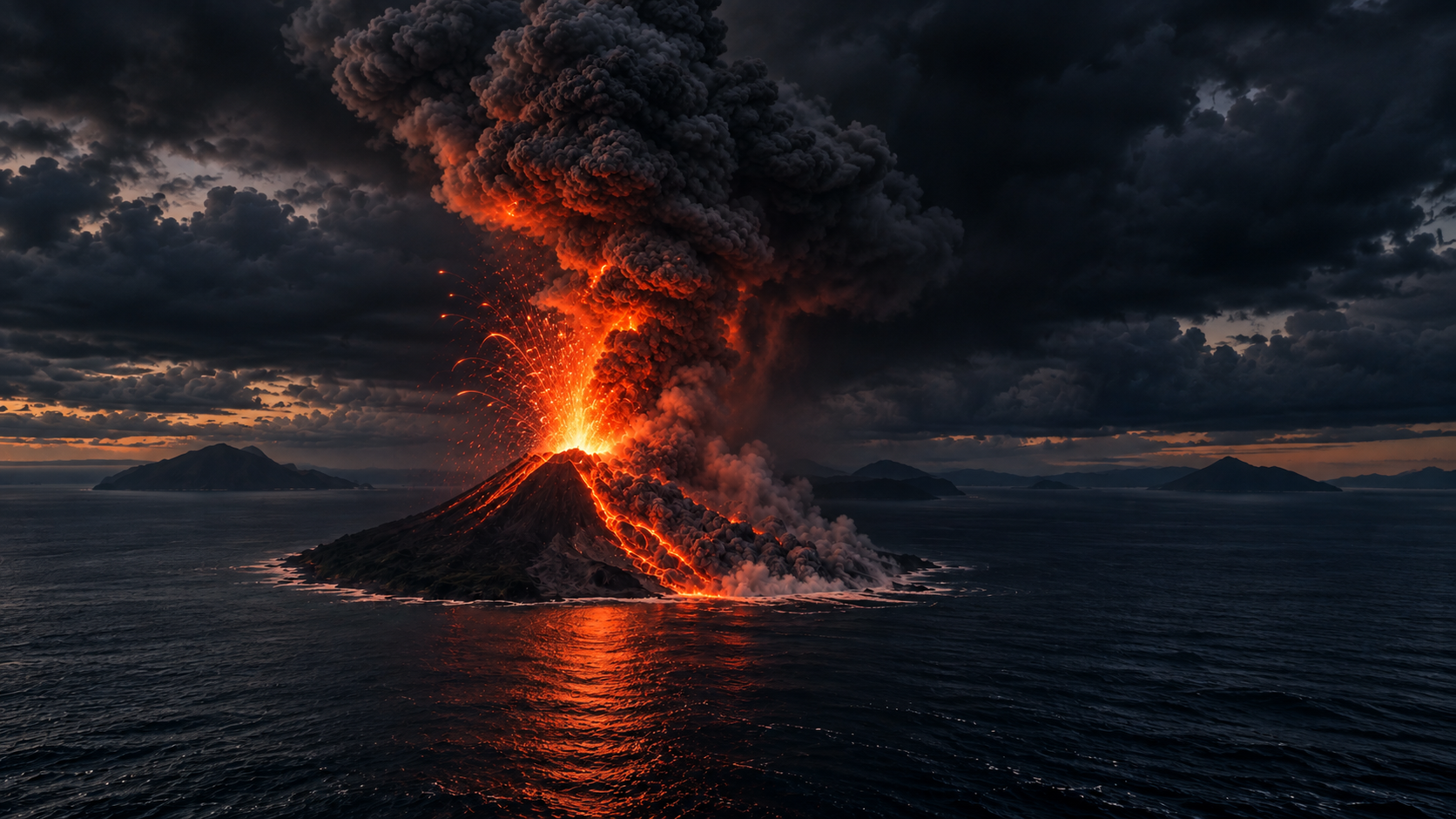
On the morning of 16 September, at 12:35 UTC, a mountain peak in East Greenland gave way.
A rock and ice mass of about 25 million cubic metres fell 1.2 kilometres into Dickson Fjord. The volume is hard to picture: it is roughly the contents of ten thousand Olympic swimming pools, dropped from higher than any building on Earth.
The water it displaced went up. The initial backsplash reached about 200 metres into the air, and the wave that crossed the fjord was up to 110 metres high. Within minutes it had dropped to around seven metres.
Enjoying this story?
Get a short teaser by email whenever we publish something new. No spam.
And then, instead of dispersing, it got stuck.
The trapped wave
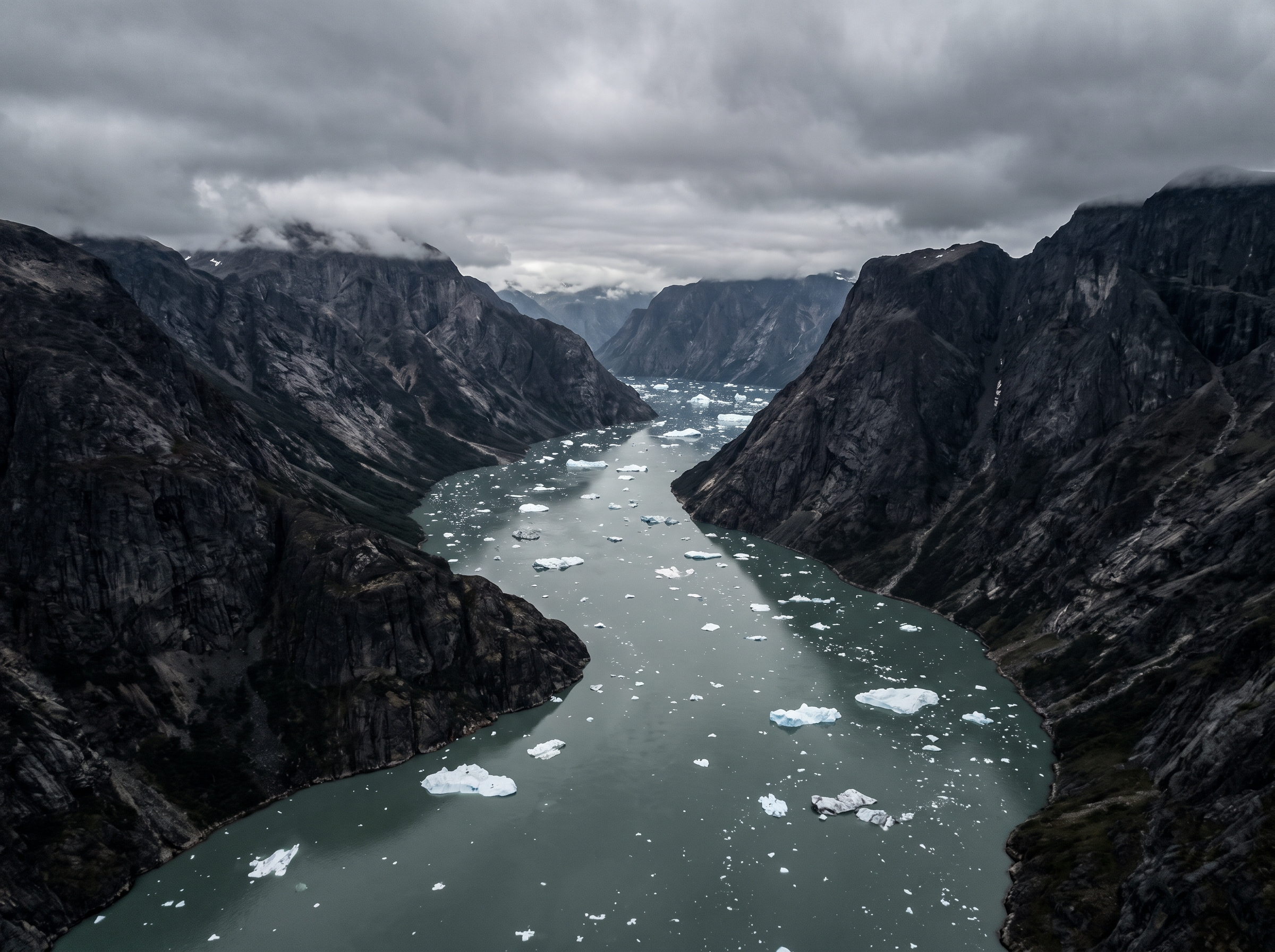
Dickson Fjord is narrow, steep-walled and bent. Those three properties together make it an almost perfect container. The wave could not escape into open ocean, so it sloshed from one wall to the other and back, over and over, in what oceanographers call a seiche.
A seiche is not exotic. It happens in bathtubs, harbours and lakes. What is extraordinary here is the duration. Seiches normally die out within hours. This one kept going for nine days, losing energy so slowly that its amplitude decay could be modelled as almost linear.
Every time that mass of water changed direction, it pushed against the rock of the fjord. The researchers calculated the force at up to 5 × 10¹¹ newtons, oscillating back and forth across the fjord's axis. That rhythmic shove was what the world's seismometers were hearing.
The modelled sloshing period was 90 seconds. The seismic signal was 92 seconds. That match is what closed the case.
Nearly a year later
The explanation was published in *Science* on 12 September 2024, almost exactly twelve months after the signal began. A separate 2025 study from the University of Oxford went further and produced the first direct observation of the seiche itself, using NASA's SWOT satellite mission to measure the water surface, rather than inferring it from models alone.
The trigger is not incidental. The mountainside failed because the glacier at its foot had thinned, removing the support that had held the slope in place. The short version is that ice is structural, and when it goes, the rock above it is no longer held.
Tsunamigenic landslides had been recorded elsewhere in Greenland. None had ever been reported from the eastern fjords. That is the part that should hold your attention: not that a mountain fell, but that it fell somewhere the record said mountains did not fall.
Sources
- A rockslide-generated tsunami in a Greenland fjord rang Earth for 9 days | Science
- Climate-change-triggered 2023 mega-landslide caused Earth to vibrate for nine days | UCL via ScienceDaily
- Climate Change-Triggered Landslide Unleashes a 650-Foot Mega-Tsunami | Scripps Institution of Oceanography
- How a fjord in Greenland generated a global seismic event | University of Stuttgart
- Greenland's mega tsunamis: First direct observation of the trapped waves that shook the world | Phys.org