The driest desert outside the poles is covered in flowers
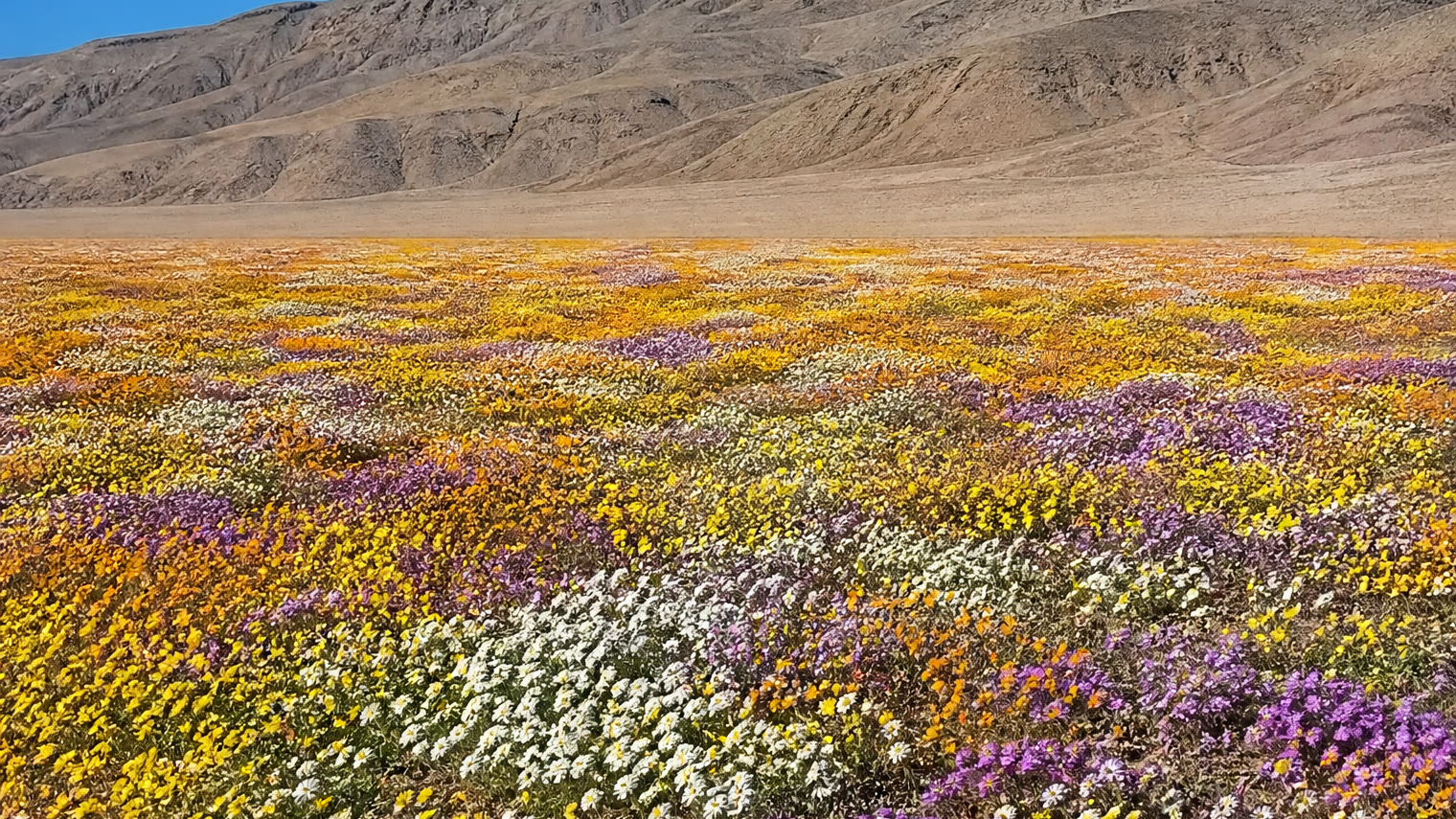
Illustration generated with AI for DomiVerseX
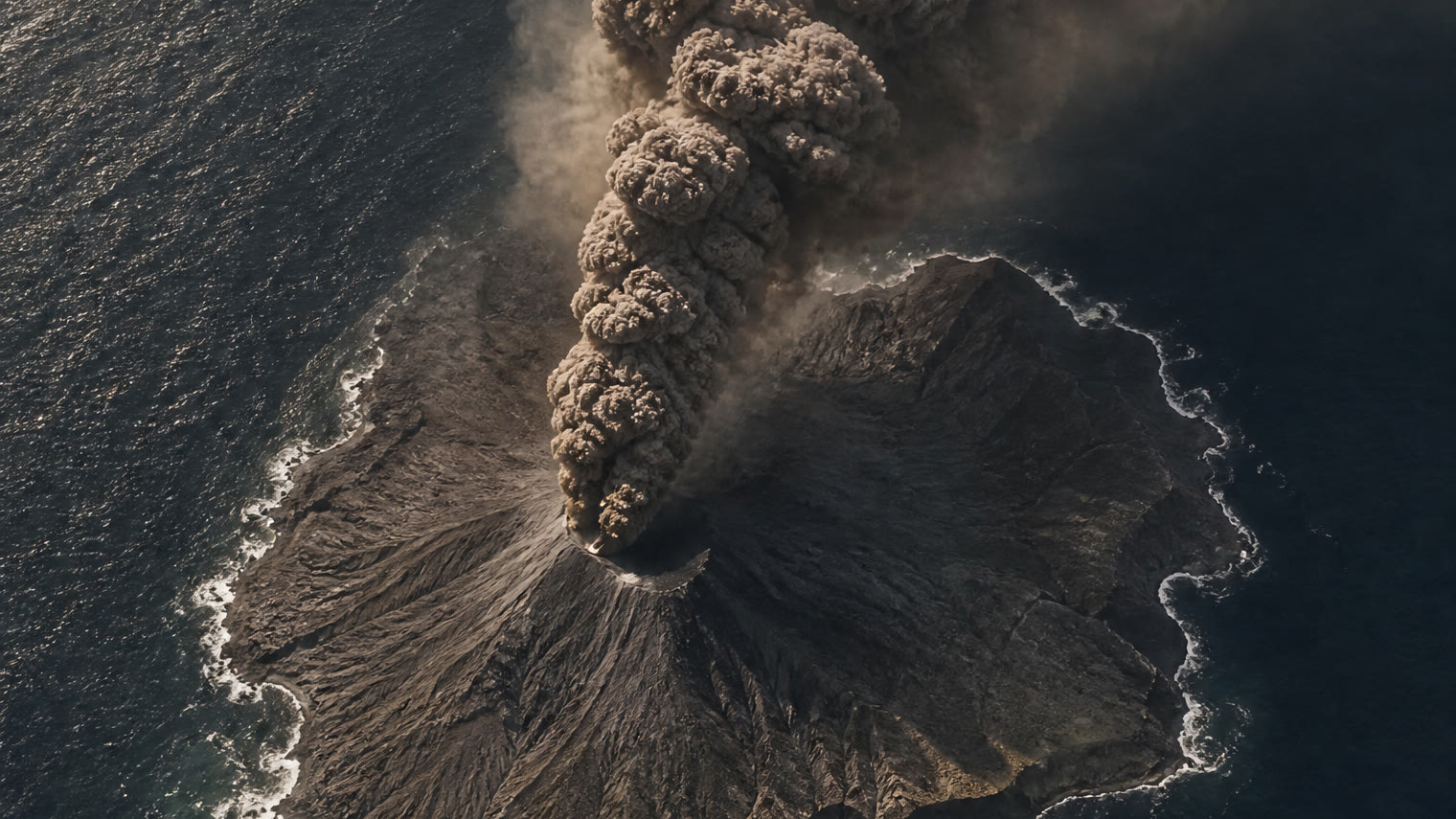
In the spring of 2026, a desert in Chile that almost never sees rain changed color. The seeds behind it had been lying in the ground for years, and the full story comes with a catch.
This article contains affiliate links. If you buy through them, we may earn a small commission at no extra cost to you.
Imagine a place so dry that a whole year of rain would not fill a glass deeper than a small coin is wide. Then imagine that same ground covered in flowers for kilometer after kilometer. That happened in the Atacama Desert in Chile in the spring of 2026. Spring there runs from September to November, because Chile lies in the southern half of the world.
The first flowers showed in the first half of September. The peak was forecast for October, and the show was expected to end in November. So this was a short visit, not a new look. If you are reading this after November 2026, the flowers are probably gone and the bare ground is back.
Why care about flowers on the other side of the planet? Because they prove something useful to know: ground that looks dead can be full of life that is only waiting.
Twelve years of rain in one winter
The Atacama is the driest desert outside the poles. Those last three words matter. The McMurdo Dry Valleys in Antarctica are described as the driest desert in the world, as IFLScience explains, so the Atacama holds the title for everywhere else.
In the part of the Atacama where the flowers grew, a normal year brings about 15 millimeters of rain. That is less than the width of a US dime. Then came the winter of 2026. In places it dropped 160 to 190 millimeters, the Associated Press reported. That is water about as deep as a new pencil is long, and about twelve normal years of rain in one winter.
The Chilean outlet Ladera Sur reported that in places the water soaked more than 60 centimeters into the ground, about two school rulers laid end to end. It also reported that 86 percent of the weather stations in Huasco province broke their winter records. That is about six stations out of every seven.
The rain arrived during a very strong El Niño, the weather pattern that news reports linked to the bloom. How strong depends on how you measure it. According to Carbon Brief, it set a record in daily readings on 21 September 2026, but in monthly readings it had not yet passed the El Niño of 2015 and 2016. So the careful way to say it is: one of the strongest on record.
Why does this matter to you? Because "record" is a word worth checking. A record on one day is not the same thing as a record for a whole season.
Seeds that wait for decades
How do flowers show up that fast in a desert? They were there all along. Chile's forestry agency, CONAF, says the seeds lie asleep in the top 15 centimeters of the soil, a layer about as deep as a ballpoint pen is long. They sprout after more than about 15 millimeters of rain, the same small amount that a normal year brings.
Cesar Pizarro of CONAF, quoted by the Associated Press, said: "This desert germplasm can remain (dormant) for many years, even decades." Germplasm is his word for the seeds and bulbs in the ground. Think about what that means. A seed that fell before you were born could have flowered in 2026.
More than 200 kinds of plants took part, according to Jorge Carabantes of CONAF, quoted by the Associated Press. That is enough to give every day from New Year's Day to the middle of July a flower of its own. Among them were the añañuca, the suspiro, the pata de guanaco and the garra de león, or lion's claw.
If you have ever seen a weed push up through a crack in the pavement after a storm, you have watched a tiny version of the same trick.
The catch: the flowers were not in the driest part
Here is what the headline cannot fit. The flowers did not grow in the bone dry heart of the Atacama, the part that earns the "driest" title. Weather stations there record only 1 to 3 millimeters of rain a year. That is a film of water about as thick as one or two coins lying flat.
The bloom happened on the desert's southern edge, around Vallenar, Copiapó and Huasco. A normal year there brings about 15 millimeters, and anything above that can set off flowering. Going by the forecast size of the bloom and the desert's area as given by Wikipedia, the flowers covered roughly one seventh of the Atacama. Picture a pizza cut into seven slices, with flowers on one of them.
So the headline is true, and it still leaves something out. "The driest desert is covered in flowers" does not mean "the driest spot is covered in flowers". That is worth remembering whenever a big headline names a big place: ask which part of it the story is really about.
Enjoying this story?
Get a short teaser by email whenever we publish something new. No spam.
The rain had a dark side too: the same July rains killed at least 13 people and damaged about 4,000 homes, according to the news agency AFP.
How big was it? Three different answers
In August 2026, Cesar Pizarro of CONAF forecast that the bloom would cover more than 15,000 square kilometers. That is about two million soccer fields. On 1 October the Associated Press put it at about 17,000 square kilometers, or about 2.4 million soccer fields.
But a story from AFP, published by Euronews, says CONAF estimated 15,000 hectares. That is only about 21,000 soccer fields, a hundred times smaller than the forecast. It is like one friend telling you a trip takes one hour and another telling you it takes about four days.
One side probably mixed up its units. Two Chilean outlets and the Associated Press agree on thousands of square kilometers, so that is the safest way to say it. When this article was written, on 12 October 2026, we could not find a measured figure published by CONAF itself that would settle the question.
CONAF also said this could be the most extensive bloom since 1997. That was 29 years earlier, long enough for a baby born that year to have become a grown-up.
Why should you care about three numbers? Because wildflowers are easier to photograph than to measure, and a number in a headline is only as good as its units.
Does more rain always mean more flowers?
You would think the wettest years give the biggest blooms. Maybe not. In 1997, Copiapó got 129.4 millimeters of rain, a bit more than the height of a soda can. Wikipedia's article on desert blooms says flowering that year was minimal. CONAF, on the other hand, treats 1997 as the big year to measure against. The two do not agree, and this article cannot tell you which one is right.
It matters because, until that is settled, nobody can count the rain and then promise you flowers. If you ever plan a trip around a bloom, plan for the chance of bare sand as well.
Why visitors were asked to stay off the flowers
Tourism officials expected nearly 300,000 overnight trips before the end of the bloom, the Associated Press reported. That is like filling a stadium of 60,000 seats five times.
That many visitors bring a risk. Through the Chilean news site BioBioChile, biologist Dario Moreira asked people not to drive onto flowering ground, because packed soil stops seeds from sprouting. Part of the area has been protected since 12 June 2023, when Desierto Florido National Park was created. It covers 57,107 hectares, about 80,000 soccer fields.
The same rule works on any trail near you. One tire track or one shortcut in the wrong place could cost the next round of flowers.
Will it bloom like this again?
That is the part nobody can answer yet. In October 2026 the El Niño was still strengthening. If strong El Niño years bring heavy rain more often, the Atacama could bloom more often. But heavier rain could also wash away the buried seeds that make a bloom possible, and if Wikipedia's account of 1997 is right, a wet year is not a promise.
So which will it be: a desert that flowers more often, or a desert that slowly loses the seeds it has been saving for decades?
Sources
- It's spring in the Southern Hemisphere and even Chile's Atacama Desert is blossoming, Associated Press via MyMotherLode
- El Niño transforms Atacama desert as thousands of hectares burst into bloom, Euronews (AFP)
- Se viene un gran desierto florido: extraordinarias lluvias invernales están despertando el desierto de Atacama, Ladera Sur
- Desierto florido podría repetirse con una intensidad no vista desde 1997, BioBioChile
- Parque Nacional Desierto Florido, CONAF
- Analysis: Super El Niño reaches remarkable all-time record, Carbon Brief
- Desert bloom, Wikipedia
- Atacama Desert, Wikipedia
- The driest place on Earth probably isn't where you expect, IFLScience