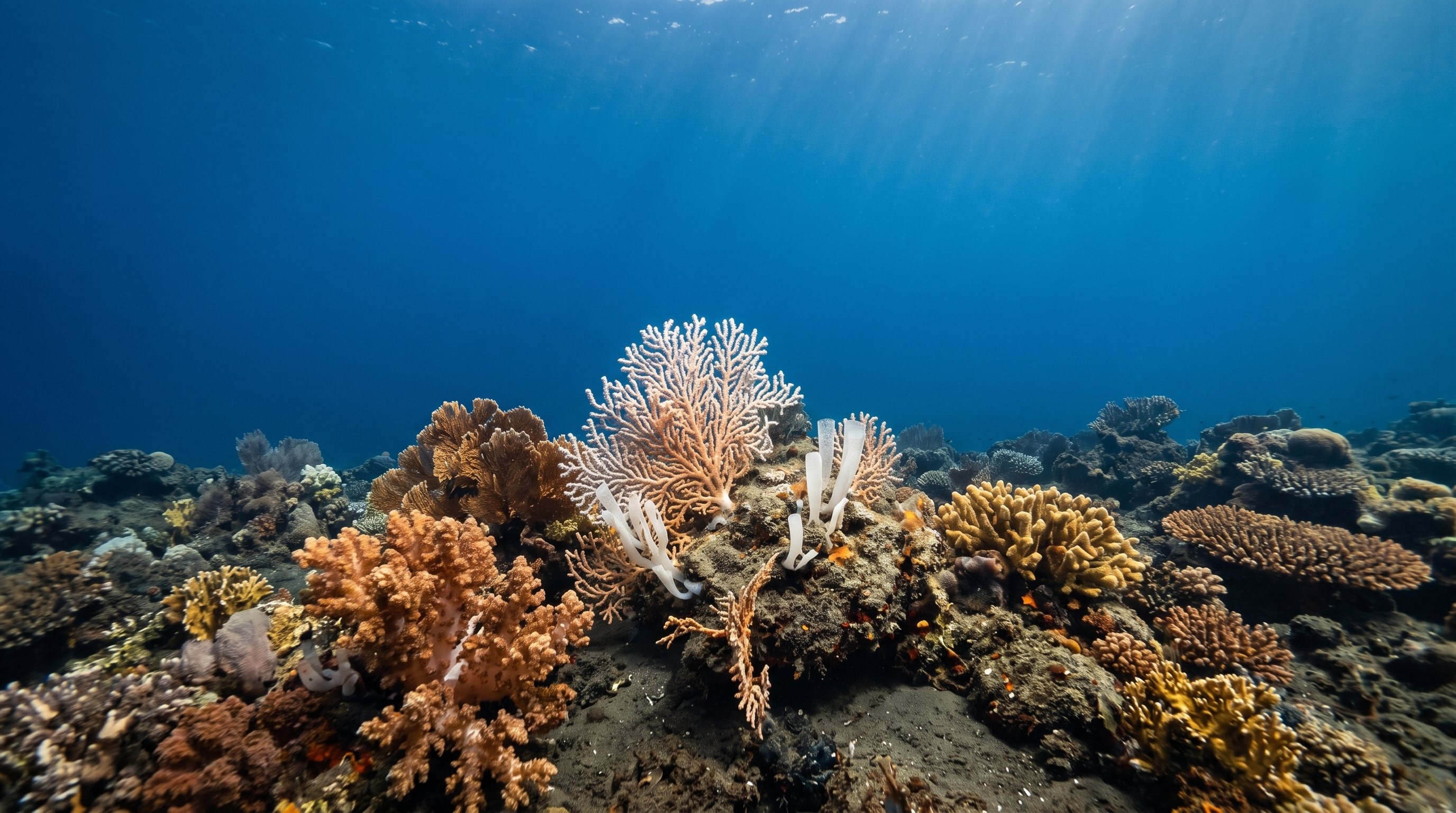
In 2023 Scientists found a glowing gold sphere on the ocean floor. For three years it stayed one of the ocean's biggest unsolved mysteries.
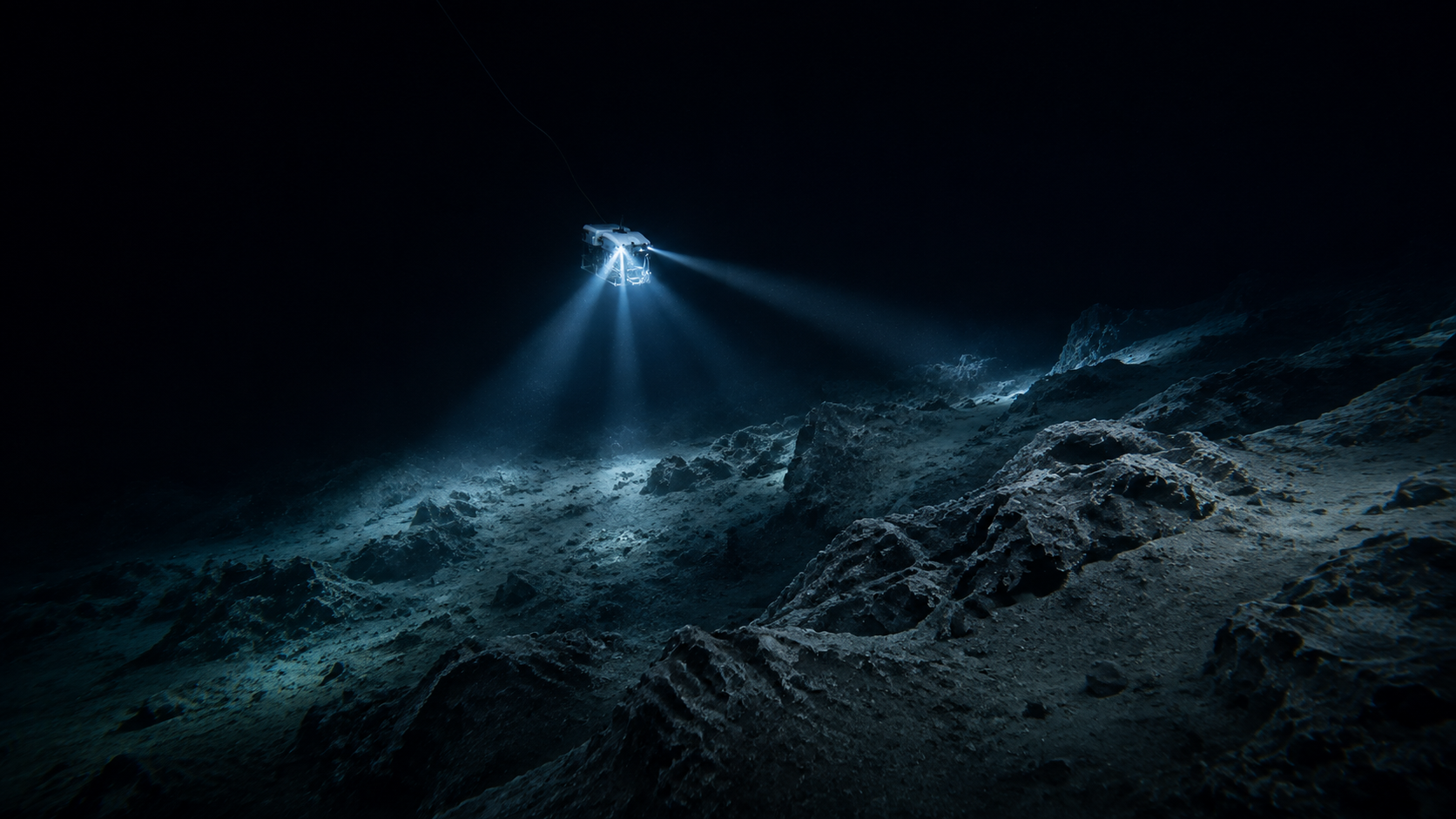
Illustration by Domi Verse X
A robot camera spotted something glowing and gold on the ocean floor. It took scientists three years to explain it.
This article contains affiliate links. If you buy through them, we may earn a small commission at no extra cost to you.
On August 30, 2023, a robot submarine called Deep Discoverer was crawling across the seafloor of the Gulf of Alaska, about 3,251 meters down. That is roughly 2 miles, or about seven Empire State Buildings stacked on top of one another, straight down into total darkness. Its cameras, streaming live to scientists watching from the NOAA Ship Okeanos Explorer far above, caught something nobody expected: a smooth, glowing gold sphere sitting on a rock, about the size of a softball. "Everyone was like, 'What the heck? What is that?'" said Allen Collins, a zoologist with NOAA and the Smithsonian's National Museum of Natural History who watched it happen. Even with cameras sharp enough to work like a jeweler's loupe, nobody on the ship could agree on what they were looking at.
A Perfect Golden Ball, Two Miles Down
Deep-sea cameras find strange things all the time: fish with see-through heads, worms as long as a bus, creatures nobody has ever named. But a perfectly round, glowing gold ball is different. It did not look like a rock. It did not look like coral. It did not look like anything the team had a name for. The mission, part of NOAA's Seascape Alaska series of expeditions, exists specifically to explore parts of the seafloor nobody has ever filmed before, and this was exactly the kind of discovery it was built to catch.
What made it even stranger is that this was not the only one. In 2021, two years earlier, a completely different ship, the research vessel Falkor, run by the Schmidt Ocean Institute, had filmed something very similar elsewhere in the ocean. That meant whatever this thing was, it was not a one-time fluke. Something out there was making more than one of them. Once the footage reached the public in 2023, the story went semi-viral on its own, with NOAA and news outlets reporting guesses that ranged from a dead sponge to a fish egg case to, on social media, an alien egg.
Egg, Sponge, or Something Nobody Had a Name For
Back in the lab, the guessing started. Was it an egg case, laid by some deep-sea fish or squid? Was it a dead sponge, worn smooth by the current? Or was it something science had never described at all? Researchers tried the fastest tool they had, DNA barcoding, a quick genetic test that usually identifies a species within days. It came back inconclusive. The sample's surface was covered in its own community of microbes, and their DNA was drowning out whatever was underneath. The golden orb was not ready to give up its secret that easily, and for a while it simply sat cataloged as an unsolved specimen, one of thousands collected on deep-sea expeditions every year that never quite make it to a clean answer.
The Answer Was Hiding Under the Microscope
With the quick test stuck, the team went back to basics. "The first thing we were looking for was gross anatomy," Collins explained. "Is there a mouth somewhere? Can we find muscles?" There was neither. But under a microscope, something did turn up: tiny capsule-shaped structures called nematocysts and spirocysts. These are stinging cells, and in nature only one group of animals makes them, the Hexacorallia, the group that includes sea anemones, corals, and their relatives. It was the first real clue, and it pointed somewhere nobody had guessed. A live sea anemone fidget toy gives you the general shape, a soft body with reaching tentacles, but nothing about a plush toy explains why a piece of one would end up looking like a gold marble at the bottom of the sea.
Enjoying this story?
Get a short teaser by email whenever we publish something new. No spam.
A Sea Anemone You Have Probably Never Heard Of
Genetic sequencing eventually matched the sample to Relicanthus daphneae, an unusual, rarely seen deep-sea anemone relative that scientists only formally described in the last couple of decades. A single animal's body can reach about 30 centimeters across, roughly the size of a dinner plate, with tentacles that reach out into the current to snag whatever drifts by in the dark. Just how long those tentacles get is disputed: some sources describe roughly two feet, others describe six or seven. It lives astonishingly deep, anywhere from about 1,200 to 4,000 meters down, and turns up in scattered spots across the world's oceans, not just off Alaska.
Here is the twist: the golden ball itself was never the living animal. It was something the anemone leaves behind. To anchor itself to a rock on the seafloor, Relicanthus daphneae secretes a tough, glue-like cuticle at its base. When the animal dies or moves on, that hardened cuticle can remain, sitting on the rock like a strange little monument. This particular one had been undisturbed long enough, in a place with almost no currents or predators to break it apart, that it had become its own tiny neighborhood: home to a community of microbes that scientists had never had the chance to study this closely before.
It Took Three Years and a Team of Specialists
Confirming all of this took whole genome sequencing and a careful read of the sample's mitochondrial DNA, matched against known reference genomes, plus the eye of Estefanía Rodríguez, a researcher who had spent years studying this exact species and recognized the cuticle for what it was. Even scientists who study the deep sea for a living were caught off guard. "From its looks alone, we didn't guess it would be the remnants of an anemone-like animal," said marine biologist Jon Copley.
NOAA itself says more than 80 percent of the world's ocean has never been mapped, explored, or even seen by a human eye, so finds like this keep surfacing faster than anyone can explain them. If you want a closer look at just how strange the science of the deep sea can get, a book like this one is a good place to start, because the golden orb is very likely not the last mystery object waiting on the seafloor for someone with a microscope and a lot of patience.
Sources
- NOAA: Scientists reveal identity of mysterious 'golden orb' collected during NOAA expedition
- Live Science: Mystery of golden orb found in depths of ocean off Alaska finally solved
- Sci.News: Marine Biologists Solve Mystery of Deep-Sea 'Golden Orb'
- ScitechDaily: This Strange "Golden Orb" Found 2 Miles Deep Stumped Scientists for Years
- CBS News: Mysterious "golden egg" found 2 miles deep on ocean floor off Alaska
- ZME Science: Scientists Finally Solved the Mystery of the 'Golden Orb' Found 2 Miles Under the Sea