For 25 Years These 9/11 Documents Stayed Sealed
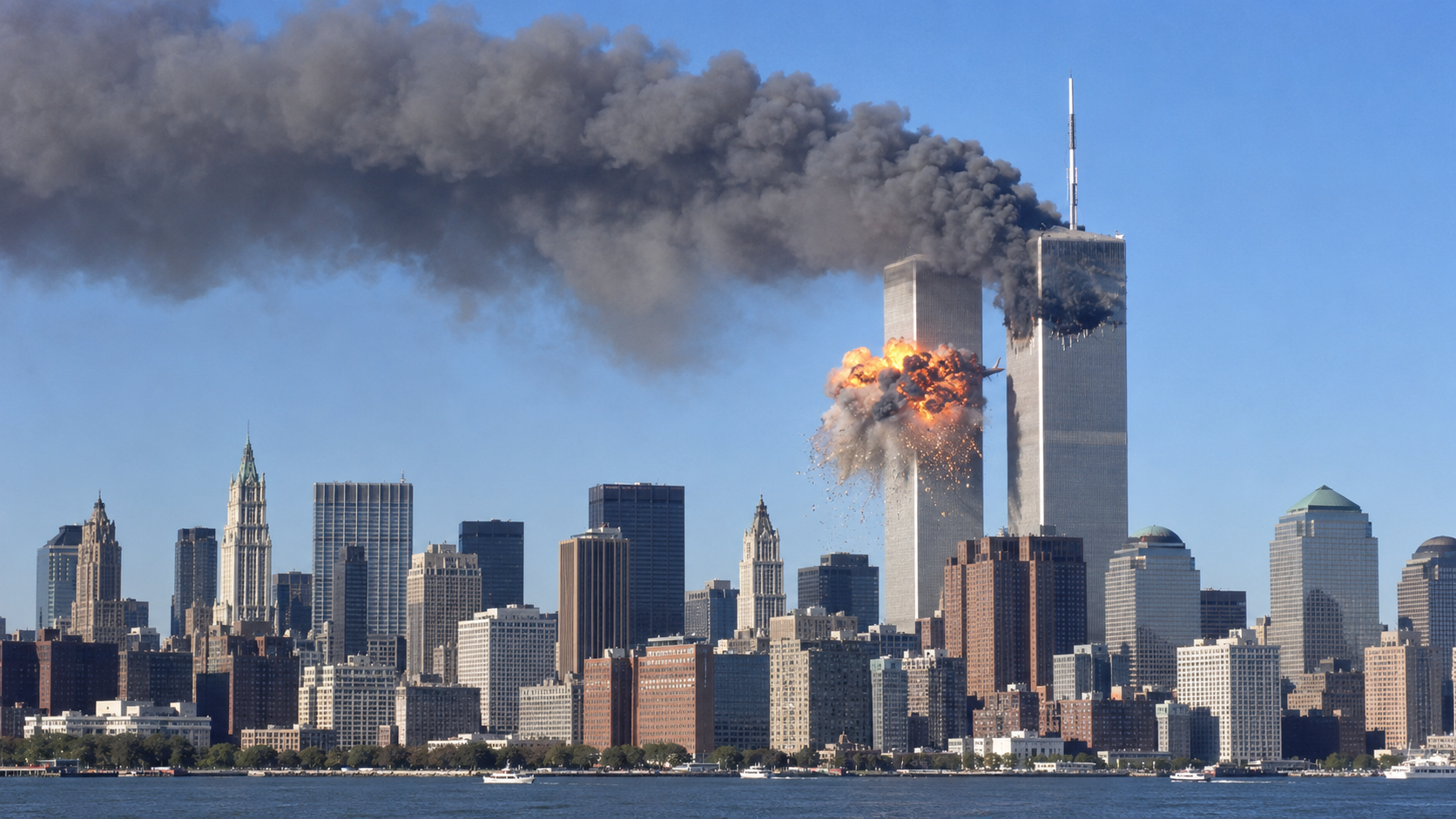
Illustration generated with AI for DomiVerseX
New York City sealed 170,000 pages of its own records for a quarter of a century. Two lawsuits finally forced them open, three days before the anniversary.
This article contains affiliate links. If you buy through them, we may earn a small commission at no extra cost to you.
On Tuesday, September 8, 2026, three days before the twenty fifth anniversary of the September 11 attacks, New York City quietly put a website online. Sitting on it were more than 170,000 pages of city records that no member of the public had ever been allowed to read.
Printed out and stacked, 170,000 sheets of paper reach about 17 metres. That is roughly the height of a five storey building, made entirely of paperwork that four different mayors had kept in a drawer.
Mayor Zohran Mamdani announced the release at a City Hall news conference. He did not describe it as housekeeping. He described it as something New Yorkers had been owed for a quarter of a century.
The people who spent 25 years asking
The files did not come out because someone in city government decided the time was right. They came out because a small advocacy group called 9/11 Health Watch sued for them, twice, and the city eventually settled.
Benjamin Chevat, who directs the group, said that across 25 years and four mayoral administrations the city withheld these records not only from the public but from Congress and from the City Council itself, according to reporting on the release. When a reporter asked Mamdani whether the delay amounted to a cover up, he answered that multiple administrations had refused to hand over documents that belonged to New Yorkers.
Mamdani's proposed 2027 budget sets aside 34 million dollars to build and run the public portal where the pages now live. That is a large amount of money to spend on making old paperwork readable. It is worth asking what kind of ordinary city file is worth that.
What the files are actually about
Every page in the release circles one subject: the air.
Specifically, the air in Lower Manhattan and parts of western Brooklyn after the towers came down, and what City Hall knew about it while telling people it was fine.
According to CNN's review of the documents, the release includes internal memos in which officials raised alarms about environmental testing carried out between October and November 2001. Those tests kept finding elevated levels of toxic material, including asbestos and chemicals that are hard to detect without looking for them specifically.
The city's public message during that same period did not change. The air was described as safe and acceptable.
What was actually in the cloud
Two days after the collapse, the US Geological Survey was asked to work out what the dust falling on Lower Manhattan was made of. The answer was not smoke in any normal sense.
The USGS analysis found the dust was mostly pulverised building: glass fibres, gypsum from wallboard, crushed concrete, and paper. Two towers had been ground into powder and pushed into the streets at speed.
Chrysotile asbestos showed up in about two thirds of the samples, but at trace levels, at or below roughly 1 percent by weight. That sounds reassuring until you look at where the asbestos was concentrated. Material coating steel beams in the wreckage ran as high as 20 percent chrysotile. The dust was not uniform, which means two people standing a street apart could have breathed very different things.
The stranger finding was chemical. When USGS researchers ran water through the dust samples, the water came out alkaline. Later laboratory work measured pH values in fine particles ranging from about 8.9 to 10.0. Rain sits near neutral. Milk of magnesia sits around 10.5. The powder settling on cars and window ledges was closer to that end of the scale than to anything you would expect to inhale, because calcium hydroxide from crushed concrete dissolves in moisture.
Outdoor dust was partly neutralised by the rain that fell on September 14 and 24. Indoor dust, sitting in sealed apartments and offices, was not. That difference matters more than it sounds, and the documents released this week are largely about indoor spaces.
"Safe to breathe"
Seven days after the attacks, on September 18, 2001, the head of the Environmental Protection Agency told New Yorkers their air was safe to breathe.
In August 2003, the EPA's own internal watchdog examined that statement. The Inspector General's evaluation report, number 2003-P-00012, concluded that when the agency made the September 18 announcement it "did not have sufficient data and analyses" to say it. Results for several pollutants, including fine particulate matter and PCBs, had not come back yet.
Enjoying this story?
Get a short teaser by email whenever we publish something new. No spam.
The report went further. It found that the White House Council on Environmental Quality influenced what went into EPA press releases: reassuring language was added to at least one of them, cautionary language was removed, and guidance on cleaning indoor spaces did not make it in. The report named national security concerns and the desire to reopen Wall Street quickly as factors.
City files were a separate matter from federal ones, and until this week nobody outside City Hall could compare the two. Now they can.
The city's private arithmetic
Buried in the release is a memo that reads less like a public health document and more like a legal risk assessment.
It cites a city Law Department estimate of roughly 35,000 potential plaintiffs from the attacks and their aftermath, with about 10,000 expected to actually file claims. It lists possible legal grounds against the city, including the possibility that health advisories caused people to come back to the area too soon and be exposed, or to stay away too long and lose money.
The memo also worries, in plain language, that judges and juries might side with the people bringing those claims.
So while one part of city government was telling residents the air was acceptable, another part was counting how many of them might eventually sue over what they breathed.
The number that never stopped climbing
At the World Trade Center site, 2,753 people were killed on the day. The attacks as a whole killed close to 3,000.
The slower count is now larger. Around 5,892 first responders and people who lived or worked near Ground Zero have died of cancer attributed to the toxic air, according to figures from the September 11 Victim Compensation Fund cited in a firefighter cancer screening campaign launched this month. The New York Fire Department has lost more than 400 members to World Trade Center illnesses, against the 343 it lost on the morning itself.
The World Trade Center Health Program, which monitors the exposed, was caring for 145,275 responders and survivors as of June 30, 2026. That is a city the size of Pasadena, all of them under medical surveillance because of one Tuesday morning. Over the program's lifetime, 57,044 cancers have been certified as World Trade Center related conditions.
That last number needs a caveat that often gets lost. It counts certifications, not people, because one person can have more than one cancer certified. The National September 11 Memorial and Museum's own figure for individuals stands at about 49,000. Both numbers are real, they just measure different things.
In the twelve months ending June 2026, the program recorded 10,393 cancer certifications. That works out to roughly one every fifty minutes, day and night, twenty five years after the event that caused them.
Cancer was not even on the program's list of covered conditions at first. It was added in 2012, once the evidence had accumulated.
What was never measured
The part of this story with the longest reach is the least dramatic one: nobody was measuring inside.
The outdoor air got monitors within days. Apartments, offices, stairwells and ventilation systems, where the alkaline dust sat undisturbed by rain, got far less attention, and the federal watchdog specifically flagged that indoor cleaning guidance had been stripped out of public communications.
That gap is the reason indoor air is now treated as its own problem rather than an afterthought, and it is the reason the newly released city files matter. They are the record of what one government knew about the inside of its own buildings while it was telling people those buildings were fine.
What 170,000 pages cannot settle
The documents show what the city knew and when. They do not, on their own, prove that any specific official set out to deceive anyone, and the former EPA administrator has said publicly that the agency published its data as it came in and did the best it could with what it had.
What the files do is move the argument. For 25 years the question was whether the record would support what survivors had been saying. Now the record is public, all 170,000 pages of it, and 145,275 people are still enrolled in a health program that keeps certifying new cancers roughly once an hour.
The portal went live three days before the anniversary. Nobody has read all of it yet.
Sources
- CNN, NYC Mayor Mamdani releases 9/11 records showing officials misled New Yorkers about air quality around Ground Zero: https://www.cnn.com/2026/09/08/us/nyc-sept-11-air-quality-records
- NPR, New York City Mayor Mamdani releases documents related to post-9/11 air quality: https://www.npr.org/2026/09/09/nx-s1-5961417/new-york-city-mayor-mamdani-releases-documents-related-to-post-9-11-air-quality
- The Hill, Mamdani: NYC leaders lied about post-9/11 air quality: https://thehill.com/homenews/state-watch/6077522-mamdani-releases-911-records/
- EPA Office of Inspector General, Report 2003-P-00012, EPA's Response to the World Trade Center Collapse, August 21, 2003: https://19january2021snapshot.epa.gov/sites/static/files/2015-10/documents/wtc_report_20030821.pdf
- USGS, Environmental Studies of the World Trade Center Area After the September 11, 2001 Attack: https://www.usgs.gov/centers/gggsc/science/environmental-studies-world-trade-center-area-after-september-11-2001-attack
- USGS Open-File Report 01-0429, World Trade Center dust analyses: https://pubs.usgs.gov/of/2001/ofr-01-0429/
- NH Journal, Twenty-Five Years After 9/11, Firefighters Are Still Dying, citing the WTC Health Program June 2026 quarterly report: https://nhjournal.com/bloomquist-twenty-five-years-after-9-11-firefighters-are-still-dying
- Firefighter Cancer Support Network, 25 Years After 9/11, More FDNY Members Have Died from World Trade Center Illnesses Than Were Killed That Day: https://www.prnewswire.com/news-releases/25-years-after-911-more-fdny-members-have-died-from-world-trade-center-illnesses-than-were-killed-that-day-302874246.html