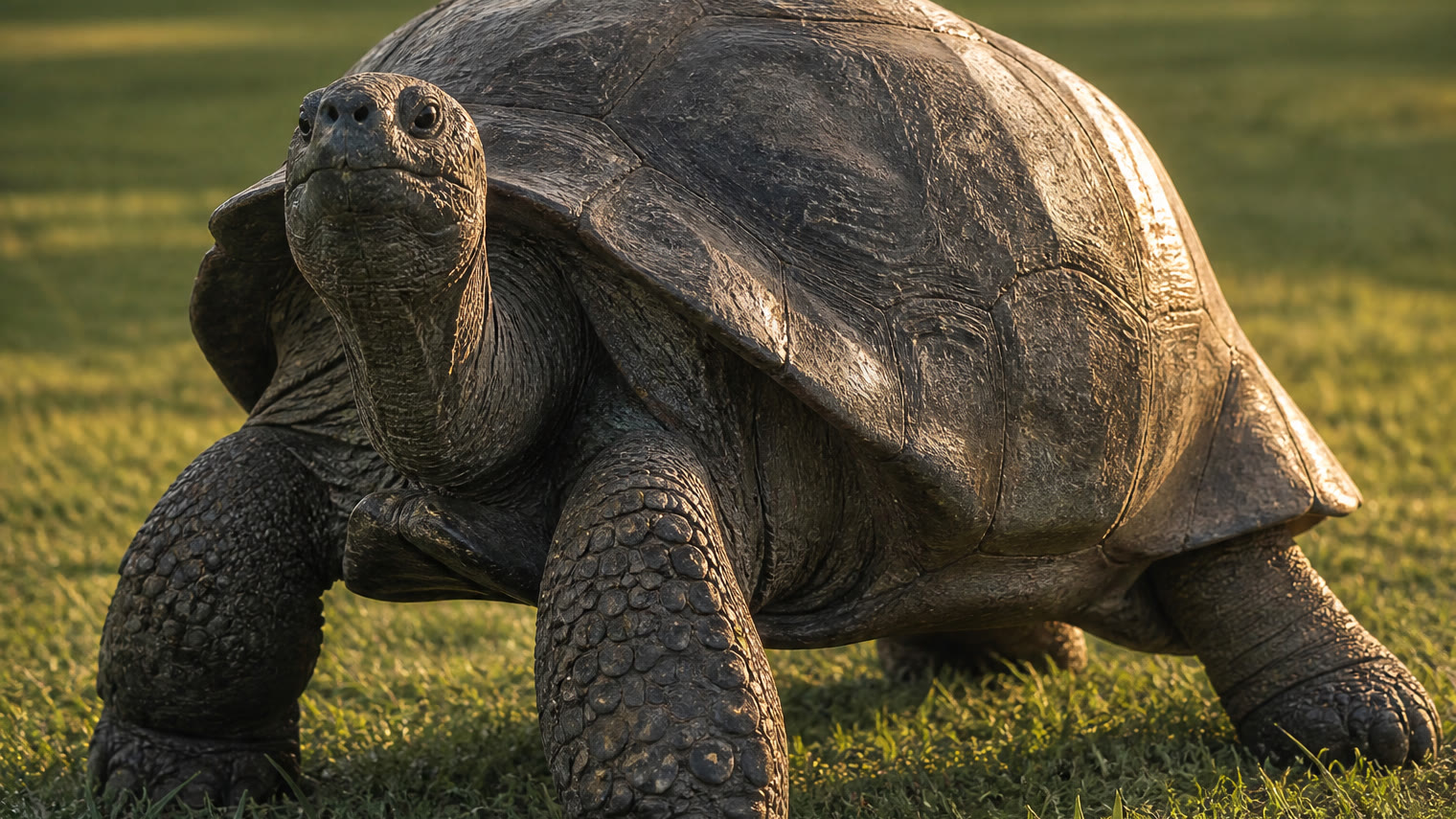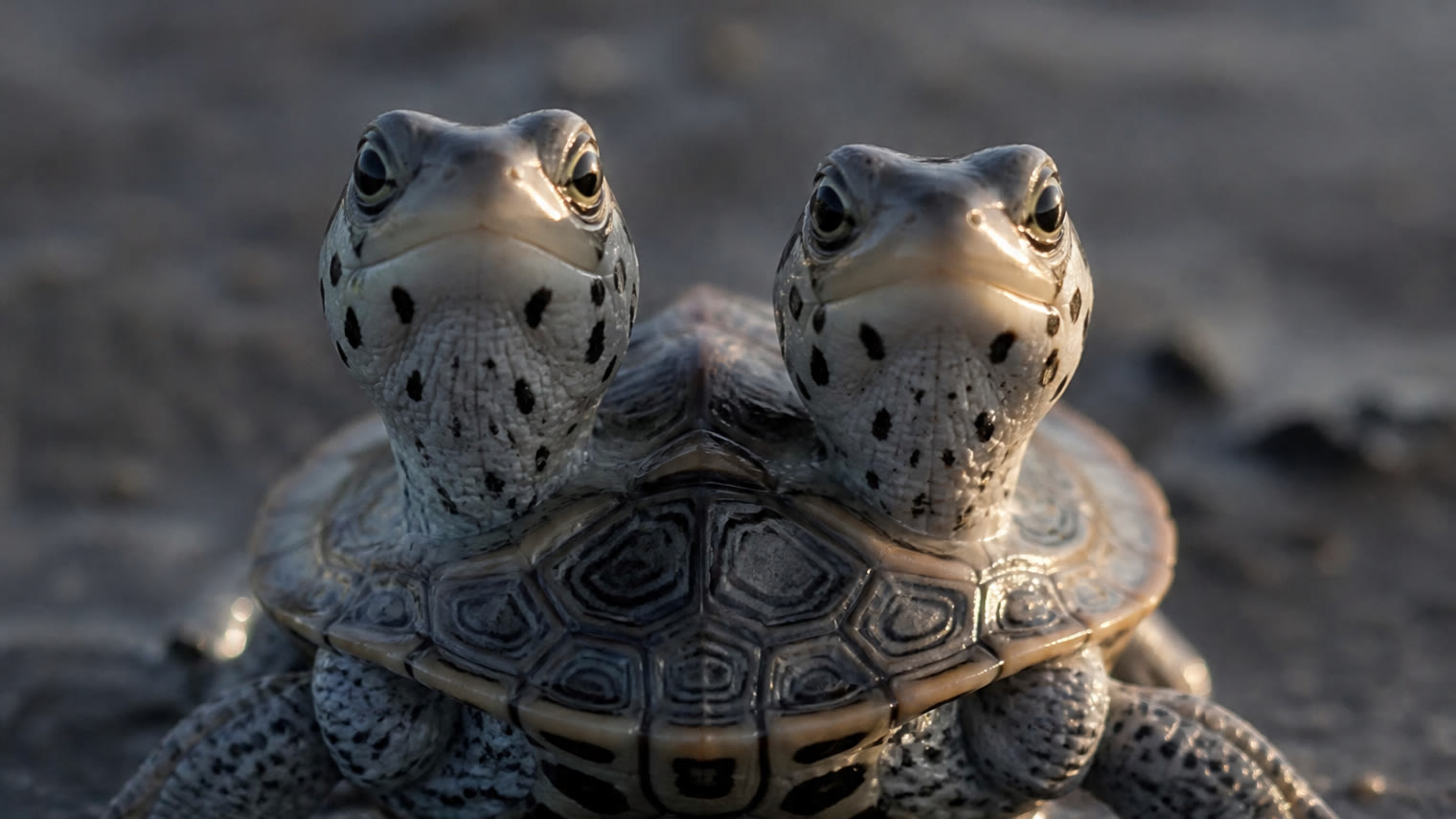
This is a longhorn cowfish.
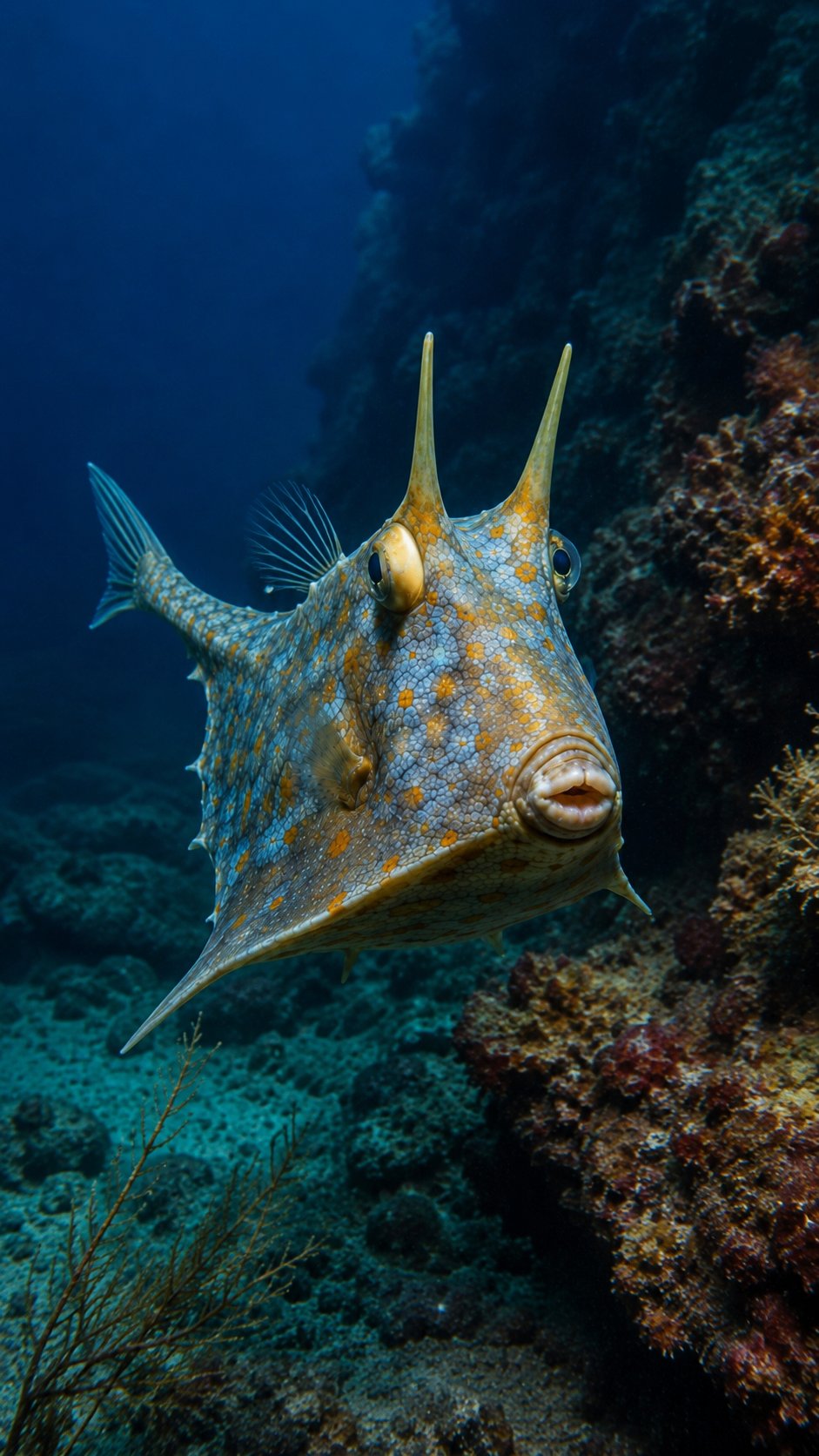
Illustration by Domi Verse X
A box with horns that cannot bend its body. The dangerous part is not the horns.
It looks like something a child drew and an engineer then had to build. A yellow box with blue spots, four horns, and a mouth set low at the front like a small vacuum nozzle. It lives on reefs and sandy flats across the Indo-Pacific, from the Red Sea and East Africa all the way east to the Marquesas, north to southern Japan and south to Australia.
The size depends on who you ask. FishBase lists a maximum of 46 cm, while other summaries give up to 50 cm. Either way, a full grown one is about the length of your forearm.
It does not swim like a fish
Most fish bend their whole body to move. This one cannot. Its body is wrapped in a shell of fused bony plates, and as Britannica puts it, everything except the eyes, mouth, fins and tail stays encased in that box. So the body holds completely still and only the fins and tail flutter. The result looks less like swimming and more like a badly tuned drone holding position in a breeze.
That rigidity is the trade. It gives up speed and agility, and in return it is very hard to bite, very hard to swallow, and almost impossible to knock off course by a passing current.
The horns are not decoration
Two horns above the eyes, two more pointing back from the underside. They make an already awkward mouthful into a genuinely difficult one. A predator that gets a cowfish into its mouth has to deal with a rigid box that is now wider than the box it thought it was eating.
Enjoying this story?
Get a short teaser by email whenever we publish something new. No spam.
The part the video did not tell you
Boxfish, including this one, carry a poison in the mucus on their skin. It is called pahutoxin, and it was first described in 1964 from a related boxfish by Donald Thomson, writing in Science. It is not a bite and not a sting. It is released into the water from the skin when the animal is badly stressed.
Here is the twist. The toxin is not aimed at anything in particular, and it does not spare the fish that made it. Pahutoxin is toxic to boxfish too, including the one leaking it. In the open ocean this barely matters, because the water carries it away in seconds. In a closed tank there is nowhere for it to go.
And there is a detail that gets the popular version wrong. The fish has to be alive to make the toxin, so the common line that a dying cowfish poisons everything around it is not quite how it works. The danger is a living, frightened fish in a small volume of water, not a dead one.
So it is a box that can empty a room
Britannica puts it plainly: when captured and handled, boxfishes exude a toxic substance that can kill other fishes kept with them. Which makes this the sort of animal that rewards being left alone rather than chased with a net.
Which raises a question worth sitting with. An animal whose best defence can also kill itself is not a design flaw. It is a bet that it will never be cornered in water small enough to matter.