This animal looks like poop, and it may outlive you
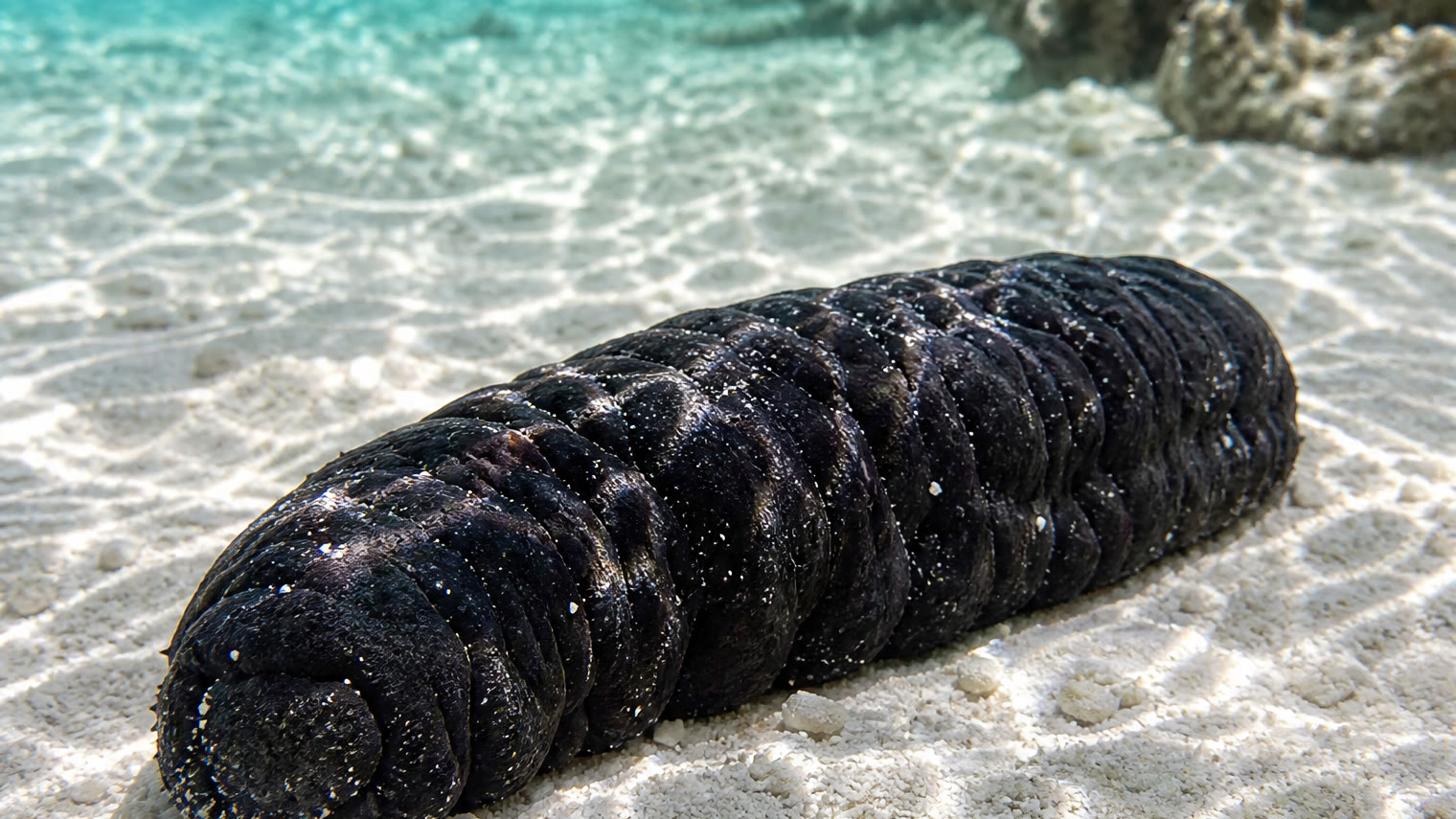
Illustration generated with AI for DomiVerseX
Scientists went back to one reef after 24 years and found old friends lying on the sand. What they worked out next is hard to believe, and even harder to prove.
This article contains affiliate links. If you buy through them, we may earn a small commission at no extra cost to you.
On the white sand of a coral reef lies a fat, black lump. It has no face that you can see. It does not seem to do anything at all.
The science site ScienceAlert did not try to be polite about it. Its headline said that this sea creature "looks like poop".
The lump is alive. It is a black teatfish, and in spite of the name it is not a fish. It is a sea cucumber, which is an animal and not a vegetable.
How old can a lump like this get? To find out, a team of scientists in Australia did something simple. They waited.
One small reef, far from the fishing boats
The story happens on the Great Barrier Reef, off the coast of Australia. Find Australia on a globe. The reef lies in the sea beside it.
The exact spot is called Bird Islet, near Lizard Island, according to ScienceAlert and the Japanese science site Nazology. The Australian Institute of Marine Science, AIMS for short, says the place lies in a "no-take zone". That is a part of the marine park where nobody is allowed to take animals out.
Why does this matter to you? If you want to know how long an animal lives when people leave it alone, you need a place where people really do leave it alone.
The same animals, 24 years later
In the year 2000, the scientists took a tiny sample from 76 black teatfish on that reef. That is about as many animals as there are children in three school classes. Each animal was put back where it was found.
Why a sample, and not a tag? Because tags do not stay on a sea cucumber. ScienceAlert reports that markers fall off within weeks or months. So the team read each animal's DNA instead. DNA is like a name tag that an animal carries inside every part of its body, and it cannot fall off.
In 2024, the scientists came back. A baby born in the year of the first visit would have been a grown adult of 24 by then.
They found black teatfish on the same reef and read their DNA again. About 30 of them were the very same animals as in 2000.
Here the sources do not agree on the exact count, and you should know that. ScienceAlert and Nazology, who both report from the study, say 31 animals out of 52. The press release from AIMS says 33 out of 55. Nobody has explained the difference. Both versions come to the same share: about six animals out of every ten.
"That really was a surprise," said Sven Uthicke, the scientist who led the study, in the press release.
Why does this matter to you? Think of going back to your first school after 24 years and finding that six of every ten children are still sitting at the same desks.
They did not grow. They shrank.
You would expect an animal to be bigger after 24 years. These were not.
In 2000, the animals were between 26 and 42 centimeters long. The shortest was a little shorter than a school ruler, and the longest was nearly as long as a ruler and a half.
By 2024, the animals that were found again were on average 21 percent lighter and 14 percent shorter. Picture a 1 kilogram bag of flour that now weighs about 800 grams. Picture a 30 centimeter ruler that is now about 26 centimeters long.
The AIMS press release says it in softer words: most of the animals grew very little, and many became smaller.
None of the reports gives a reason for the shrinking.
Why does this matter to you? With most animals, bigger means older. Here it does not. You cannot tell the age of a black teatfish by looking at it, and that makes the next part tricky.
The twist: nobody has met a 120 year old sea cucumber
Enjoying this story?
Get a short teaser by email whenever we publish something new. No spam.
You may have seen headlines saying that this animal lives for 120 years. Here is what the scientists really did.
They did not find a sea cucumber with 120 candles on its cake. Nobody measured the age of a single animal.
What they did was count who was still there. Of the 76 animals from 2000, about 41 percent were found again after 24 years. That is about two out of every five. So very few of them die in any one year.
Then came the question: what if that goes on for a whole life? If the animals keep dying at the same slow rate, about one adult in a hundred would still be alive somewhere between 109 and 126 years. ScienceAlert quotes one exact figure from that range: 123.3 years.
That is a calculation, not a birthday. It comes from one reef, and it only works if the death rate stays the same for life. This is why the careful word is "may". A small share of these animals could pass a hundred. A typical one probably does not. The study puts the average life at 24 to 27 years, or more.
So will it outlive you? A common figure for people around the world is an average life of about 73 years. One sea cucumber in a hundred could beat that by 40 or 50 years, if the calculation is right.
Now the twist turns once more, in the other direction. The 76 animals were already adults in 2000, and nobody knows how old they were then. So each animal found again is 24 years old plus an unknown number of years.
And there is a second reason why the true ages could be higher. The scientists cannot tell an animal that died from an animal that simply crawled away, ScienceAlert reports. Every animal that moved off counts as dead in the numbers. So the real death rate may be lower, and the real lives may be longer.
Uthicke puts the result like this: "This species is the first sea cucumber species known to surpass a longevity of a century."
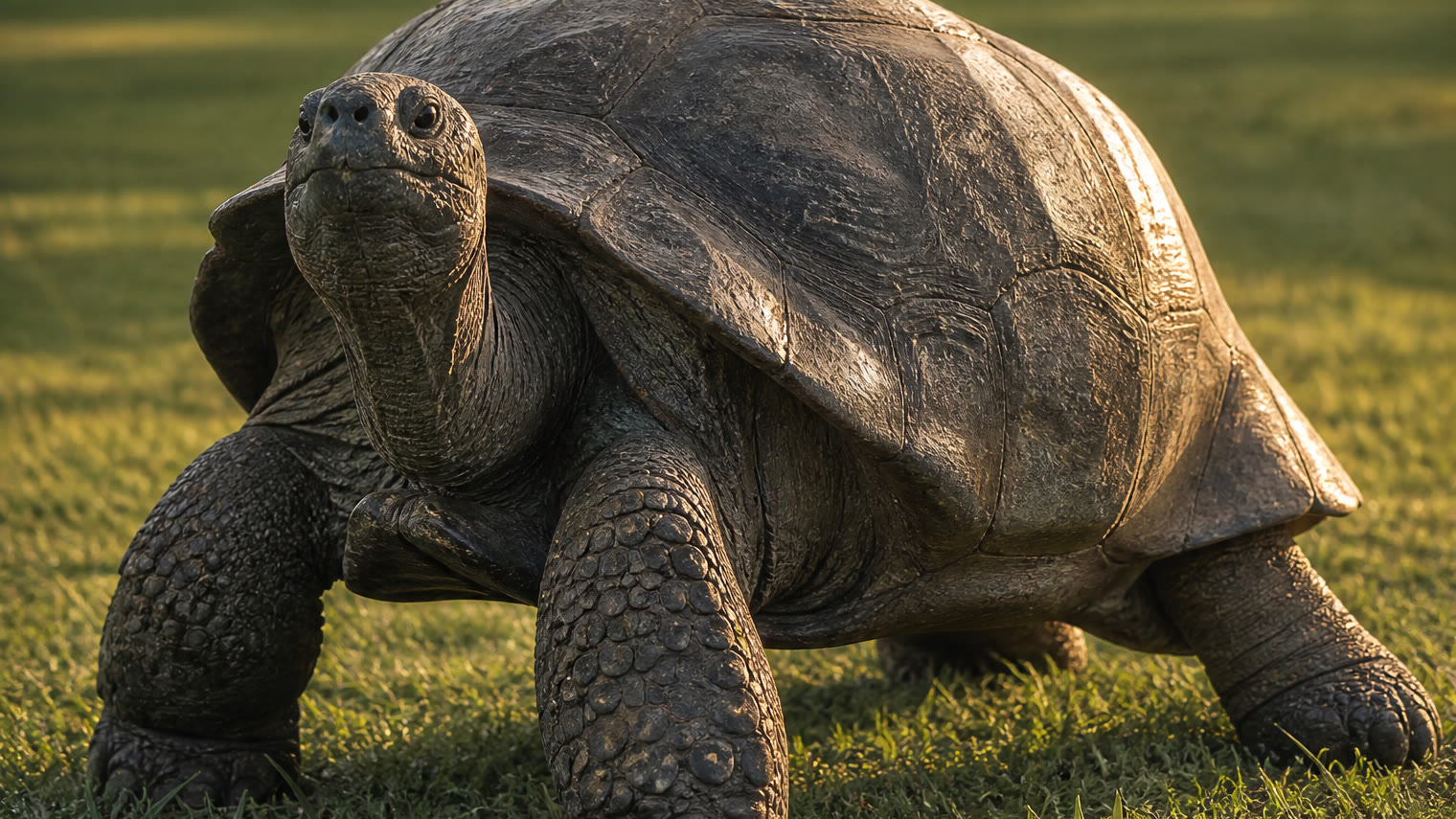
Even the most famous old animals have this problem. Jonathan, a giant tortoise on the island of Saint Helena, is said to be about 194 years old. His age is an estimate too.
Why does this matter to you? A big number in a headline can be an honest calculation and still not be a measurement. It is worth asking which one you are reading.
A slow life is easy to wipe out
Black teatfish are not only old. They are also worth a lot of money.
People in some parts of the world eat them as a fine food. According to the AIMS press release, they sell for more than 400 Australian dollars per kilogram in Hong Kong. A kilogram is the weight of that bag of flour. Only the press release gives that price.
The species is listed as Endangered on the Red List of the IUCN, a world list of animals and plants in danger.
Before this study, people thought a black teatfish lived for about 10 years, the press release says. If the new numbers are right, an average life is about two and a half times as long as that, or more. And an animal that lives slowly is replaced slowly.
"Harvesting long-lived reef animals like black teatfish is unlikely to be sustainable," Uthicke said. Maria Byrne of the University of Sydney called the results "a wake-up call to urgently increase their protection". Steven Purcell, another scientist quoted in the press release, said that fishers on Pacific islands report the species is "now rarely seen on their reefs".
The lumps also do a job. ScienceAlert reports that sea cucumbers recycle nutrients and help to keep a reef healthy.
Why does this matter to you? If you take away an animal that needed many decades to get old, the reef cannot just grow a new one by next summer.
Where are the young ones?
There is one more strange thing, and it comes from a single report. ScienceAlert writes that the scientists found no young black teatfish at all, not in 2000 and not in 2024. Every animal was a large adult.
ScienceAlert adds that this may mean new animals join the group only slowly. Maybe the young ones live somewhere else. Maybe they hide well. Maybe there are very few of them. None of that is known.
So two questions are left lying on the sand next to the black lumps. Why did animals that survived for 24 years get smaller? And if the old ones could last a century, where are the young ones that should come after them?
Sources
- This Sea Creature Looks Like Poop. It May Also Live For 120 Years, ScienceAlert
- Centenarian sea cucumbers at risk of over-fishing, Scimex (press release of the Australian Institute of Marine Science)
- Report on the 24 year black teatfish study (in Japanese), Nazology
- Holothuria whitmaei, Wikipedia
- Extreme longevity revealed by 24-year genetic mark-recapture challenges conservation of endangered sea cucumbers, iScience