
The planet closest to the Sun is shrinking like a raisin.
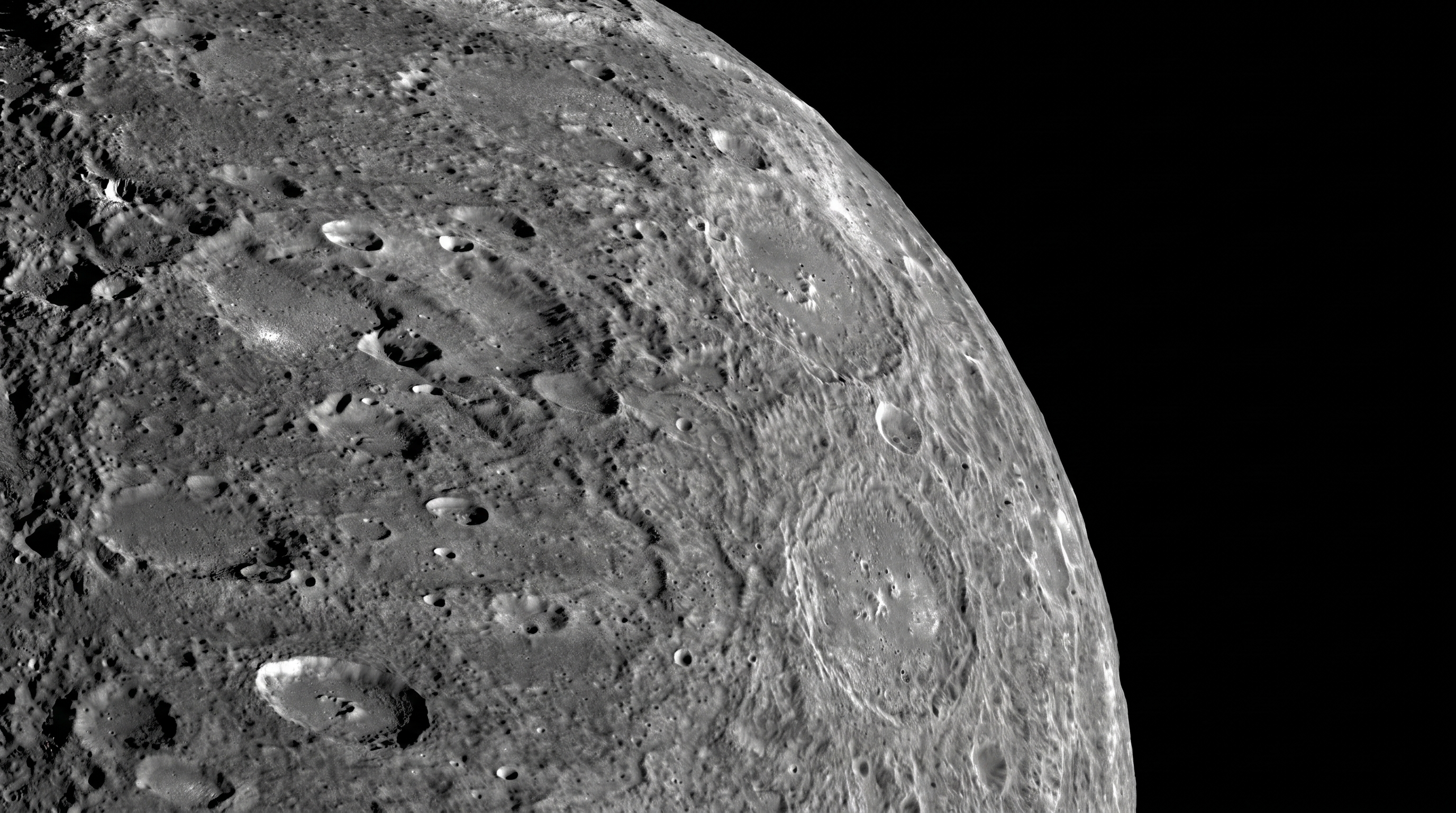
AI-generated illustration
Mercury has lost about 19 kilometers off its width since it formed, and scientists just found that earlier measurements missed a huge share of the wrinkles this shrinking left behind, hidden under rubble from younger craters.
This article contains affiliate links. If you buy through them, we may earn a small commission at no extra cost to you.
When NASA's MESSENGER spacecraft circled Mercury between 2011 and 2015, it photographed something odd. Long, curved cliffs snaked across the planet's gray, sun-baked ground, some of them stretching for hundreds of miles. Scientists call them lobate scarps, and they are not just any cliffs. They are wrinkles, and they are a clue to something happening deep inside the smallest planet in the solar system.
A World Full of Wrinkles
Picture the skin of a grape left in a bowl for a few weeks. As the fruit dries out and shrinks, the skin cannot shrink with it smoothly, so it buckles into folds. Mercury does something similar, just on a planetary scale and over billions of years. Its oversized iron core has been slowly cooling ever since the planet formed about 4.5 billion years ago, and as the core cools it shrinks, pulling the rocky shell down with it and crumpling the surface into cliffs. That much researchers have understood for decades. What they had not figured out was how to count all the wrinkles. If you want a hands-on reminder of just how wrinkled this little planet has become, a plush model of Mercury captures that same shrunken, cratered look, minus the four and a half billion years.
Something Didn't Add Up
For years, scientists estimated how much Mercury had shrunk by measuring the scarps they could see and adding up the ground they represented, similar to judging how far a bedsheet has been pulled in by counting its folds. A team led by planetary scientist Gaku Nishiyama at the German Aerospace Center (DLR) started comparing those old scarp maps with new maps that recorded how rough or smooth different patches of Mercury's surface were. The roughest patches, the ones scattered with debris from younger craters, had noticeably fewer visible scarps nearby than the smoother ground around them. As Nishiyama put it, "it made us think that there's a process obscuring shortening structures."
The Cliffs Were There. They Were Just Buried
That was the twist. The missing scarps in those rough patches had not disappeared. They were still there, just buried and blurred under rubble blasted out by younger impacts, the way a garden path can vanish under a fresh layer of gravel without the path itself going anywhere. Once the researchers used the clearer, less-cluttered regions as a guide for how much wrinkling should be happening everywhere, including underneath all that hidden debris, the total came out higher than before.
Enjoying this story?
Get a short teaser by email whenever we publish something new. No spam.
So How Much Has Mercury Actually Shrunk?
Here the numbers get a little messy, and it is worth being upfront about that rather than picking one figure and pretending it is certain. The study, published in the journal Geophysical Research Letters on September 10, 2026, found that Mercury's crust has likely contracted 10 to 30 percent more than earlier estimates suggested. That pushes the total loss in the planet's diameter since it formed to as much as 23 kilometers, or about 14 miles, up from earlier estimates of roughly 4 to 16 kilometers. Several outlets covering the same paper reported a more specific figure of about 19 kilometers, or 12 miles, off Mercury's width, while others emphasized the higher end near 23 kilometers. Either way, this shrinking played out gradually across the planet's entire 4.5-billion-year history. It is not something happening now, and nobody is suggesting Mercury is still visibly shrinking within a human lifetime.
A Spacecraft Is About to Get a Closer Look
There is a reason scientists think there could be even more hidden wrinkles still to find. NASA's MESSENGER probe could only reliably spot features larger than about 3 miles, or 5 kilometers, across. The BepiColombo mission, run jointly by the European and Japanese space agencies, is expected to settle into orbit around Mercury in November 2026 and take higher-resolution scans than MESSENGER ever could. If smaller scarps have been hiding in the rubble the same way the bigger ones were, BepiColombo may be the mission that finally spots them.
Why This Is Worth Knowing
Mercury's shrinking core is a preview, sped way up, of the kind of cooling that happens inside any rocky planet as it ages, Earth included. Getting the shrinkage numbers right helps scientists check whether their models of how planets cool and age actually hold up against a real planet's surface. Mercury has been keeping part of that story tucked under its own rubble for billions of years. The question now is simple: once BepiColombo gets a proper look, how much more of Mercury's shrinking has been hiding in plain sight all along?
Sources
- Mercury is shrinking more than we thought | AGU Newsroom, https://news.agu.org/press-release/mercury-is-shrinking-more-than-we-thought/
- Mercury is shrinking faster than we thought. What's going on inside of it? | Space.com, https://www.space.com/astronomy/mercury/mercury-is-shrinking-faster-than-we-thought-whats-going-on-inside-of-it
- Scientists Drastically Underestimated How Much Mercury Has Shrunk | Gizmodo, https://gizmodo.com/scientists-drastically-underestimated-how-much-mercury-has-shrunk-2000808810
- Little Mercury may be shrinking faster than scientists expected | Associated Press (via WFMZ), https://www.wfmz.com/news/ap/ap-national/little-mercury-may-be-shrinking-faster-than-scientists-expected/article_14456bde-f395-5bfd-b76f-9be58d206623.html