Telegraph Operators Disconnected Their Batteries and the Machines Kept Working
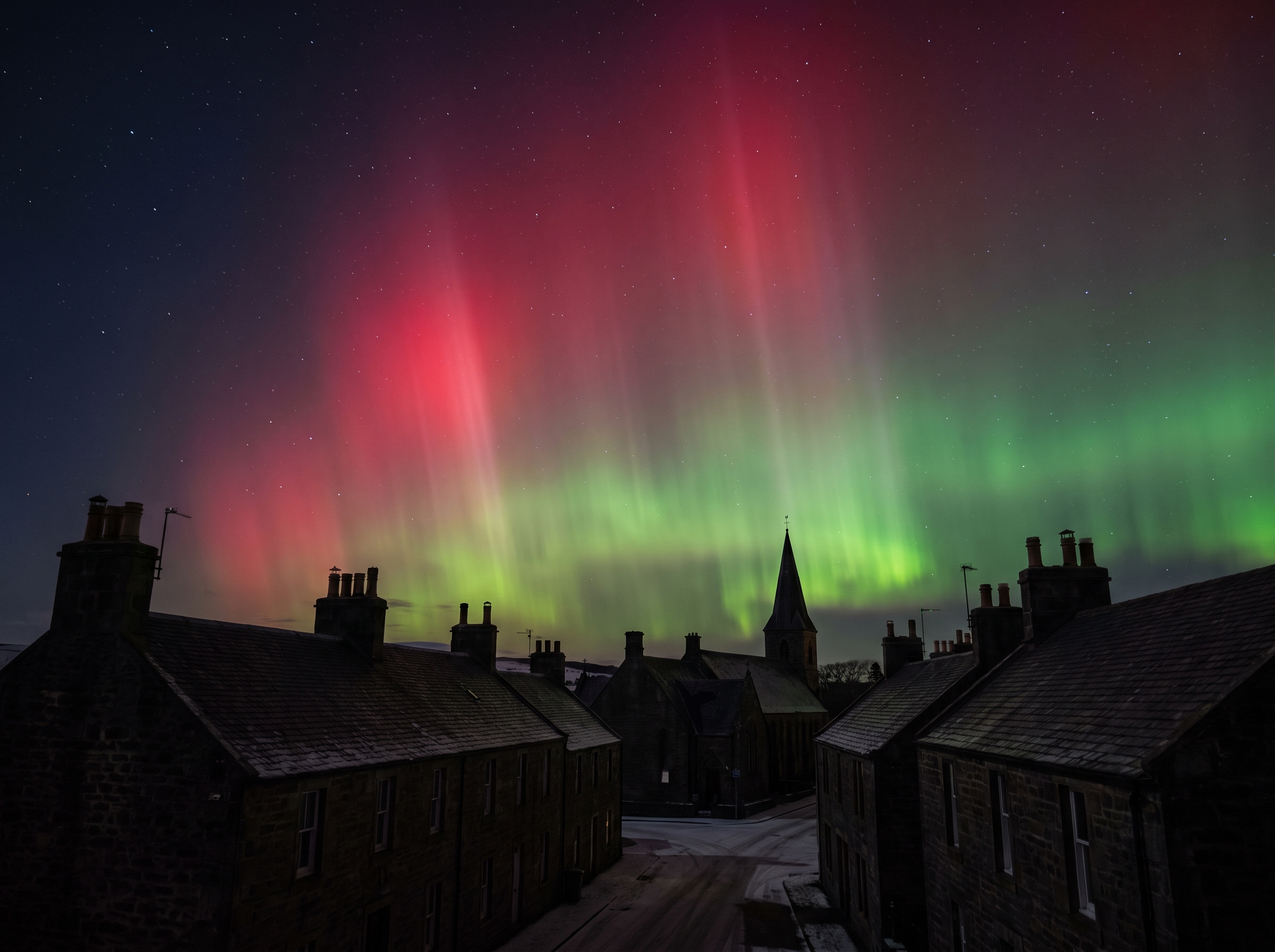
AI-generated illustration
In 1859 the sun hurled a storm at Earth that set telegraph offices on fire and lit the sky over the tropics. For two hours, the wires ran on the aurora.
This article contains affiliate links. If you buy through them, we may earn a small commission at no extra cost to you.
At about 11:15 GMT on 1 September 1859, an English astronomer named Richard Carrington was sketching sunspots at his private observatory in Redhill, Surrey. Two patches of light appeared on the solar surface, intensely bright, and over the next five minutes they moved across the sunspot group and vanished.
He had just watched a solar flare, and nobody had ever recorded one before.
The material it threw off reached Earth about 17.6 hours later.
What the sky did
The aurora that followed was seen in places that had no business seeing one. Reports came from Cuba, Hawaii, Queensland, Japan, south-central Mexico, and from Colombia, almost on the equator.
It was bright enough to be functional. Accounts describe birds beginning to sing and labourers getting up to start work, having concluded from the light that morning had arrived. People in the Caribbean reported being able to read by it.
What the wires did
The telegraph network was about fifteen years old in 1859 and was the closest thing the century had to global infrastructure. It consisted of very long conductors stretched across the landscape, which is precisely the worst thing to own during a geomagnetic storm.
When Earth's magnetic field changes rapidly, it induces current in any long wire sitting inside it. The longer the wire, the larger the current.
Operators across North America and Europe reported the same sequence. Sparks jumped from the keys. Paper tape scorched and in some cases caught fire. Insulation smouldered. In Washington an operator was grazed by an arc leaping from his equipment. Some telegraph poles caught alight. There are contemporary reports of operators being shocked badly enough to be knocked back from their desks.
The part that still gets quoted
Enjoying this story?
Get a short teaser by email whenever we publish something new. No spam.
On the morning of 2 September, employees of the American Telegraph Company arrived at the Boston office at 8 a.m. and found they could neither send nor receive.
The induced current was overwhelming the batteries. When the batteries were connected in their normal polarity they were fighting the current coming in from the sky, and the system threw sparks.
So the operators tried something else. They disconnected the batteries entirely.
The line kept working. The *Boston Evening Traveler* recorded the exchange between the Boston and Portland, Maine operators, and it is worth reading as a piece of nineteenth-century understatement: Boston asks Portland to cut off the battery for fifteen minutes, Portland replies that it is now disconnected, and Boston confirms that its own is off and that they are working with the auroral current.
They kept relaying messages that way for roughly two hours, at intervals of thirty to ninety seconds. By 10 a.m. the disturbance had eased enough that the stations reconnected their batteries, though transmission stayed degraded through the morning.
For two hours the American telegraph network ran on the sky.
What it would cost now
The Carrington Event remains the most intense geomagnetic storm in the instrumental record. Magnetometers of the day went off scale.
A 2008 National Research Council estimate put the damage from an equivalent storm today at up to two trillion US dollars. The exposed systems are no longer telegraph wires but high-voltage transformers, undersea cables, satellites, GPS timing and the grid infrastructure that everything else sits on.
The honest uncertainty is that we do not know exactly how much energy the 1859 event carried. Estimates of the flare, the coronal mass ejection and the particle flux all carry wide error bars. What is not uncertain is that storms of that class happen, that one missed Earth by about a week in July 2012, and that the infrastructure exposed to the next one is considerably more delicate than a copper wire on a wooden pole.
Sources
- Carrington Event | Armagh Observatory and Planetarium
- A Perfect Solar Superstorm: The 1859 Carrington Event | History.com
- East Asian Observations of Low Latitude Aurora during the Carrington Magnetic Storm | arXiv
- Space Weather Effects on Critical Infrastructure | arXiv
- Lord Kelvin's atmospheric electricity measurements | arXiv