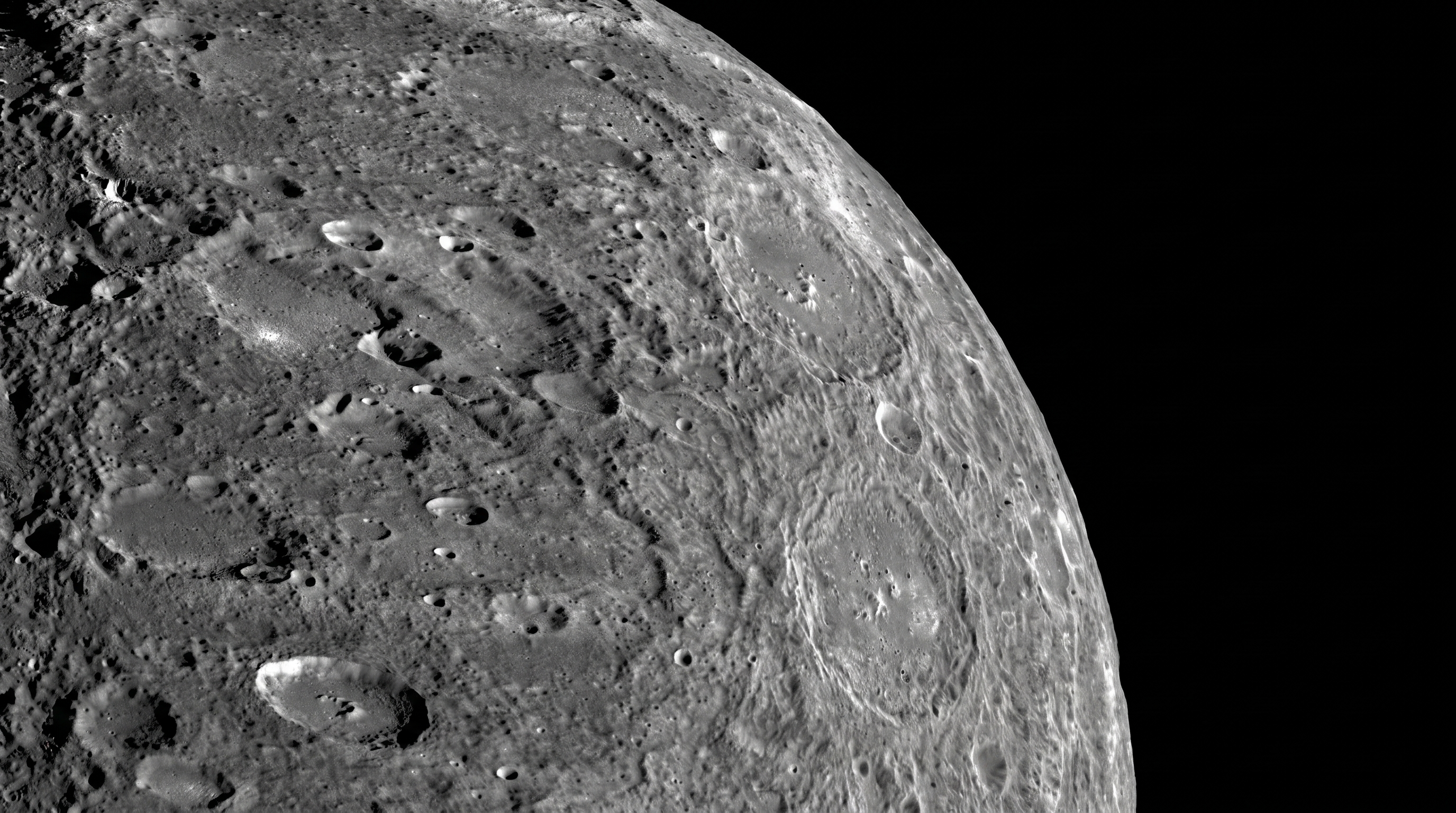
What is hiding under this hole on the Moon?
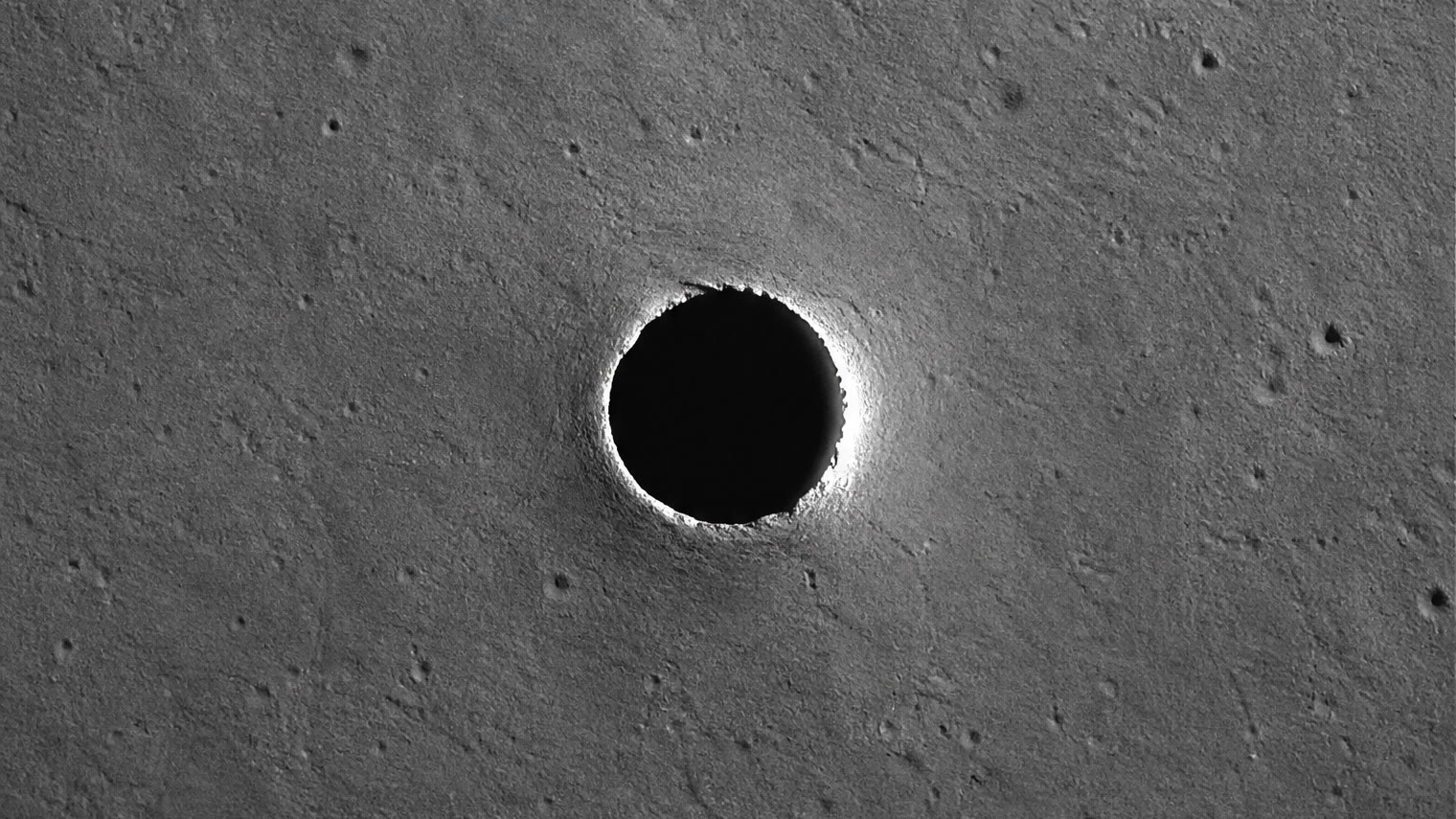
Illustration generated with AI for DomiVerseX
A spacecraft spotted a dark pit on the Moon in 2009, and clues about it have been piling up ever since. In 2026 NASA picked a team to go and find out where it leads.
This article contains affiliate links. If you buy through them, we may earn a small commission at no extra cost to you.
From far away the Moon looks like a solid gray ball. Up close, in a region called the Marius Hills, there is a hole in it. It is not a crater with sloping sides. It is a pit that drops straight down into the dark.
For years, scientists could only look at it from orbit and guess. Then, on 30 September 2026, NASA announced that it had selected a science project called GIMLI to investigate the pit from the ground.
Why should a hole on the Moon matter to you? Because if the guess about it is right, it could be a doorway. And one day, people could use that doorway as a place to live.
A pit deep enough to hide a building
The opening is about 58 by 49 meters across. An Olympic swimming pool is 50 meters long, so the pool would fit inside the opening one way with room to spare, and almost fit the other way. The pit is about 40 meters deep. That is about as tall as a 13 story building. If you stood on the floor and looked up, the rim would be as far above you as the roof of that building.
These figures come from the team behind the camera on NASA's Lunar Reconnaissance Orbiter, which published the first close views of the pit and updated its measurements in 2017. Its own earlier estimates made the pit wider and shallower, so if you find different numbers somewhere else, that is why.
The pit was first found in pictures from a Japanese spacecraft called Kaguya. The discovery is dated 2009, and the team was led by Junichi Haruyama. That was 17 years before GIMLI was selected. If you are 10 years old, people have been wondering about this hole for longer than you have been alive.
On a map of the Moon you would find it in a region called Oceanus Procellarum. It sits in the middle of a long winding channel in the ground, and that position is the first clue.
The clues from orbit
Why would there be a deep pit in the middle of a winding channel? The camera team's best explanation is that the pit is probably a place where the roof of a lava tube fell in. A lava tube is a long hollow tunnel left behind by flowing lava. The team adds another possibility: a rock from space could have punched through the roof.
Either way, a hole in a roof means there could be more roof, and more tunnel, on each side of it. Three clues from orbit point the same way.
First, pictures from the Lunar Reconnaissance Orbiter showed the floor of the pit carrying on underneath the overhanging roof. So the space at the bottom is wider than the opening.
Second, Kaguya carried a radar. Japan's space agency, JAXA, reported that its echoes fit an intact lava tube near the pit, and that the hollow could carry on underground for about 50 kilometers. That is longer than a marathon race, which is a little over 42 kilometers.
Third, a mission called GRAIL measured the Moon's gravity. At most of the same spots, it found less mass than solid rock would have.
Put together, that sounds convincing. But JAXA itself calls the tube a candidate, and Universe Today points out that all of the evidence comes from orbit and none of it is confirmed. Nobody has seen the tunnel. Nobody has measured it from the ground.
This matters because it is a good example of how science deals with something it cannot reach. You collect clues, you say "could", and you keep saying "could" until somebody goes and checks.
Checking a cave without climbing in
That is the job of GIMLI. Its goal, as described by NASA and the Planetary Science Institute, is to find out whether the pit opens into a large lava tube and how big that tube is.
Here is the surprising part of the plan. According to the Planetary Science Institute, GIMLI investigates the pit "directly from the lunar surface". No source we found says that anything will drive or climb into the hole. As far as the published plan goes, the instruments stay on top.
There are four kinds. One is a radar that looks down into the ground, supplied by the Norwegian Space Agency. One is a gravimeter, which takes gravity readings. Cameras will photograph the walls of the pit that are open to view. The fourth kind is the strangest, and it gets its own section below.
Enjoying this story?
Get a short teaser by email whenever we publish something new. No spam.
Think of it like a wrapped present. You are not allowed to open it, but you can weigh it, tap it and look at it from every side. Each test tells you a little. Together they could tell you what is inside.
The plan is to thump the Moon and listen
The fourth kind of instrument is a set of seismic sensors, which feel shaking in the ground. Usually sensors like these wait for the ground to shake by itself. GIMLI will not wait. The mission will make small shakes in the ground on purpose and listen to what comes back.
You have probably done something like this at home. Knock on a wall, and a solid spot sounds different from a hollow one. The idea is to knock on the Moon.
What makes this special is how long it has been. Than Putzig of the Planetary Science Institute, who leads GIMLI, says this method has not been used in planetary science since the seismic surveys of the Apollo missions. Universe Today quotes him as saying: "It's long been a desire of mine to reintroduce intentional active-source seismic methods to planetary science."
So one of the newest Moon projects is bringing back one of the oldest tricks. The sources do not say how the thumping will be done, so that detail is still open.
For you, the point is simple. A new answer does not always need a new invention. Sometimes it needs an old idea taken to a new place.
Why a cave on the Moon matters to people
NASA gives a practical reason in its announcement: a lava tube would shelter astronauts from radiation and from the Moon's temperature swings. A ready made roof of rock is a roof nobody has to carry there from Earth.
There is a science reason too. Gareth Morgan, the deputy leader of GIMLI, put it this way: "Confirming a substantial lava tube would give us an insight into how volcanism operated on the Moon."
And the tunnel, if it exists, is very old. According to Universe Today, the Moon's lava tubes probably formed about 3.8 to 3 billion years ago. The last big dinosaurs died out about 66 million years ago. Even the younger end of that range is about 45 times further back in time.
What nobody has said yet
It would be easy to make this sound closer than it is, so here is what was missing when this article was written in October 2026. No source gives a launch date. No source names the company whose lander will carry GIMLI. No source gives a cost. The project was chosen through a NASA program called PRISM and is to be delivered by another called CLPS, and that is all that has been published.
GIMLI was also not chosen alone. NASA selected two other projects with it: DISCO, which will look for ice in small cold traps, and LEMS-SP, a long lived monitoring station at the Moon's south pole.
The team is spread across several places. Honeybee Robotics, a Blue Origin company, is a partner. Other team members come from Boise State University, Johns Hopkins University, the Lunar and Planetary Institute and the University of Oslo.
Why tell you what is not known? Because a mission without a launch date is a plan, not a trip. It is fair to be excited and still ask when.
Is there really a cave down there?
Everything in this story rests on a "could". The radar echoes could mean a tunnel. The missing mass could mean empty space. The floor that carries on under the roof could go on for 50 kilometers, or it could stop after a few steps.
If GIMLI flies and its thumps come back sounding hollow, the next question arrives at once. Is the cave big enough, and safe enough, for people to live in?
Sources
- NASA adds new science investigations for Moon base, NASA
- PSI-led team selected for NASA PRISM program, Planetary Science Institute
- NASA selects GIMLI to search the Marius lunar pit for a potential lunar base site, Universe Today
- GIMLI selection news release, ScienceDaily
- Marius Hills pit, first close views, Lunar Reconnaissance Orbiter Camera
- Marius Hills pit, earlier measurements, Lunar Reconnaissance Orbiter Camera
- Kaguya radar detection of a candidate intact lava tube at the Marius Hills, JAXA ISAS