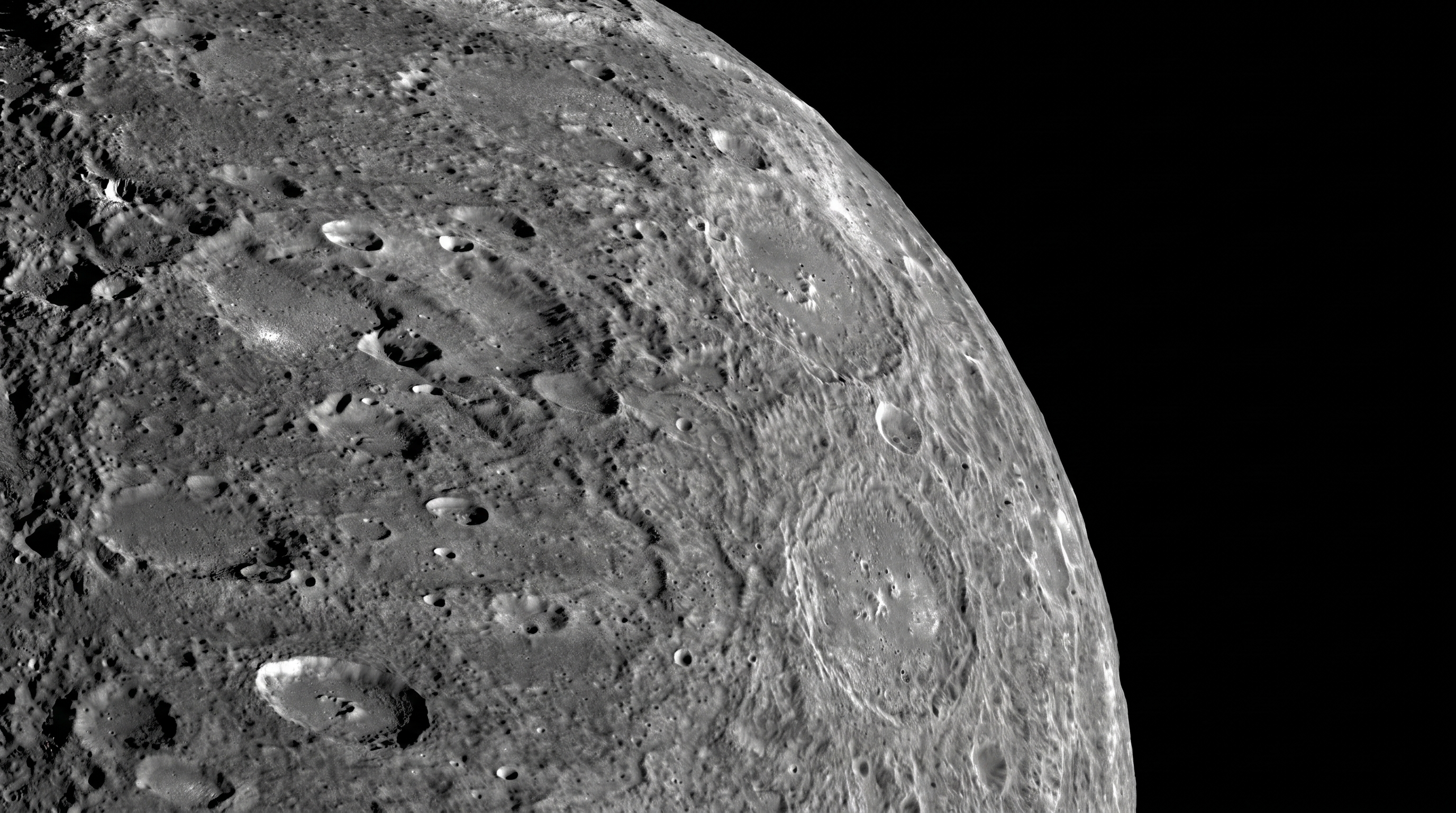
One Of The Most Researched Star Systems Hid A Massive Secret
AI-generated illustration
Two separate teams found the same planet on the same day. It had been sitting in the pictures for eleven years.
This article contains affiliate links. If you buy through them, we may earn a small commission at no extra cost to you.
Beta Pictoris is not an obscure star. It is one of the most watched objects in the southern sky. Nothing you can buy will show you its planets, though a decent pair of stargazing binoculars will show you plenty of things astronomers were still arguing about a century ago. Professionals have pointed telescopes at Beta Pictoris for decades, photographed the ring of dust around it, and found two enormous planets orbiting inside it.
On 15 July 2026, two teams announced that they had both found a third one. Neither team was looking for it. And once they knew where to look, they discovered it had been in their old photographs for eleven years.
The star everyone was already watching
Beta Pictoris sits about 63 light-years from us. In cosmic terms that is close, close enough that it is one of the few star systems where we can actually photograph the planets rather than infer them.
It is also very young. The system is somewhere around 20 to 23 million years old. Our own Sun is about 4.6 billion. If you scaled the Sun's life to a human of forty, Beta Pictoris would be a baby of a few weeks. Its planets are still settling. The dust around them has not been swept up yet.
That is exactly why astronomers keep looking at it. It is the closest thing we have to a live recording of how a solar system gets built, and it is the sort of thing our own neighbourhood looked like before Earth existed.
The star itself sits in Pictor, a small southern constellation almost nobody can find from memory. This is exactly the situation a rotating star chart was invented for: you dial in the date and the hour, and it shows you what is actually above you rather than what a poster says should be.
Two teams, one planet, one day
One team used the European Southern Observatory's Very Large Telescope in Chile, with an instrument called ERIS. They were re-examining the known planet Beta Pictoris b to see how it had changed over time.
They saw something else.
The other team, led by Aidan Gibbs at the University of California, was using the James Webb Space Telescope for essentially the same reason: studying the atmosphere of a planet they already knew about. A signal turned up in the data where nothing was supposed to be.
Both groups published in the same journal on the same day. Neither had set out to find a planet. Gibbs put it plainly: they were trying to understand a world they already knew existed, and then a signal appeared where they did not expect one.
That happens more often in science than the textbooks suggest. Some of the biggest finds are the thing sitting next to the thing you were actually looking for.
The amateur version of that problem is knowing where to point in the first place, which is the whole subject of Turn Left at Orion, the spiral-bound guide most observers end up owning. It shows you what each object actually looks like through a small telescope rather than what it looks like in a press photograph, which is a distinction worth learning early.
How you find a planet without seeing it as a dot
Here is the part that makes this discovery different from the two before it.
Beta Pictoris b and c were found the ordinary way. You block out the star's light and look for a faint point of light beside it. It works, but only if the planet is bright enough to stand out. The same principle governs your own eyes outdoors, which is why observers carry a dim red light rather than a normal torch. One second of white light and your dark adaptation is gone for the next twenty minutes.
Beta Pictoris d is not. It is roughly 100 times fainter than Beta Pictoris b. Worse, it sits inside a huge disc of dust that glows and smears across everything. Looking for it that way is like trying to spot a candle in a lit fog bank.
So the Webb team did something else. They looked at the colours.
Every gas absorbs specific colours of light and lets the rest through. If you spread light out into its full spectrum, those absorbed colours show up as dark gaps, always in the same places for the same gas. It is a fingerprint, and it works the same way a barcode scanner works: the pattern of gaps is the identity.
Dust does not produce that pattern. It just glows smoothly. So when the team saw a repeating set of gaps in one small patch of the disc, they knew they were not looking at dust. The pattern belonged to carbon monoxide, which is exactly what you expect in the atmosphere of a young giant planet.
Enjoying this story?
Get a short teaser by email whenever we publish something new. No spam.
Follow-up observations in March 2026 with Webb's MIRI instrument found water vapour and methane at the same spot. That settled it.
This is the first planet ever found this way, by matching a spectrum against a library of model atmospheres rather than by spotting a dot. It is a genuinely new tool, and it works precisely where the old method fails: on faint, cold planets buried in bright dust.
It had been in the pictures all along
Normally, confirming a planet means going back for more observations and waiting.
Beta Pictoris did not need that, because so many people had already photographed it. The teams went into the archives instead, and there it was. The ESO team found it in images going back as far as eleven years, including one where it was only barely visible against the glare of its bigger neighbour. It also turned up in older Webb data.
Nobody had been wrong, exactly. The planet was simply too faint to notice unless you already knew the precise spot to check. Once you did, it was obvious.
One of the researchers, Jayne Birkby, described it as a game of hide-and-seek that had run for over a decade.
The uncomfortable implication is the interesting one. Astronomical archives hold decades of images that were taken to answer one question and then filed away. If a planet can sit unnoticed in the most examined system in the sky, there is a reasonable chance other archives are holding things nobody has looked for yet. One of the co-authors said as much directly, that the archives probably still hold more.
It is the small one, and that is the point
Beta Pictoris d is a gas giant. It is also, by the standards of its own neighbourhood, the runt.
The two previously known planets are each around ten times the mass of Jupiter. Beta Pictoris d comes in at about 2.4 Jupiter masses according to the ESO team. It orbits much further out than the other two, roughly where Neptune sits in our own system, and takes about 91 years to go around once. It is cold, and cold is a large part of why it is so faint.
Being small is what makes it valuable. Direct imaging has always been biased towards monsters, because monsters are the only things bright enough to see. Every time the floor drops, the picture of what is out there gets less distorted. Beta Pictoris d is among the lightest planets ever imaged from the ground, and by one measure the faintest.
Faintness is the enemy at every scale, including a back garden. More magnification makes an object bigger and dimmer at the same time, which is why a variable zoom eyepiece is more useful than a drawer full of fixed ones: you can find the point where the object is as large as it can be while still bright enough to actually see.
It may also solve a problem that had been sitting there for years. The dust disc around Beta Pictoris has an oddly sharp inner edge, the kind of shape that usually means something massive is sweeping the area clean. Nobody could point to what. Beta Pictoris d has close to the right mass in close to the right place.
Why any of this should matter to you
There are two reasons, and neither is about the planet itself.
The first is the method. Until now, finding a planet meant seeing it. Now it can mean recognising the chemistry of its air. That works on colder, smaller, less spectacular worlds, and colder and smaller is the direction you have to go if you eventually want to find something like Earth.
If it makes you want to go outside and actually look at something, a hands-free red headlamp is the one accessory experienced observers never leave at home, because it keeps both hands free and does not blind you every time you check a chart.
The second is the archive. Somebody photographed this planet eleven years ago and did not know it. The data was public the whole time. That is a strange and slightly hopeful thing about science: a discovery can already be sitting on a hard drive, finished, waiting for someone to ask the right question of it.
Beta Pictoris has been studied for forty years. It was still holding something back.
Sources
- ESO press release eso2609: Faintest planet ever imaged from Earth found after more than 10 years of hide-and-seek, 15 July 2026
- Gibbs, A. et al., Discovery of an Exterior Third Planet Orbiting β Pictoris, The Astrophysical Journal Letters
- Sutlieff, B. J. and Bonse, M. J. et al., The Astrophysical Journal Letters
- Max Planck Institute for Astronomy: A New Planet in the Beta Pictoris System
- NASA / Space Telescope Science Institute release, via ScienceDaily, 22 July 2026
- Astrobiology.com: Webb Discovers A Hidden Planet In The Beta Pictoris Star System, 16 July 2026