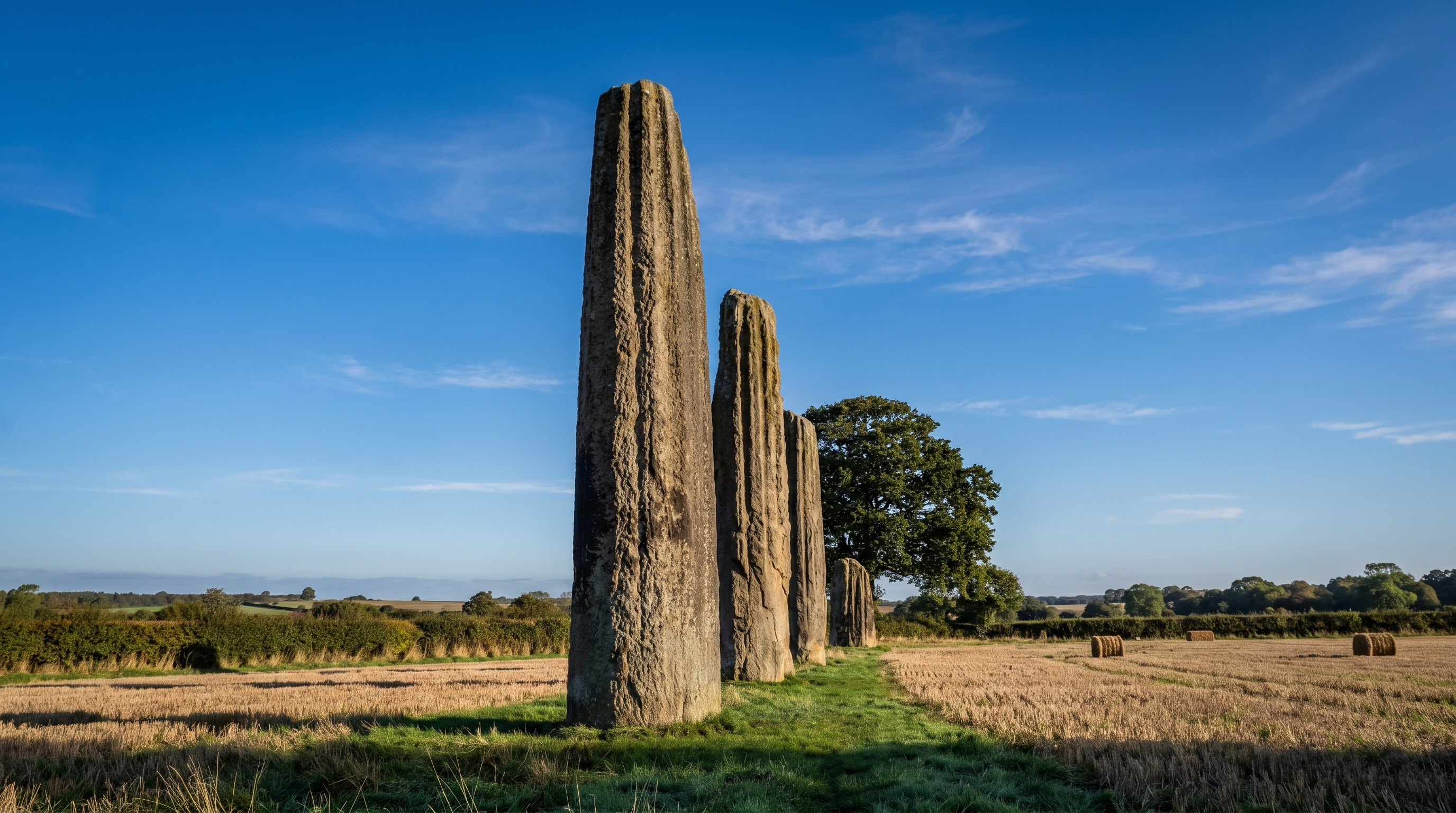
The ice is melting on a Norwegian mountain, and 48 arrows came out
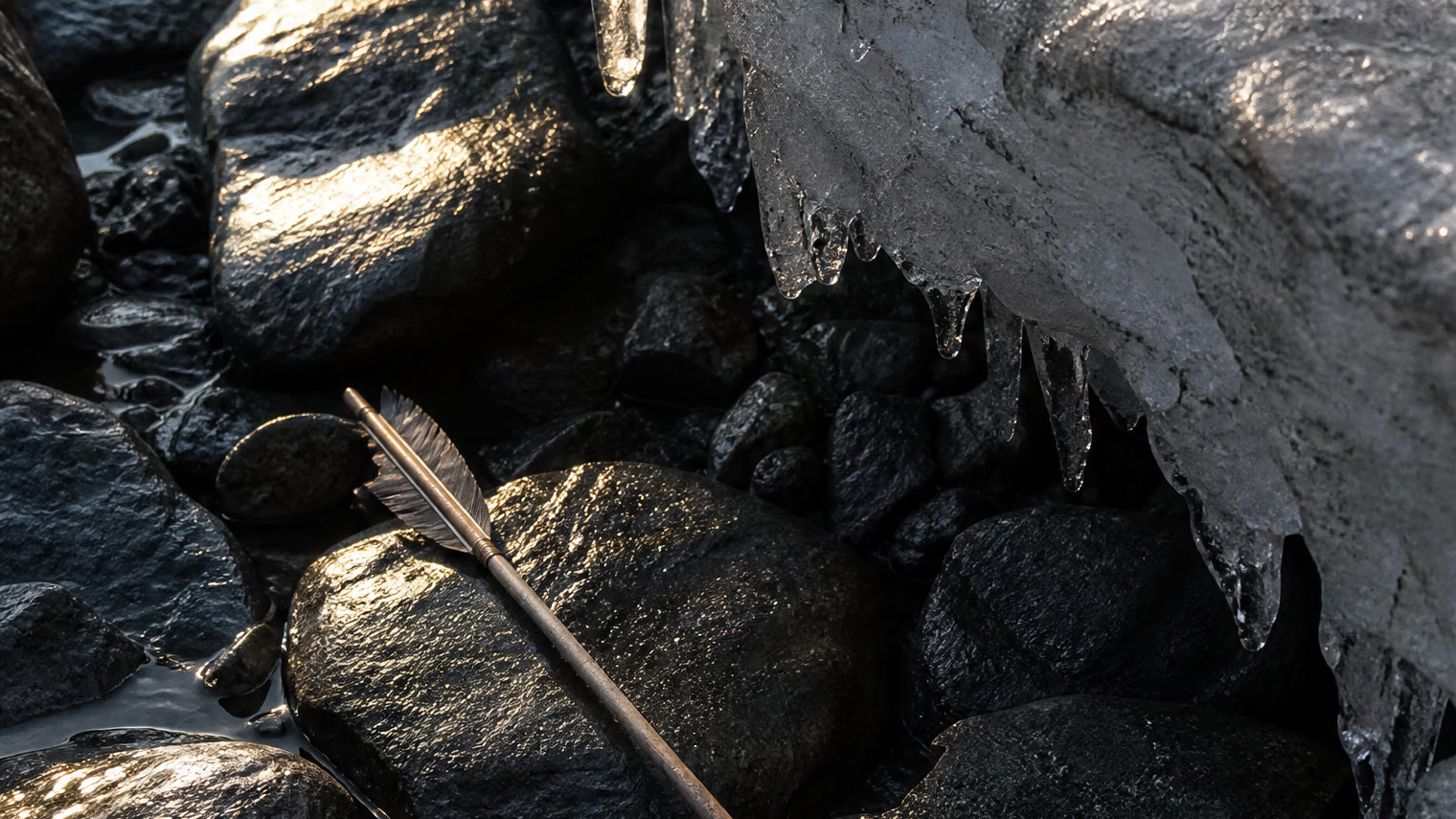
Illustration generated with AI for DomiVerseX
For three weeks in the summer of 2026, a small team walked along the edge of some shrinking ice in the mountains of Norway. What they picked up is good news with bad news hidden inside it.
This article contains affiliate links. If you buy through them, we may earn a small commission at no extra cost to you.
High in the mountains of Jotunheimen, the ice has a ragged gray edge. Meltwater runs over dark stones. On those stones, lying perfectly still, is a thin wooden stick with a point at one end. A few steps away lies another point with no stick at all. Stone arrowheads like that one were probably last touched by the person who shot them.
That was the scene in the summer of 2026. Archaeologists from a program called Secrets of the Ice spent three weeks at the melting edge of three ice patches. Their names are Langfonne, Storfonne and Handklefonne, and they lie in the Kvitingskjølen mountain area. The place is about 320 kilometers from Oslo, the capital of Norway. By car that is about a four hour drive.
The team came down from the mountain with 48 prehistoric arrows.
Why does this matter to you? The past is not always buried deep. Sometimes it is lying on the ground in plain sight, and the only question is who gets there first, a person or the weather.
Four dozen in three weeks
Three weeks is 21 days, so 48 arrows is more than two for every day of the trip. The count includes complete arrows, loose arrowheads and pieces of shaft. No report says how many of each, so nobody outside the team knows how many of the 48 are whole.
The number also carries a date. The team reported it on 23 September 2026, after that one expedition. More fieldwork was planned for the weeks that followed, if the weather allowed, so the total for the year could be higher than 48.
The leader of the team, Espen Finstad, said it simply. "This year, we found 48 prehistoric arrows. That's a lot," he told Science Norway. His own report has a title that says the same thing: "Year of the Arrows".
Who lost them all? Hunters did. People climbed up to this ice with bows to hunt reindeer, and some of their arrows were lost on the ice. The ice then kept safe the things that normally rot away: wood, animal sinew and even birch bark.
Reindeer still use the ice. One of the slate arrowheads was photographed where it lay, with reindeer standing on the ice patch behind it.
Why does this matter to you? Each of the 48 is a small moment from one person's day. Someone aimed, let go, and lost an arrow. You know the feeling of losing something you needed. This is that feeling, kept in a freezer for thousands of years.
Slate, shell and bone
The arrows are not all the same age. They are not even close.
The oldest find of the summer is an arrow with a tip of slate. It is about 5,000 to 6,000 years old. If a new generation is born about every 25 years, that is 200 to 240 generations ago.
The strangest is an arrowhead cut from the shell of a freshwater mussel. It is about 3,600 years old. It is fragile, and it has already begun to split.
From about the same time comes the back end of an arrow shaft. It still has animal sinew and birch bark wrapped around the notch where the bowstring sat. Somebody's fingers wound that wrapping about 3,600 years ago, and it is still in place.
One arrow is complete. It has a bone head and a wooden shaft, and it is about 1,800 years old. The archaeologist Kjetil Loftsgarden, from the Museum of Cultural History in Oslo, held it up for the camera. The mussel shell point is about twice as old as that arrow.
And the youngest? If Science Norway has it right, they are arrowheads of iron, about 1,000 to 1,500 years old, and a shaft that is about 1,000 years old. Think about what that means. The gap between the oldest arrow and the youngest one is four or five times as long as the gap between the youngest one and you.
One honest note. These ages are the team's best current estimates, made by comparing each arrow with ones found before. No laboratory dates had been published when this article was written, in October 2026.
Enjoying this story?
Get a short teaser by email whenever we publish something new. No spam.
Why does this matter to you? This is one mountain, used for the same thing for thousands of years. People kept coming back to the same ice, long after everyone who first hunted there was forgotten.
The twist: older is worse
Here is the part that turns the story around. You would think that older finds are better news. For this team they are a warning.
Secrets of the Ice began in 2006, so 2026 was its 20th year. In that time it has recorded 73 sites and recovered more than 5,000 objects from the ice. That is about 250 objects a year, or about five for every week.
In 2006 most of the objects were less than 2,000 years old, and many came from the Viking Age. Now the Stone Age is coming out. The team explains why in one short sentence: "The oldest ice contains the oldest finds."
So when Stone Age arrows appear, the team is reaching the bottom of the ice. Finstad told Science Norway that there has been ice at this place for 6,000 to 7,000 years. The oldest arrow of the summer is almost as old as the ice that held it.
When the last layer goes, this frozen store of old things is finished. And anything that melts out and is not collected rots away within a few seasons.
Finstad did not hide how that feels. "Only patches of ice remain where we once had large ice patches. It's brutal," he said. And then: "Now it is simply going to melt."
Why does this matter to you? A find that looks like a win can be a sign that something is running out. It is like getting to the last pages of a book when there is only one copy.
A fridge for arrows
Some of the arrows went on show within days. They were placed in a refrigerated case at the Norwegian Mountain Centre in the village of Lom. The team calls it a "fresh finds counter", like the chilled counter in a food shop. Visitors could look at an arrow that had been lying by the ice only days earlier, as Smithsonian Magazine also describes.
There is one more number worth knowing. If Science Norway is right, one single ice patch has given up more than 100 arrowheads and arrow shafts over the years. That is more than twice the 48 from this whole summer. The report does not name the patch.
Why does this matter to you? These finds are not locked away where only experts see them. Somebody decided that ordinary visitors should see them almost as soon as the archaeologists did.
The 20 year clock
Langfonne was once one large ice patch. It has split into several smaller ones, and the team says it will probably be gone completely within 20 years. Most of the other ice patches with finds in them could go the same way in that time.
Put that next to the age of the ice. If the whole life of this ice were squeezed into one day, the 20 years it has left would be about the last four or five minutes. A child who started school in 2026 would be about 26 years old when the ice is gone.
Secrets of the Ice is run by Innlandet County Municipality and the Museum of Cultural History in Oslo. Its people can only walk so much mountain in a summer, and there are 73 sites to watch.
That leaves a question no one can answer. Regular searching by this program only began in 2006. How many arrows had already come out and rotted away in the years when nobody was looking?
Sources
- Year of the Arrows: Now the Stone Age Is Melting Out, Secrets of the Ice
- The oldest ice is disappearing: The Stone Age is emerging from the melting ice, Science Norway
- In an Exciting but 'Brutal' Find, a 5,000-Year-Old Arrow Emerges From Norway's Rapidly Melting Mountain Ice, Smithsonian Magazine
- World's Largest 'Glacial Archeology' Expedition Recovers 48 Stone Age Arrowheads and Shafts, Good News Network
- Hidden in Ice for Millennia, a 6,000-Year-Old Discovery Has Emerged from Western Scandinavia's Once-Frozen Landscape, The Debrief