A tomb built for a man whose entire job was secrecy.
AI-generated illustration
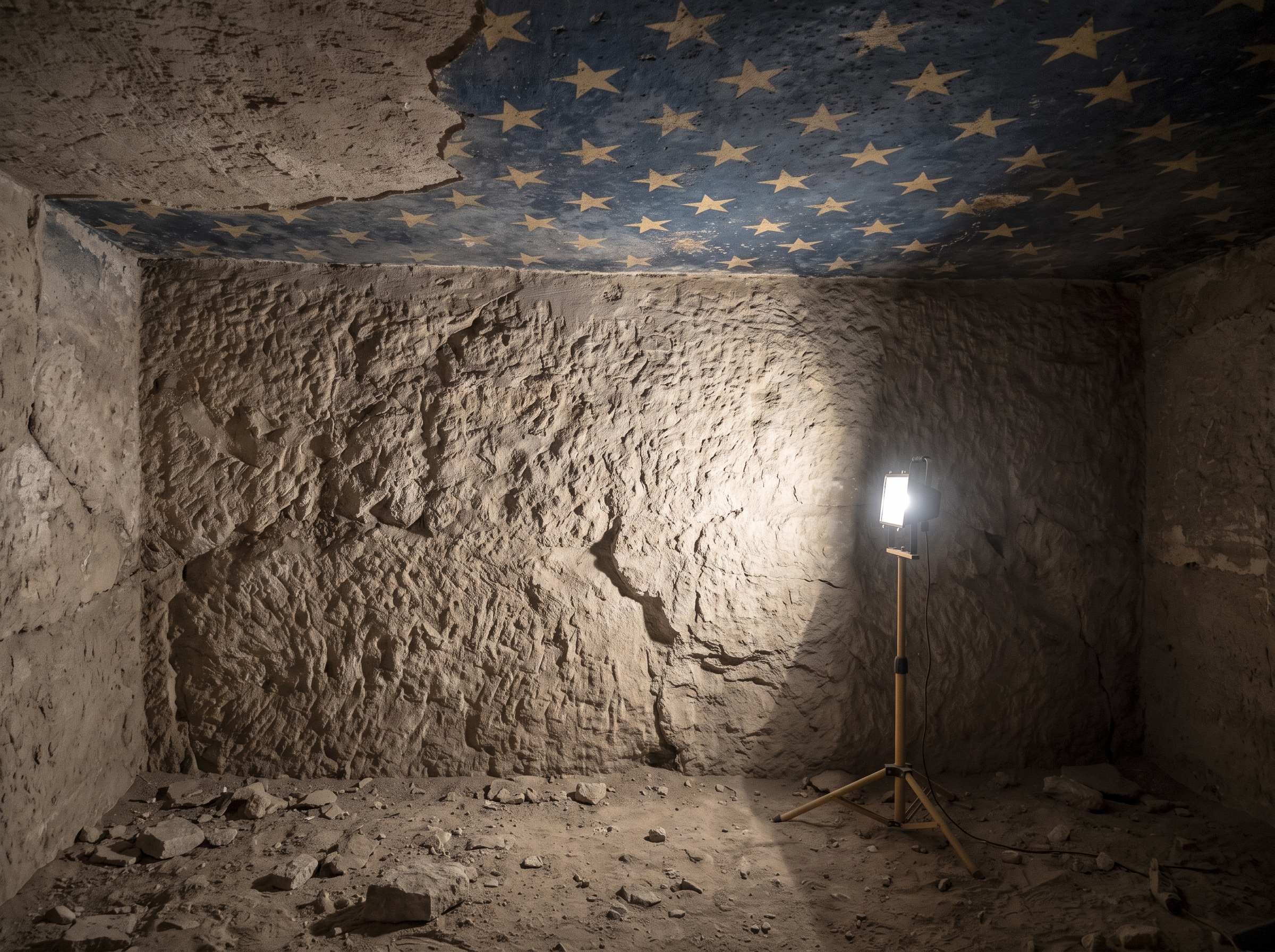
Archaeologists in Saqqara found the tomb of an official called the keeper of the king's secrets, filled with more than a hundred carved statues meant to serve him forever in the afterlife, but his own body is nowhere to be found.
This article contains affiliate links. If you buy through them, we may earn a small commission at no extra cost to you.
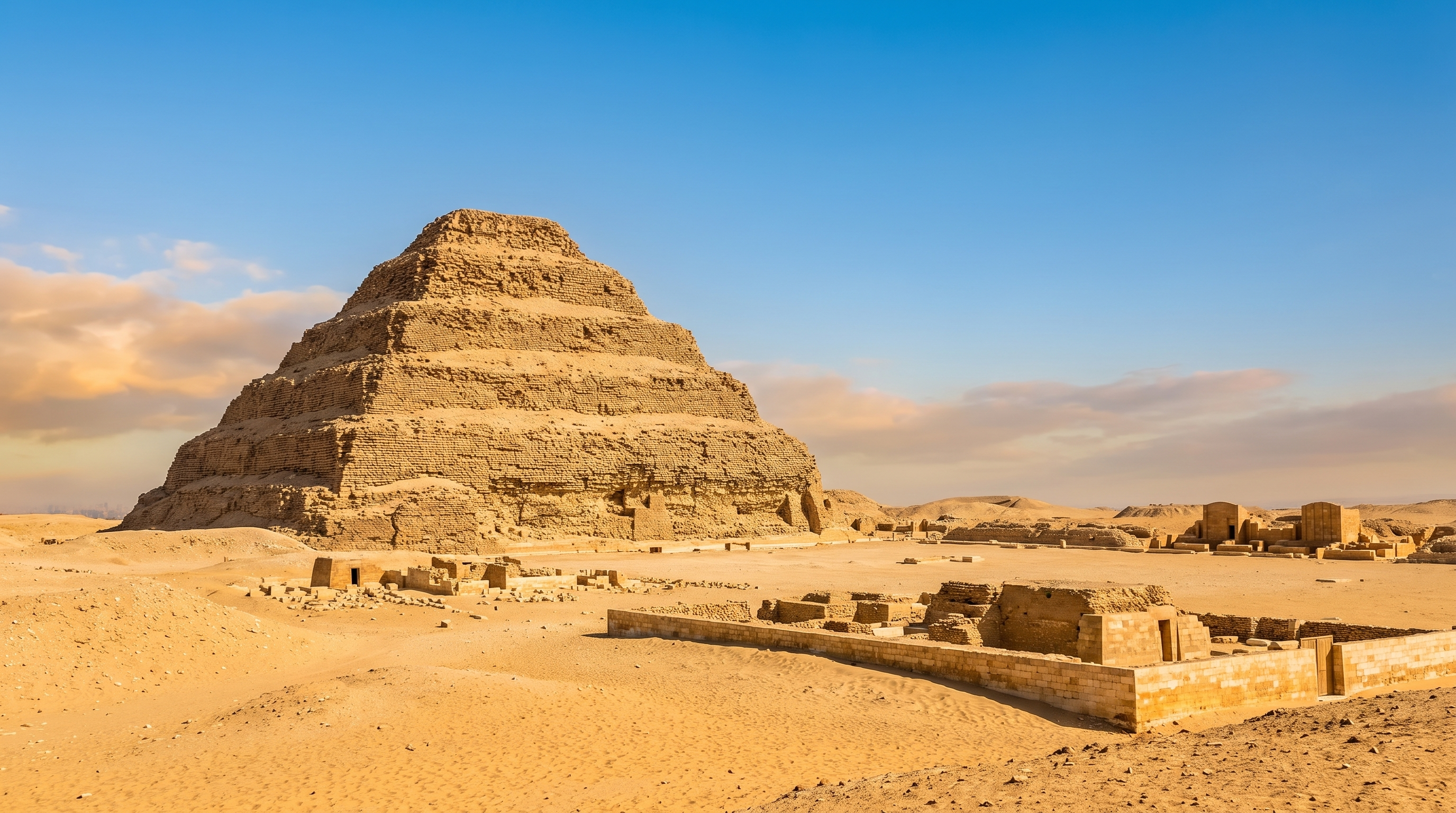
It happened on a dusty limestone plateau just south of Cairo, where pyramids and burial shafts have been piling up for thousands of years like layers in a cake. Egypt's Ministry of Tourism and Antiquities announced that a team had opened a tomb cut deep into the rock, its entrance marked by a carved stone slab called a false door, the kind ancient Egyptians believed a spirit could pass through to visit the world of the living. On the door was a name, usually written today as Sekhentiu-Ptah, though outlets spell it slightly differently, since translating Egyptian hieroglyphs into English letters is never an exact science.
A Man With Too Many Job Titles
Whoever this man was, he was busy. Carved alongside his name is a long list of jobs: royal chamberlain, overseer of all the king's works, overseer of royal documents, a priest of the goddess Maat, and overseer of scribes. Imagine one person today holding the titles of chief of staff, head archivist, and building supervisor all at once. That is roughly the scale of what his tomb wall claims for him. If tombs like this one spark your curiosity, a real hands-on Egyptian dig kit lets you excavate a small piece of that world yourself.
The Title That Sounds Like a Spy Movie
One title stands out from the rest: keeper of the secrets of royal decrees. It sounds like something out of a spy movie, a man trusted with the pharaoh's darkest plans. But Egyptologist Ann Macy Roth, who studied the tomb's design, told Live Science the title probably just means he had access to confidential government paperwork, the sealed royal orders and official letters that only certain trusted officials were allowed to read. It is less like a secret agent and more like the one employee at an office who is allowed to open the locked filing cabinet.
A Room Full of Helpers, but No One Home
Enjoying this story?
Get a short teaser by email whenever we publish something new. No spam.
Inside the tomb, archaeologists counted more than 100 small carved figures called ushabtis, tiny statues shaped like workers that ancient Egyptians packed into tombs to magically labor for the dead person in the afterlife, so the person themselves would not have to lift a finger. There was also a small wooden statue carved into the shape of a falcon, possibly connected to the falcon-headed god Horus. It is like finding a fully stocked pantry, a full closet, and a made bed, but no one sleeping in the house. Despite all this preparation, no mummy or body belonging to Sekhentiu-Ptah has turned up. Whether he was buried elsewhere, lost to looters long ago, or something else entirely, nobody currently knows.
A House Used by Many Families
The tomb was not a one-time-use space. Researchers found signs it was reused long after Sekhentiu-Ptah's time, with later burials tucked into the same shafts. One Egyptian antiquities official involved in the work, Hisham El-Leithy, noted that some of the shafts appear to have been disturbed by looters in antiquity. Picture an old apartment building where new tenants moved in generation after generation, sometimes leaving behind their own belongings mixed in with the first owner's. That mixing is part of why the tomb's exact age is still a best estimate rather than a settled fact. Roth places it at roughly 4,350 years old, likely from the late fifth or early sixth dynasty of Egypt's Old Kingdom, based on the carving style of the false door, but that dating comes from a single expert's early read on freshly announced material, not yet from years of published study.
Why a 4,000-Year-Old Filing Cabinet Matters
This discovery is a reminder that ancient governments were not so different from ours: they needed paperwork, trusted record-keepers, and people who could be relied on to keep sensitive documents safe. Sekhentiu-Ptah was not guarding treasure or plotting in shadows. He was, by the best guess, a very important paper-pusher, the kind of person whose job title sounds thrilling but whose actual workday probably involved a lot of scrolls, seals, and careful filing.
So the tomb raises a small mystery of its own. A man spent his life keeping other people's secrets safe. He was buried with everything he might need to keep doing that job forever. And yet he himself is missing. What happened to the one person who knew where all those secrets were kept?
Sources
- Ancient Egyptian tomb holding the king's 'keeper of secrets' unearthed at Saqqara | Live Science, https://www.livescience.com/archaeology/ancient-egyptians/ancient-egyptian-tomb-holding-the-kings-keeper-of-secrets-unearthed-at-saqqara
- Ancient Egyptian official's tomb and 100+ ushabti figures found at Saqqara | Archaeology News Online Magazine, https://archaeologymag.com/2026/08/egyptian-officials-tomb-and-ushabti-figures-at-saqqara/
- 4,000-Year-Old Tomb Unearthed in Saqqara | Archaeology Magazine, https://archaeology.org/news/2026/09/01/4000-year-old-tomb-unearthed-in-saqqara/
- 4,000-Year-Old Tomb of Ancient Egyptian 'Keeper of the Secrets' Discovered at Saqqara | The Debrief, https://thedebrief.org/4000-year-old-tomb-of-ancient-egyptian-keeper-of-the-secrets-discovered-at-saqqara/