This desert plant grows only two leaves, ever
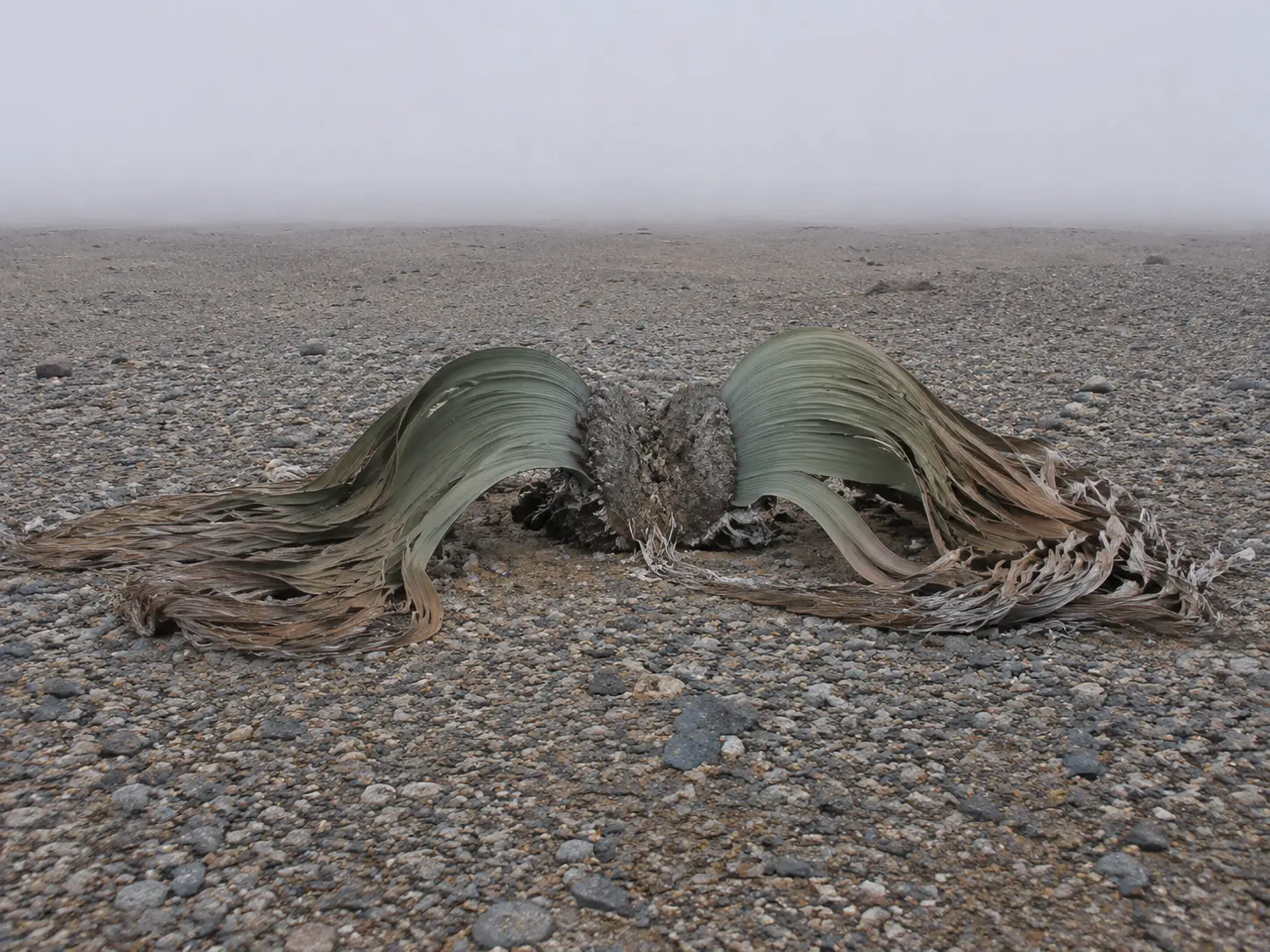
Illustration by Domi Verse X
In the Namib sand sits a plant that never drops a leaf, and nobody can agree on how long it has been sitting there.
This article contains affiliate links. If you buy through them, we may earn a small commission at no extra cost to you.
Out in the Namib Desert of Namibia and Angola there is something on the sand that looks like a pile of torn green ribbons. It is a plant called *Welwitschia mirabilis*, and it breaks almost every rule you were taught about how plants work.
Two leaves and no more
Most plants grow fresh leaves every year. This one does not. Kew Gardens says it grows two leaves as a seedling and keeps those same two for the rest of its life. They are never shed. They just keep pushing out from the base, a bit like your fingernails, while the far ends split and fray in the wind until the whole plant looks like a tangled mop.
Guinness World Records lists it as the record holder for the longest leaf lifespan of any plant. The Gymnosperm Database reports that mature plants add roughly 8 to 15 cm of leaf a year, about the width of your hand, and that the longest leaf ever measured was 6.2 m, longer than a family car. If slow desert plants appeal to you, a self watering succulent and cactus kit is the easy way to keep something alive that wants to be left alone.
Drinking the fog
Its home gets less than 100 mm of rain in a year, about the depth of a coffee mug, and in some years none at all, according to SANBI. So the plant drinks fog instead. Cold sea air rolls in off the Atlantic, and Welwitschia catches the mist and also pulls water up from deep underground. Desert soil swings from baking to cold within hours, which is the sort of thing a soil thermometer will show you in your own garden bed.
Enjoying this story?
Get a short teaser by email whenever we publish something new. No spam.
So how old is old?
Here is where it gets messy. Kew says some plants are thought to be over 2,000 years old. Guinness goes further, suggesting 2,000 to 3,000 years for the biggest ones, while admitting that figure requires further scientific analysis.
But a study in the journal *Radiocarbon* carbon dated one dead Welwitschia and found its oldest tissue grew in the 1400s, roughly 600 years ago. The same authors say the famous 2,000 year number traces back to a single 1961 estimate that was never tested.
The honest version: carbon dating gives ages of several hundred years, commonly around 500 to 600. The giants out there may be far older, but that has not been proven. Rachel Sussman spent a decade photographing organisms in this bracket for The Oldest Living Things in the World, and Welwitschia is one of them.
Somewhere in that desert is a plant nobody has dated yet, still slowly feeding out the same two leaves it started with.