This plant waits a lifetime to bloom once
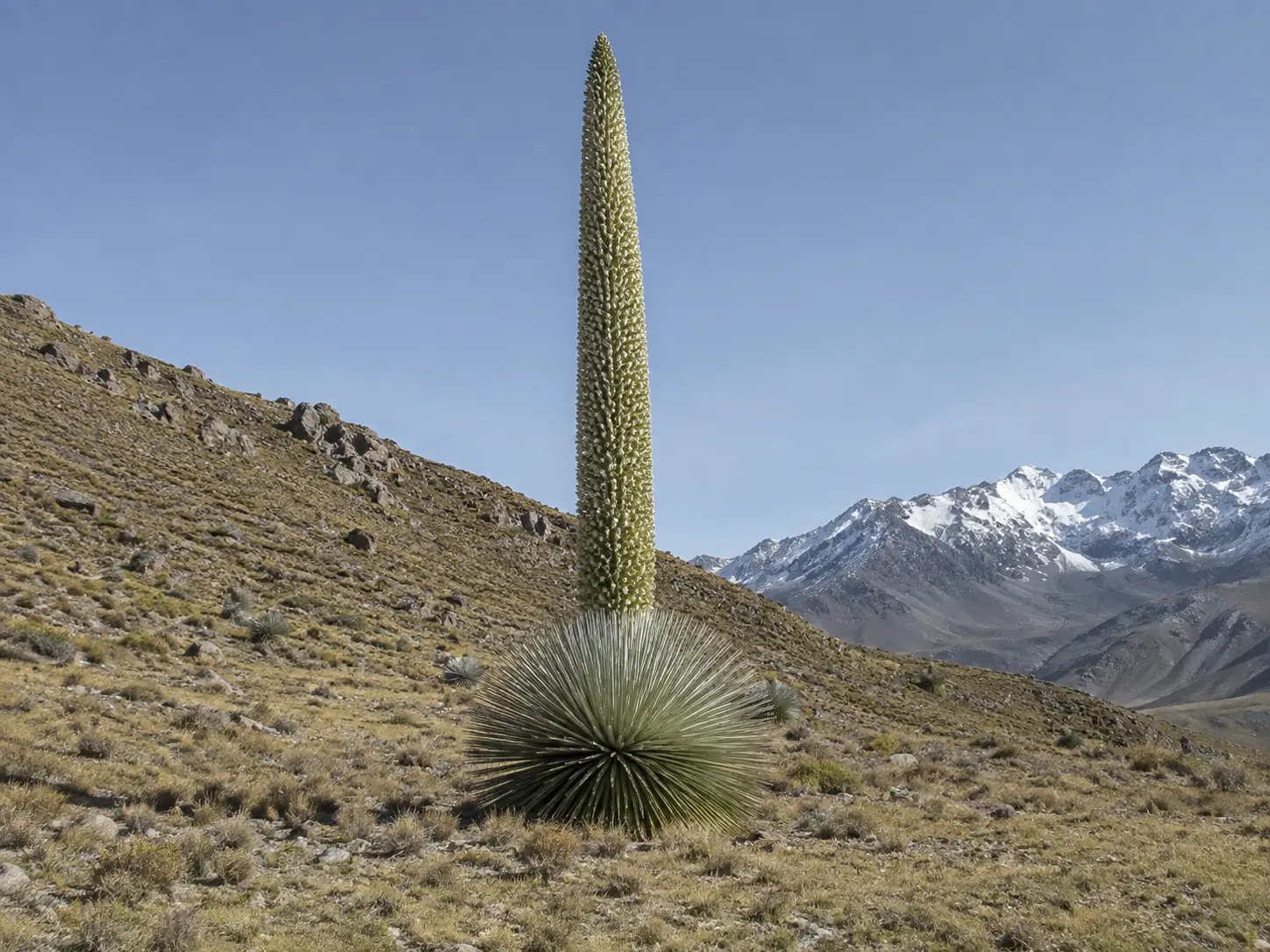
Illustration by Domi Verse X
High in the Andes grows a giant that does almost nothing for decades, then spends everything in a single season.
This article contains affiliate links. If you buy through them, we may earn a small commission at no extra cost to you.
High in the mountains of Peru and Bolivia grows a spiky green giant that looks like a hedgehog stuck on top of a pole. Its name is *Puya raimondii*, the queen of the Andes, and it is a very large cousin of the pineapple. Its smaller relatives, the air plants sold in every garden centre, belong to the same family and live on almost nothing in the same way.
A slow life at the top of the world
It lives on cold, windy grassland, often around 4,000 metres above sea level, higher than almost any place people live. Up there, almost nothing happens quickly. The plant sits as a ball of stiff, sharp leaves for decades, looking like it has forgotten to do anything at all.
Then, one year, it pushes up an enormous flower spike. In bloom the whole plant stands roughly 8 to 10 metres tall, about the height of a house. It flowers, it makes seed, and then, as that same 2024 review puts it, the entire plant dies. One flowering, and the story is over.
Two numbers everybody gets wrong
Enjoying this story?
Get a short teaser by email whenever we publish something new. No spam.
You will often read that the queen waits exactly 100 years. Nobody actually knows. Guinness World Records calls it the slowest-flowering plant and says about 80 to 150 years. Biologist Riley Fortier's review says 60 to 100. And a plant grown at the University of California Botanical Garden flowered in 2014 aged only 24. So the honest answer is many decades, and probably a very different number in a warm garden than on a freezing mountain. Light is a large part of that difference, which is why indoor growers reach for a full spectrum grow light when a plant refuses to move.
The flower count is just as messy. Early estimates were around 8,000. Wikipedia's summary of the sources notes a later estimate of 20,000. Berkeley's gardeners expected up to 30,000. Fortier's review says upwards of 100,000 flowers and fruit. If you counted one flower every second, the lowest guess would keep you busy for over two hours and the highest for more than a whole day.
Millions of seeds, and still in trouble
A single plant may make somewhere between 6 and 12 million seeds, according to Fortier, roughly one seed for every person in a very large city. Even so, the species is listed as endangered, and the research points to fires and a changing climate among the reasons.
So a plant that gambles everything on one enormous performance is running low on chances. Brian Capon's Botany for Gardeners explains the machinery behind a decision like that one. And nobody has yet worked out what finally tells the queen that her year has come.