This flower locks beetles in for days
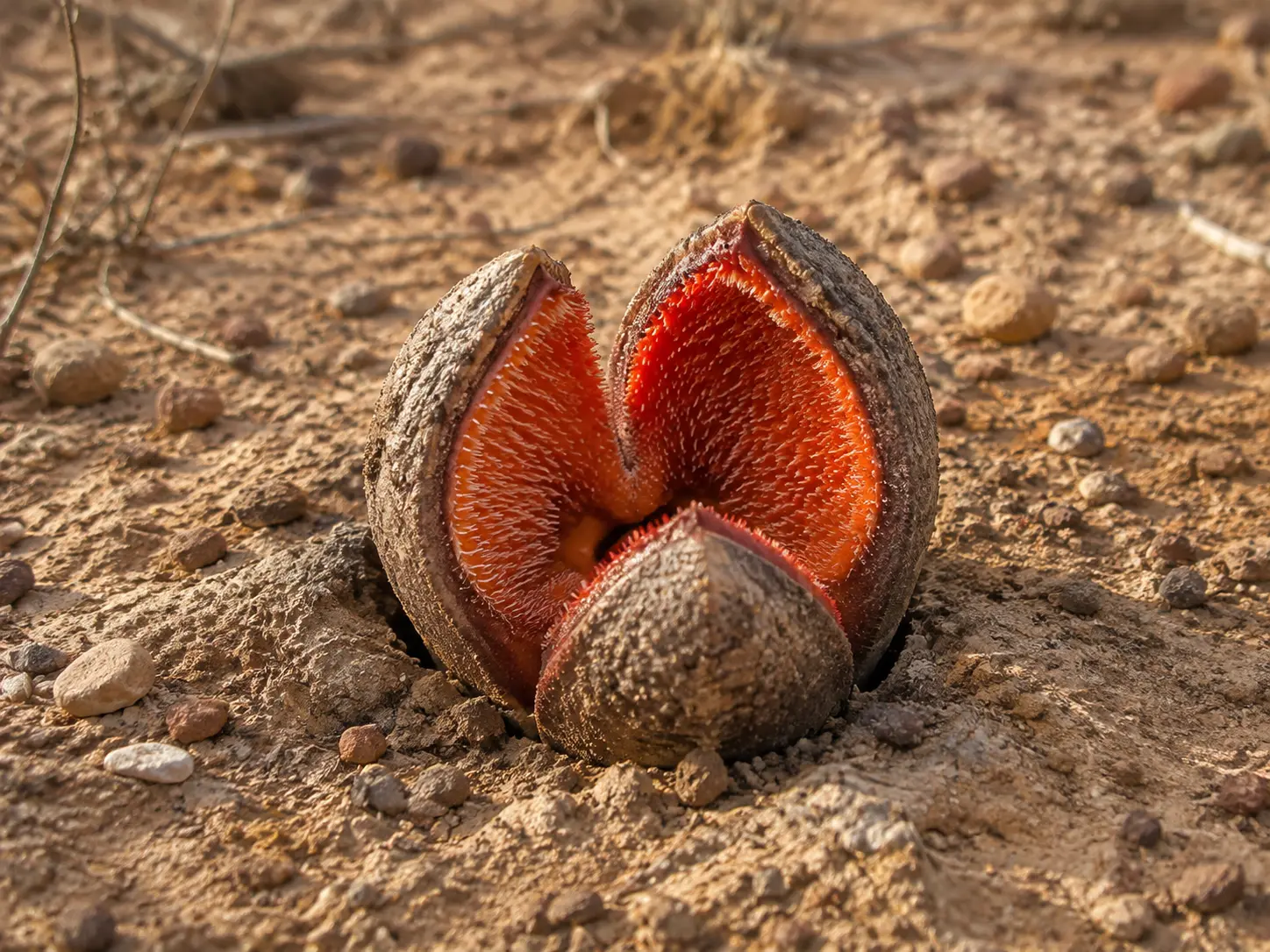
Illustration by Domi Verse X
A leafless African plant pretends to be rotting meat, then shuts the door behind its visitors.
This article contains affiliate links. If you buy through them, we may earn a small commission at no extra cost to you.
Picture a desert in southern Africa. The ground cracks open, and something the colour of raw salmon pushes up through the sand. It has no leaves, no stem and no green anywhere. It is a plant called *Hydnora africana*, and it spends nearly its whole life buried.
A plant that steals its food
Most plants make their own food using sunlight. This one cannot. Kew explains that it has no leaves and no chlorophyll, the green stuff that catches sunlight, so it cannot photosynthesise at all. Instead it plugs into the roots of other plants and drinks from them. SANBI, South Africa's biodiversity institute, says its usual victims are *Euphorbia* shrubs, and that the plant is a mass of underground stems and roots with worm-like growths that grab onto the host.
The only part you ever see is the flower, which pokes roughly 10 to 15 cm above the sand. That is about the height of a mug. Plants this strange reward a proper look, and a folding pocket magnifier shows you more of any flower than a phone screen ever will.
The smell is the trick
Enjoying this story?
Get a short teaser by email whenever we publish something new. No spam.
The flower smells like something dead. That is deliberate. Beetles that normally lay their eggs in rotting animals fly in, squeeze through narrow gaps between the flower's thick lobes, and slide down a smooth inner wall they cannot climb back up.
Researchers watching these flowers in Namibia found 10 kinds of beetle stuck inside. In their study, hide beetles made up about 77% of the prisoners, at roughly two beetles per flower. The wall then changes texture, and more than half the beetles climbed out within three days, dusted in pollen and ready to be fooled all over again. The Botanical Society of America describes threads across the opening that later pull apart, letting the visitors go. The white bristles that line that trap are the sort of detail a clip-on macro lens will pick up on a plant in your own garden.
Buried treasure
The fruit ripens underground. SANBI describes a leathery berry up to about 8 cm across, roughly tennis ball sized, holding up to around 20,000 seeds in a starchy pulp. Porcupines, baboons, jackals and moles dig it up and eat it, then carry the seeds away.
Nobody is quite sure how many years a seed waits down there before anything happens. Richard Mabey's The Cabaret of Plants is full of species that behave like this one, and it is a good place to start if this is the kind of thing that keeps you reading.