The corpse flower heats itself like a human body
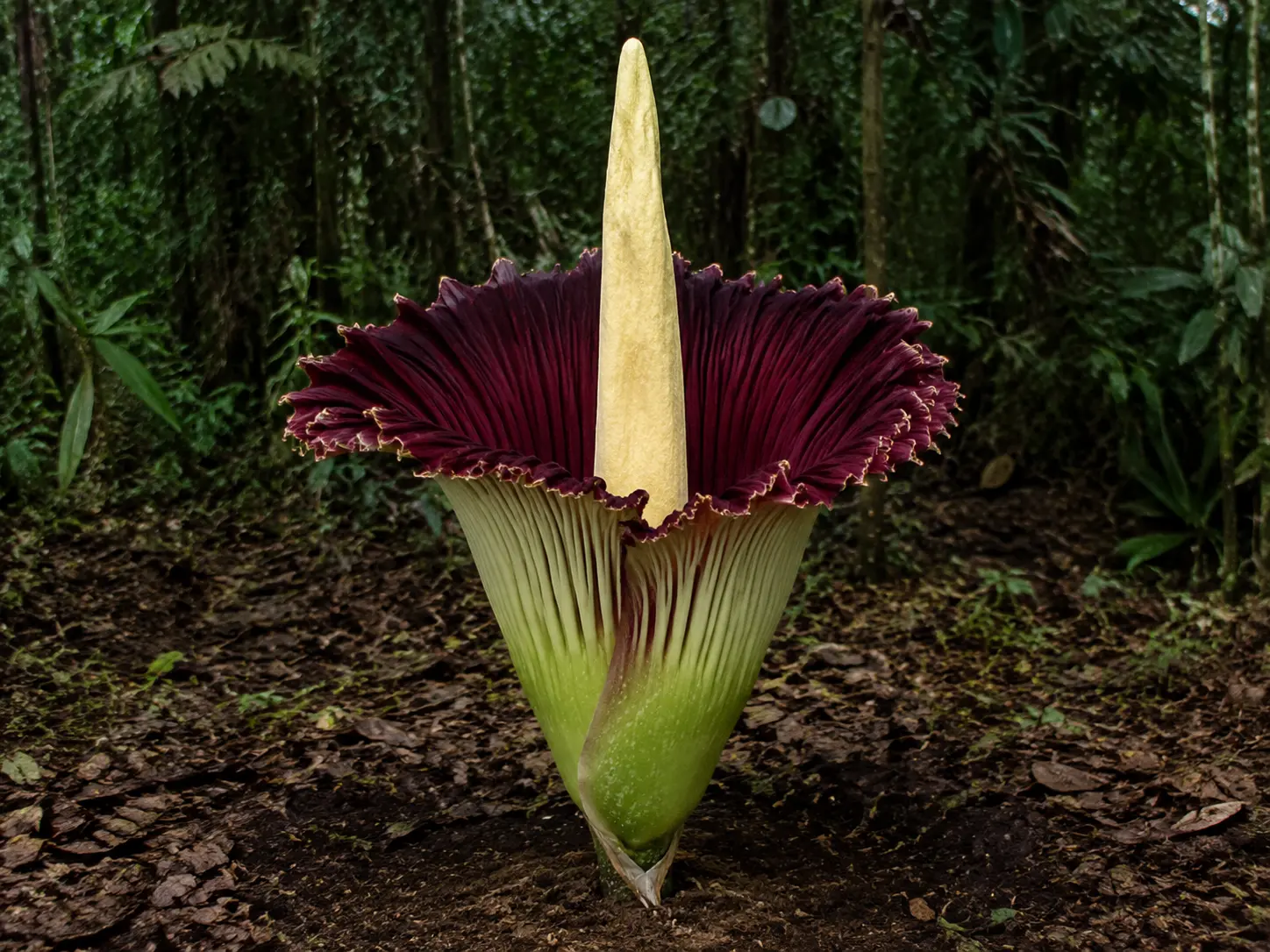
Illustration by Domi Verse X
A plant taller than your dad turns on its own heater so its stink of rotting meat can travel further.
This article contains affiliate links. If you buy through them, we may earn a small commission at no extra cost to you.
Somewhere in the rainforests of Sumatra, a plant as tall as a grown-up switches on a heater it built itself.
The record it really holds
People love to call the titan arum the world's biggest flower. That is not quite right. What it grows is an inflorescence, which Kew Gardens describes as a cluster of many smaller flowers bunched together. Kew and the United States Botanic Garden both call it the largest unbranched inflorescence in the world. It can stand around 3 metres above the ground, about the height of a basketball hoop. The real flowers are small and hidden right down at the bottom, where Kew says the female ones open first and the male ones follow about 12 to 24 hours later.
Warm as your own forehead
The tall spike in the middle is the spadix, and its tip makes heat. Ohio State University's Biological Sciences Greenhouse puts that temperature at roughly 37°C, close to human body heat, and the New York Botanical Garden also says the spadix warms to approximately body temperature. So if you touched it, it would feel about as warm as your own skin. You can check the same thing on any plant without touching it, using a non contact infrared thermometer pointed at a leaf in full sun.
Enjoying this story?
Get a short teaser by email whenever we publish something new. No spam.
The heat is not there to keep the plant cosy. Warm air rises and carries smells with it. According to Kew, the stench comes mostly from sulphur compounds called dimethyl disulphide and dimethyl trisulphide, the sort of chemicals you meet in a bin left out too long, and Kew says the smell may reach pollinators up to half a mile away, roughly eight football pitches. Beetles and flies that like dead animals come looking for a meal and find a plant instead.
Why the long wait
Underground sits a huge storage stem called a corm, and the plant hoards energy in it for years. Both the New York Botanical Garden and Ohio State say a titan arum usually needs about seven to ten years before its first bloom, and the US Botanic Garden says the gaps after that run from a few years to more than a decade. Getting anything to flower on a schedule comes down to water, light and soil, and a cheap three in one soil meter removes most of the guesswork at home.
Then it is over almost at once. Nobody can promise when the next one will open, which is why crowds start queueing the moment a garden says its plant is stirring. Kew's own guide to growing house plants is a gentler place to begin than a plant that keeps you waiting a decade.