NASA launched a message in a bottle in 1977. It never stopped moving.
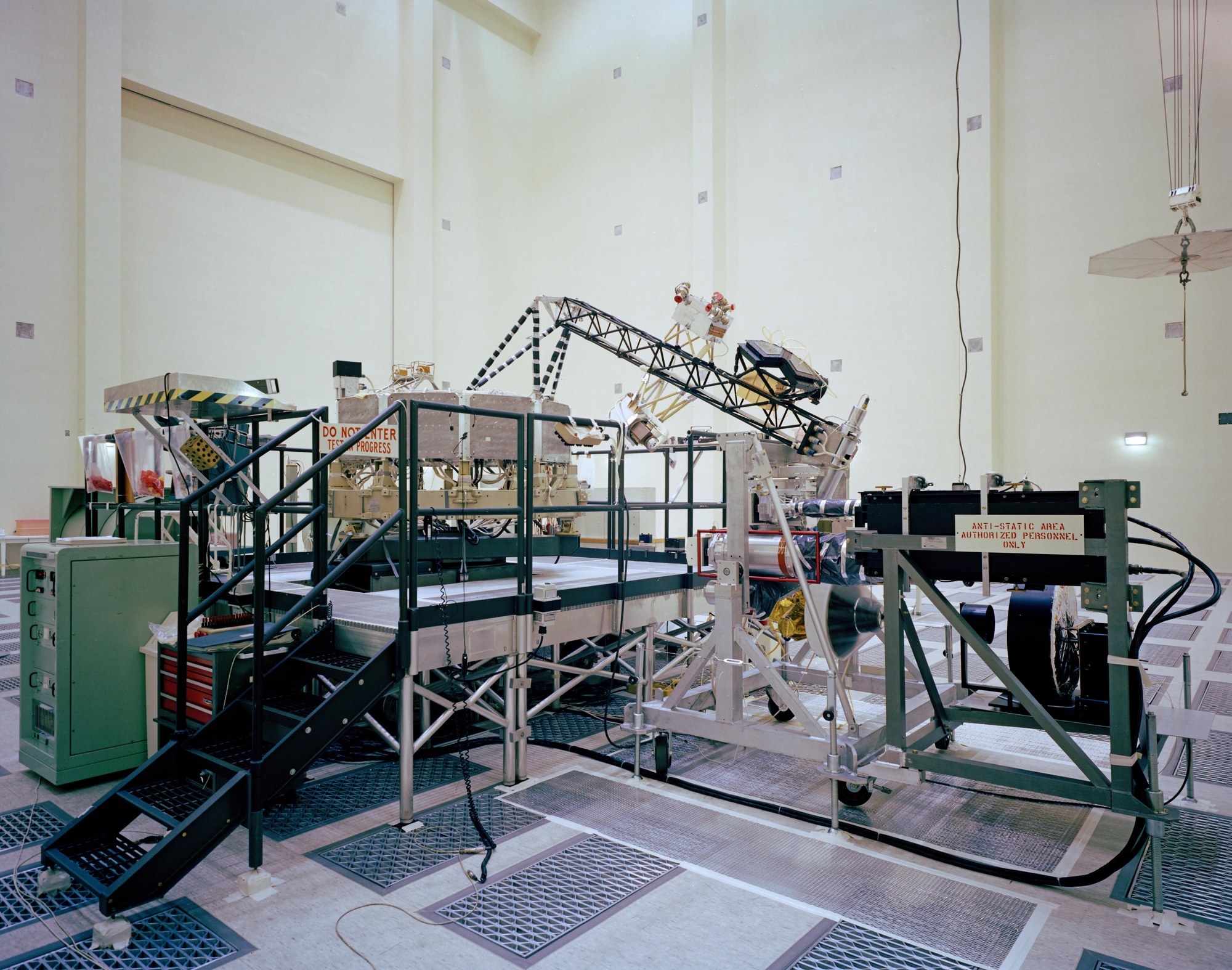
Credit: NASA/JPL-Caltech
A machine with less computing power than a modern calculator, built to last four years, is about to become the first human-made object a full light-day from Earth.
This article contains affiliate links. If you buy through them, we may earn a small commission at no extra cost to you.
Somewhere out beyond Neptune's orbit, moving faster than any bullet ever fired, a machine built with less computing power than a modern calculator is still working. It was designed to last four years. It has now been flying for almost fifty. And on November 18, 2026, it will cross a distance so vast that even light, the fastest thing there is, needs a full 24 hours to close the gap between it and Earth. That machine is Voyager 1, and its story is one of the strangest, longest-running acts of engineering optimism humanity has ever attempted.
A Once-in-176-Years Opportunity
Voyager 1 launched from Cape Canaveral on September 5, 1977, sixteen days after its twin, Voyager 2. Both were the product of a rare piece of celestial timing. Every 176 years, the outer planets (Jupiter, Saturn, Uranus, and Neptune) align in a way that lets a spacecraft use each planet's gravity to slingshot toward the next, cutting a multi-decade journey down to about a dozen years. NASA engineers in the early 1970s realized this "Grand Tour" alignment was coming, and although budget constraints eventually trimmed the full four-planet plan into a more modest two-spacecraft mission, the underlying trajectory science survived. Voyager 1 was aimed specifically toward Saturn, with a bonus target that mattered more to scientists than any planet: Saturn's large, hazy moon Titan.
The spacecraft itself is almost quaint by today's standards. It carries no modern processor: its onboard computers have less memory than a birthday card that plays music. It communicates using a large gold-and-white dish antenna, sends data back at a rate slower than an old dial-up modem, and is powered not by solar panels, which would be useless so far from the Sun, but by three Radioisotope Thermoelectric Generators (RTGs) that convert the heat of decaying plutonium-238 into electricity. At launch, those generators produced about 470 watts combined, roughly enough to run a couple of hair dryers. That number has been dropping ever since, by about four watts a year, and it is the single factor that will eventually end the mission.
Saturn and the Long Silence Beyond
On its way outward, Voyager 1 used a close pass by Jupiter in March 1979 purely as a gravitational slingshot, bending its path toward its main scientific target further out: Saturn. The spacecraft made its closest approach to Saturn on November 12, 1980, passing within about 78,000 miles of the cloud tops. The images and data it returned reshaped planetary science overnight, revealing fine, braided structure inside rings that had looked like a single smooth band from Earth, small "shepherd" moons herding ring particles into place, and a close study of Titan's thick, nitrogen-rich atmosphere, detailed enough to help scientists understand it as a genuine, if frigid, analog for early Earth chemistry.
After Saturn, Voyager 1's trajectory took it up and out of the plane in which the planets orbit, sacrificing any chance of reaching Uranus or Neptune in exchange for that close Titan flyby. From that point on, its mission became less about individual worlds and more about the space between them. The spacecraft kept transmitting, kept measuring, and kept moving outward through a region of the solar system called the heliosphere: the vast bubble of charged particles and magnetic field lines blown outward by the Sun.
That bubble has an edge. Scientists call it the heliopause, and identifying the exact moment Voyager 1 crossed it took real detective work. On August 25, 2012, the spacecraft's instruments recorded a sudden drop in particles streaming from the Sun and a sharp rise in cosmic rays arriving from elsewhere in the galaxy: the fingerprint of leaving the Sun's protective bubble. But the announcement didn't come until more than a year later, in September 2013, because researchers wanted independent confirmation. It arrived in April 2013, when a burst of solar plasma, ejected from the Sun over a year earlier, finally reached Voyager 1 and caused its plasma wave instrument to vibrate in a way that revealed the density of the surrounding material. That density was more than 40 times higher than anything measured inside the heliosphere, matching exactly what theorists expected of true interstellar space. At the moment of crossing, Voyager 1 was about 121.6 astronomical units from the Sun, roughly 11.3 billion miles. It remains, along with Voyager 2, one of only two human-made objects ever confirmed to have left the Sun's bubble entirely.
Enjoying this story?
Get a short teaser by email whenever we publish something new. No spam.
A Slow-Motion Countdown
Voyager 1 has not stopped moving since, and it is not going to. Traveling at roughly 38,000 miles per hour relative to the Sun, about 3.5 astronomical units per year, it is now headed toward the constellation Ophiuchus, carrying no destination in the conventional sense, just an outward trajectory that will continue essentially forever. On November 18, 2026, at 12:16 a.m. Central Time, it will pass exactly one light-day from Earth: a distance of about 16.1 billion miles, or 173 astronomical units. No object built by human hands has ever been that far away. A radio command sent to Voyager 1 that day would take a full 24 hours just to arrive, and another 24 hours for any reply to make it back: a two-day round trip conversation with a machine older than color television remote controls.
That conversation is getting harder to hold. Of the ten scientific instruments Voyager 1 once carried, only a handful remain switched on, and NASA's engineers have been deliberately powering down the rest, one by one, to keep the spacecraft's dwindling electricity supply flowing to its heaters and transmitter for as long as possible. In April 2026, the team switched off the Low-Energy Charged Particle instrument, which had spent decades tracking electrons, ions, and cosmic rays, though NASA has left open the possibility of briefly reactivating it for a future measurement if the power budget allows. Engineers currently expect Voyager 1 to keep at least one science instrument running into the late 2020s, with basic radio communication potentially continuing into the mid-2030s before the RTGs finally can no longer supply enough power to keep any system alive.
What Keeps Going After the Signal Stops
When that day comes, Voyager 1 will not stop moving. It will become a silent, dark, drifting object, still carrying the Golden Record bolted to its side: a gold-plated copper disc etched with greetings in 55 human languages, natural sounds of Earth like wind, thunder, and animal calls, 90 minutes of music spanning cultures and centuries, and 115 images depicting life and geography on our planet. It was assembled by a committee led by astronomer Carl Sagan on the theory that Voyager might, however improbably, someday be found by another intelligence, and that a message worth sending should represent the whole of humanity rather than any single nation's achievements.
The odds of that discovery are astronomically small, but the scale of the journey ahead is real. In roughly 40,000 years, Voyager 1 will pass closer to a star named Gliese 445, a red dwarf about 17.6 light-years from Earth, than it currently is to our own Sun. It will not stop there either. Barring a collision, which is statistically almost impossible given the emptiness of interstellar space, Voyager 1 will keep drifting for billions of years, long after Earth's climate, geography, and perhaps even the Sun itself have changed beyond recognition. A machine designed by people who did not have smartphones, built to survive four years, may end up outlasting the species that built it.
That is the real story behind November 2026's milestone. It isn't really about a number on a distance chart. It's about what happens when careful engineering meets an almost accidental kind of immortality: a five-decade-old spacecraft, still faintly whispering data across a widening gulf, carrying a record of who we were out into a darkness with no edges.