The Sun You See Is 8 Minutes Old
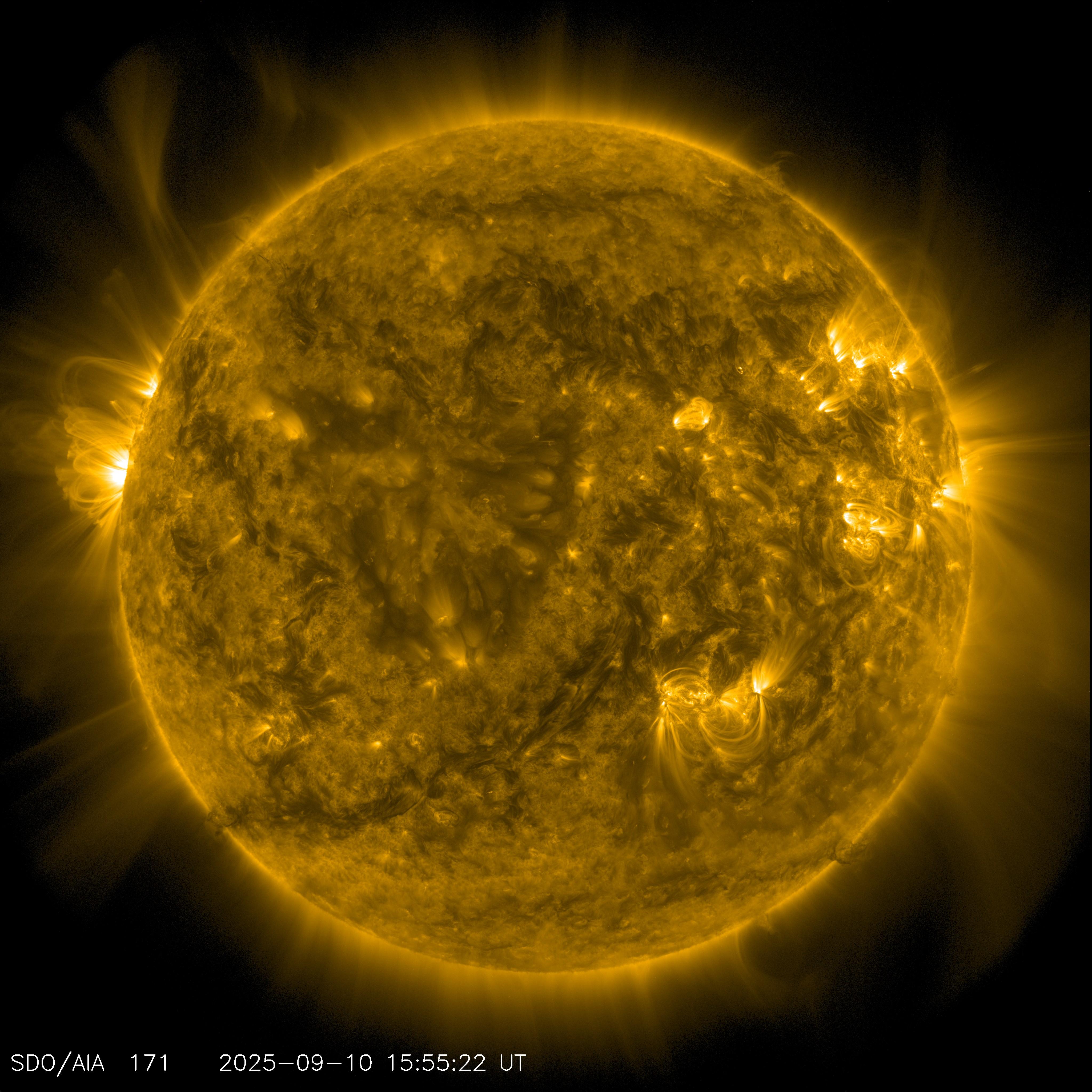
Credit: NASA/GSFC/Solar Dynamics Observatory
The sunlight warming your skin right now already left the Sun eight minutes ago.
This article contains affiliate links. If you buy through them, we may earn a small commission at no extra cost to you.
Look up at the Sun, never directly, and you are not seeing it as it is right now. You are seeing light that left its surface about eight minutes ago. The Sun you are looking at already belongs slightly to the past.
Why there is a delay at all
Light is the fastest thing in the universe, but it is not instant. It travels at about 299,792 kilometers per second. The Sun sits roughly 150 million kilometers from Earth. Divide one by the other, and light takes about 8 minutes and 20 seconds to cross that gap. Nothing, no signal, no force, no information of any kind, can cross that distance faster. It is a hard limit built into physics itself, not a measurement problem waiting to be solved with better instruments.
That means the warmth on your skin right now, and the light hitting your eyes, is old news. If the Sun somehow vanished this instant, Earth would keep orbiting normally, keep receiving sunlight, and keep looking completely fine for just over eight more minutes, before the sky went dark without warning.
How this was ever figured out
Nobody sat down and calculated this from first principles. It was discovered almost by accident in 1676, when the Danish astronomer Ole Romer was timing the eclipses of Jupiter's moon Io. He noticed the eclipses happened slightly earlier than predicted when Earth was closer to Jupiter in its orbit, and slightly later when Earth was farther away. Romer realized the difference was caused by light itself taking longer to cross the extra distance, and used the timing gap to produce the first real estimate that light has a finite, measurable speed at all, centuries before anyone could measure it directly in a lab.
The modern figure comes from far more precise methods: bouncing radar signals off Venus, tracking spacecraft with radio telemetry, and, since 1983, an internationally agreed definition of the meter itself in terms of the speed of light, which makes the speed of light an exact defined constant rather than a measured one. What is measured instead, to very high precision, is the distance from Earth to the Sun.
Enjoying this story?
Get a short teaser by email whenever we publish something new. No spam.
What this means for looking farther out
The Sun's eight-minute delay is the smallest version of something true for everything you see in the sky. Moonlight is about 1.3 seconds old. Light from Alpha Centauri, the nearest star system, is about 4.2 years old by the time it reaches a telescope. Light from many galaxies astronomers study is millions or billions of years old. A telescope pointed deep into space is not just looking far away. It is looking directly into the past, seeing objects as they existed before Earth, and in some cases before the Sun, even formed.
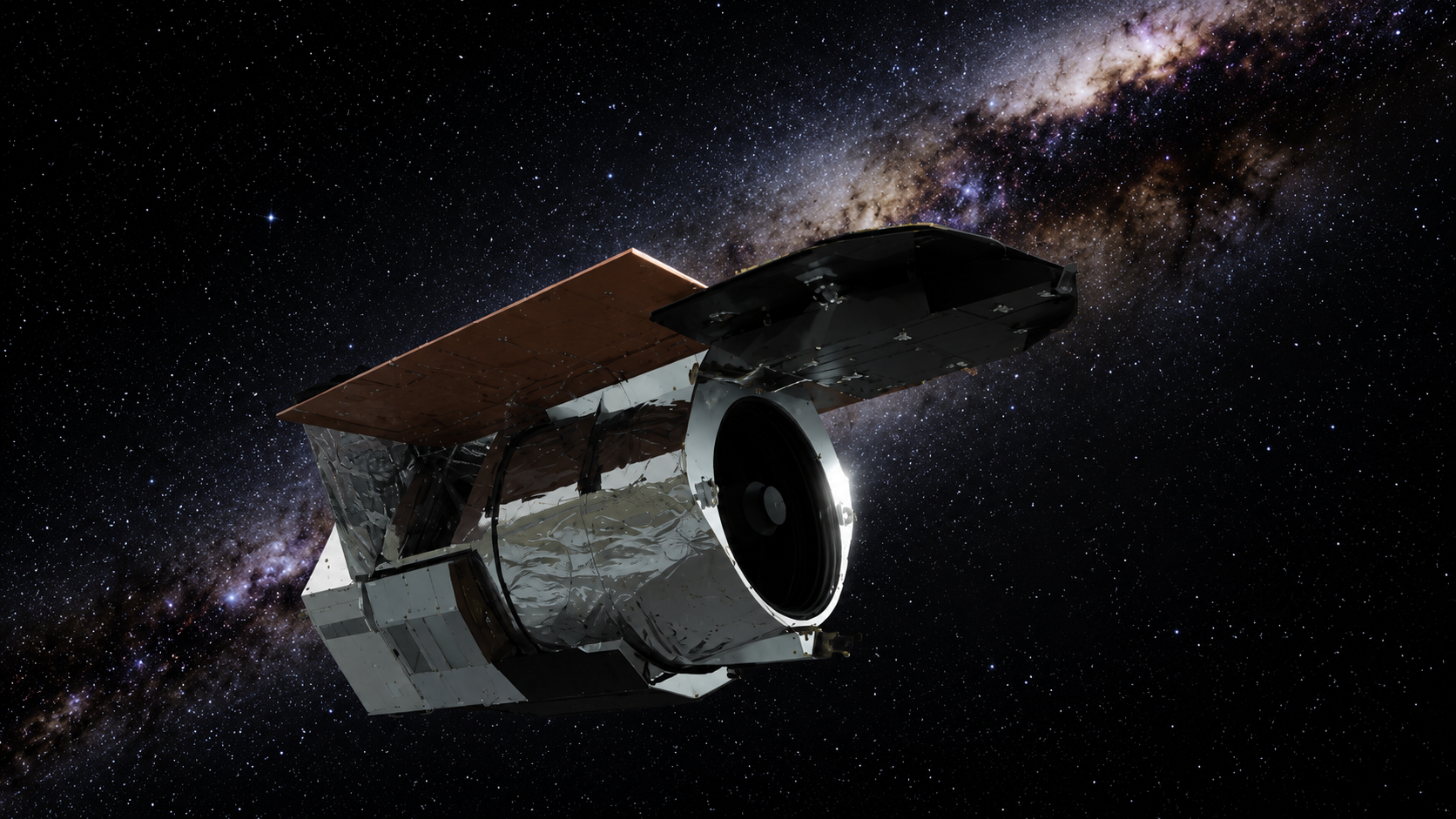
This is not a metaphor astronomers use loosely. It is the literal basis of how looking farther away and looking further back in time are the same act, which is why the most powerful telescopes, like the James Webb Space Telescope, are often described as time machines aimed outward rather than devices for seeing things that are happening right now.
Why it matters
The eight-minute delay is a small, easy number to hold in your head, and it is also the cleanest possible introduction to one of the strangest facts about the universe: distance and time are the same measurement, and nothing you have ever seen in the sky is happening at the moment you are seeing it.