There's a Treasure No One Will Ever Be Able to Steal
Credit: NASA/JPL
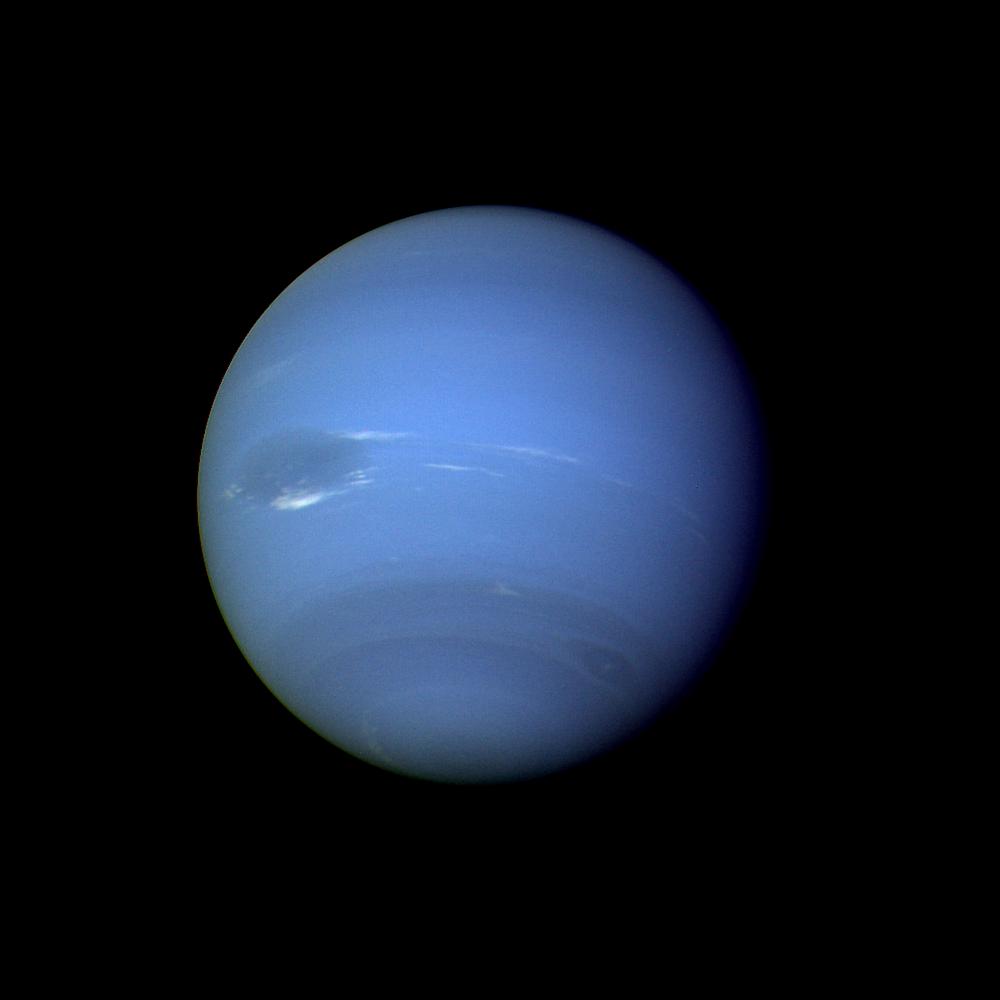
Deep inside Neptune, scientists think it rains diamonds. There is no way anyone could ever reach them.
This article contains affiliate links. If you buy through them, we may earn a small commission at no extra cost to you.
Deep inside Neptune, and its neighbor Uranus, scientists think it rains diamonds. Not a metaphor: solid diamonds, forming in the crushing mid-layers of the planet and sinking slowly through liquid and gas toward the core.
Why diamonds would form there
Neptune and Uranus are made mostly of water, methane, and ammonia squeezed under pressures and temperatures far beyond anything on Earth's surface, hundreds of thousands of times atmospheric pressure, thousands of degrees. Methane is a carbon and hydrogen compound. Under that kind of pressure, physicists predict the methane breaks apart. The hydrogen and carbon separate, and the freed carbon atoms lock together into the same crystal structure as a diamond on Earth, just formed by pressure instead of the volcanic processes that make Earth's diamonds.
Once formed, a diamond is denser than the surrounding slush of ice and gas around it. It sinks. Some scientists think the diamonds falling through Neptune's interior could grow to weigh millions of carats before reaching a layer hot and dense enough to melt them back down, at which point the carbon redissolves and the cycle can start again deeper in the planet.
How anyone could know this without a probe
No spacecraft has ever survived a trip into Neptune's interior, and none ever will: the pressure would crush anything humans have built long before it got close to the diamond-forming layer. Instead, the evidence comes from laboratories on Earth that recreate the conditions.
In 2017, researchers at Lawrence Livermore National Laboratory used an intense laser to compress a sample of polystyrene, a plastic that, like methane, is built from carbon and hydrogen, to pressures and temperatures matching Neptune's interior for a few billionths of a second. Using an extremely fast X-ray imaging technique at SLAC's Linac Coherent Light Source, they watched tiny diamonds form in that instant. It was the first direct experimental confirmation that the mechanism physicists had proposed for decades actually works, at least on a laboratory timescale of nanoseconds rather than the millions of years available inside an actual planet.
Enjoying this story?
Get a short teaser by email whenever we publish something new. No spam.
What's still not known
The lab experiment proves the chemistry is possible. It does not prove exactly what is happening inside Neptune right now. Nobody knows how large the diamonds actually grow over millions of years inside the planet, how deep the diamond-forming layer sits, or how much of Neptune's carbon ends up as diamond rather than staying dissolved in the surrounding fluid. Models differ on these points, partly because Neptune's exact interior composition, including the precise ratio of water to methane to ammonia, is itself not fully measured. The only spacecraft to visit Neptune, Voyager 2, flew past in 1989 and never went inside.
There is also a live debate over whether Uranus and Neptune behave identically here. The two planets are similar in composition but not identical, and some researchers think diamond formation may proceed differently in each, or even be less certain in Uranus given its interior has been measured with less confidence than Neptune's.
Why it matters
This is not only a curiosity about an unreachable gemstone. Ice giants like Neptune and Uranus are one of the most common types of planet found orbiting other stars, more common than planets like Jupiter or Earth. Understanding what is actually happening inside our own two ice giants, including whether diamond rain is really occurring, helps astronomers model the interiors of thousands of similar worlds across the galaxy that can never be visited either.
It may also explain something closer to home: both Neptune and Uranus have oddly tilted, off-center magnetic fields that don't match simple models of planetary magnetism. Some researchers think a layer of sinking diamonds and separating chemicals deep inside could be part of what stirs up that unusual field. Nobody will ever mine the treasure raining down inside Neptune, but working out what it is telling us about how the planet is built may turn out to matter more than the diamonds themselves.
Sources
- Lawrence Livermore National Laboratory, Scientists Create 'Diamond Rain' That Forms in the Interior of Icy Giant Planets Like Neptune (2017)
- SLAC National Accelerator Laboratory, Scientists Create 'Diamond Rain' That Forms in the Interior of Icy Giant Planets (2017)
- NASA JPL, 30 Years Ago: Voyager 2's Historic Neptune Flyby