The blast was roughly as powerful as the initial explosion at Chernobyl's reactor.
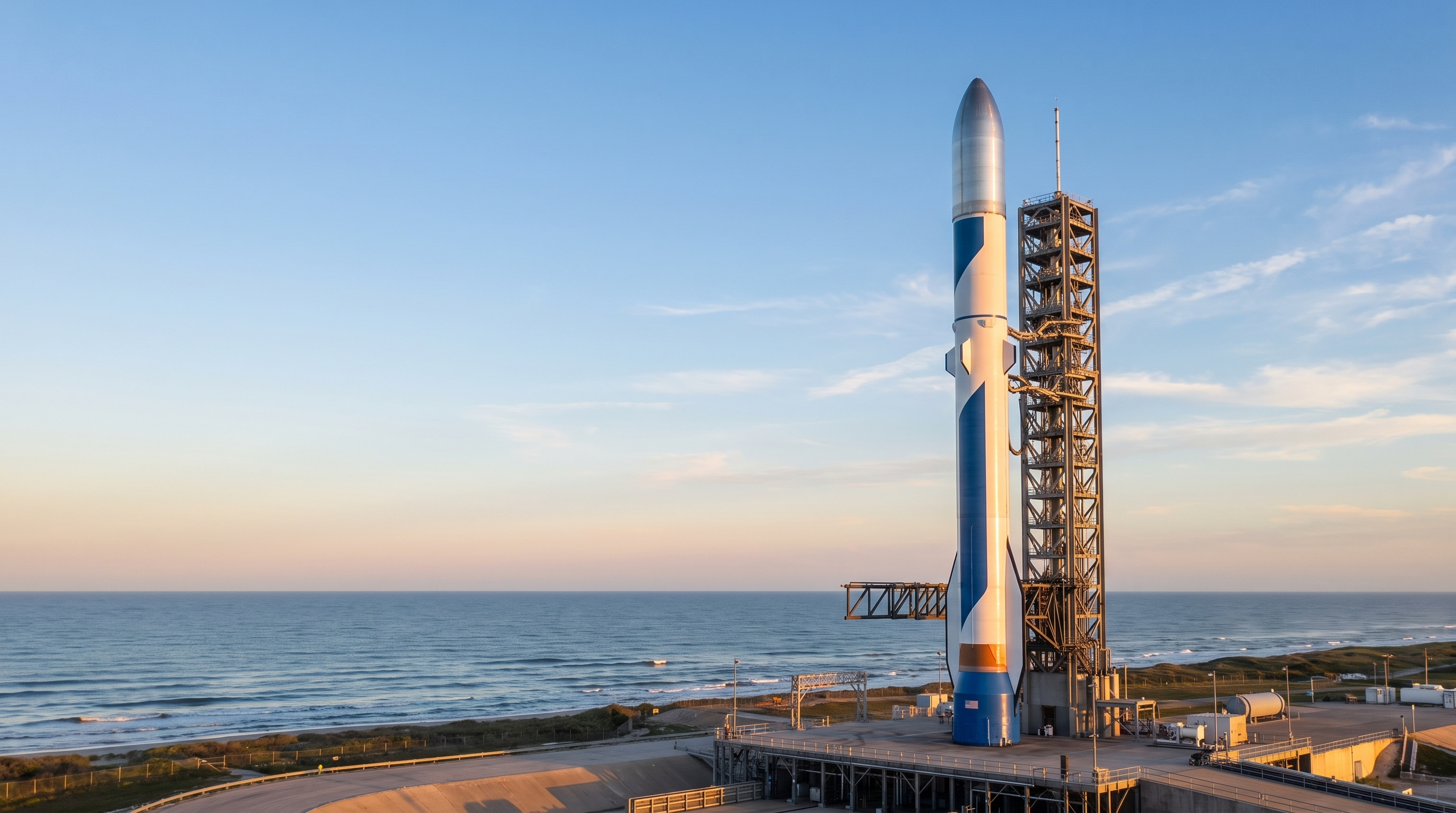
AI-generated illustration
When a Blue Origin rocket stage exploded on its pad in Florida, scientists measured the shockwave traveling over sixteen hundred kilometers, all the way into Texas, as sound too low for human ears.
This article contains affiliate links. If you buy through them, we may earn a small commission at no extra cost to you.
It happened at Cape Canaveral Space Force Station in Florida, in late May 2026. Blue Origin was running a ground test on a giant first-stage rocket booster, the kind meant to launch its New Glenn rocket into space. The booster was bolted to the pad, engines firing, when something went badly wrong. Within seconds a fireball tore through the test stand. Workers nearby felt the heat and heard a crack of thunder. Remarkably, reports say nobody was hurt.
A blast wave that kept on going
What the people standing near the pad felt was only the beginning. The explosion also pushed out a wave of pressure so deep and slow that human ears cannot pick it up at all. Scientists call it infrasound, sound so low-pitched it is more like a shove of air than a noise. Think of the thump you feel in your chest at a fireworks show, then imagine that same kind of pressure wave, just too low to hear, rolling outward for hundreds of miles.
A network of 36 infrasound monitoring stations scattered across the United States, normally used to listen for things like distant volcanic eruptions or nuclear tests, picked up the wave. The farthest station to catch it sat in northeast Texas, about 1,046 miles, roughly 1,680 kilometers, away. That is like a shove of air from Florida reaching almost to Denver, still strong enough for sensitive instruments to notice, even though nobody in Texas felt a thing. Everyday sound, the kind your own ears can pick up, is a different story: a handheld decibel meter like this one can measure that, though it won't catch anything as low-pitched as the infrasound this network detected.
As strong as Chernobyl's first blast
Researchers at Sandia National Laboratories used the spread-out chorus of infrasound signals to work backward and estimate how powerful the explosion really was. Their answer, published through the Seismological Society of America's journal The Seismic Record, was about 0.131 kilotons of TNT equivalent, which the study describes as slightly higher than the initial blast that destroyed the nuclear reactor at Chernobyl in 1986.
Enjoying this story?
Get a short teaser by email whenever we publish something new. No spam.
That comparison is worth being precise about. It is only about the mechanical force of that first explosion at Chernobyl, the blast that blew the reactor building apart. It has nothing to do with the radiation that leaked afterward or the wider disaster that followed. Two very different accidents, in other words, happened to release a similar-sized punch of raw explosive energy in their opening seconds.
Most of the fuel never actually blew up
Here is a detail that surprised even the scientists: a rocket booster like New Glenn's first stage carries a huge amount of fuel, yet only an estimated 3 to 6 percent of it actually detonated in that first fireball. Picture a full tank of gasoline where only a small splash at the top ignites instantly, while the rest burns off more slowly in the flames afterward instead of exploding all at once. That is roughly what happened here, and it is a big part of why the blast, as strong as it was, did not do even more damage.
Why this quiet science matters
This event shows something useful: a network built to catch things like secret weapons tests or far-off volcanoes can also catch an industrial accident nobody expected, turning a fireball on a Florida launch pad into a data point felt by instruments a continent away. As private companies launch more and more rockets, that kind of invisible listening network could end up helping investigators figure out exactly what went wrong, even before anyone reaches the wreckage.
So the next time you feel a deep rumble you cannot quite place, or hear thunder from a storm that seems too far away to explain it, consider this: what other silent shockwaves might be crossing the country around you right now, unheard and unnoticed, except by machines built to listen for exactly that?
Sources
- Blue Origin rocket explosion was roughly as powerful as Chernobyl blast, sent sound waves 1,000 miles across the US | Live Science, https://www.livescience.com/space/space-exploration/blue-origin-rocket-explosion-sent-sound-waves-1-000-miles-across-the-us-report-finds
- Blue Origin Explosion Detected and Measured with Infrasound Data | Seismological Society of America, https://www.seismosoc.org/news/blue-origin-explosion-detected-and-measured-with-infrasound-data/
- Blue Origin's New Glenn explosion shows infrasound can detect rocket accidents from up to 1,700 kilometers away | Phys.org, https://phys.org/news/2026-09-blue-explosion-infrasound.html
- Infrasound Detection, Geolocation, and Yield Estimate of the May 2026 Blue Origin New Glenn Static-Fire Explosion | The Seismic Record (GeoScienceWorld), https://pubs.geoscienceworld.org/ssa/tsr/article/6/3/348/734849/Infrasound-Detection-Geolocation-and-Yield